
High Performance
Playing Your First Tennis Tournament: What to Expect
How to enter, what a tournament weekend looks like, what to pack, and how to handle scoring, warm-ups and nerves when there is no umpire and no team.

Jump to a section
Want to improve your game?
Private and group coaching with Claire Carter in Redwood Shores.
Book a lessonMore tennis guides
Technique, gear, fitness and match play, written from the coach’s chair.
Browse all guidesLeague tennis has a team around you. A tournament does not. You arrive alone, you play someone you have never met, you call your own lines, and if it goes badly there is nobody to share it with.
That is the honest version, and it puts a lot of players off permanently. It is also much less daunting once you know the shape of the day, which is mostly logistics rather than tennis.
01Entering
The administrative part is straightforward and catches people out only because nobody explains it.
- Join the USTA if the event is sanctioned; membership is required to enter.
- Find events through your section’s tournament listing.
- Choose a division based on your NTRP rating.
- Check the format: single elimination, compass draw, or round robin.
- Check the dates you are committing to, which is usually a whole weekend.
- Enter early; popular divisions fill and late entries pay more.
Format matters more than people realise. A single-elimination draw can mean one match and a long drive home. A compass draw or round robin guarantees you several, which is a much better use of a first tournament.
If the rating system is new to you, it is explained in this guide to USTA leagues and NTRP ratings explained.
02Which level to enter
| Situation | Enter | Why |
|---|---|---|
| You have a verified NTRP rating | That level | It exists precisely for this |
| Self-rated and unsure | One level below your guess | Competitive matches beat quick losses |
| Strong in practice, untested in matches | Lower than you think | Match play is a different skill |
| Coming back after years away | Well below your old level | Rust is real and specific |
| Genuinely no idea | Ask a coach who has seen you play | External assessment is better |
Almost everybody over-rates themselves for a first event. Entering slightly low costs you nothing and gives you the experience you came for.
03What a tournament day looks like
The rhythm is unfamiliar even to experienced league players, because of the waiting.
- Arrive at least 45 minutes early. Check in and find your court.
- Start times are approximate; courts run late and you wait.
- You get roughly ten minutes of warm-up with your opponent, serves included.
- You may play again two hours after finishing, or five.
- Nobody tells you anything unless you ask the desk.
- Bring a book. Seriously.
The waiting is the part nobody prepares for. Warming up, cooling down, and then having to do it again three hours later is a physical and mental skill in itself.
04What to pack
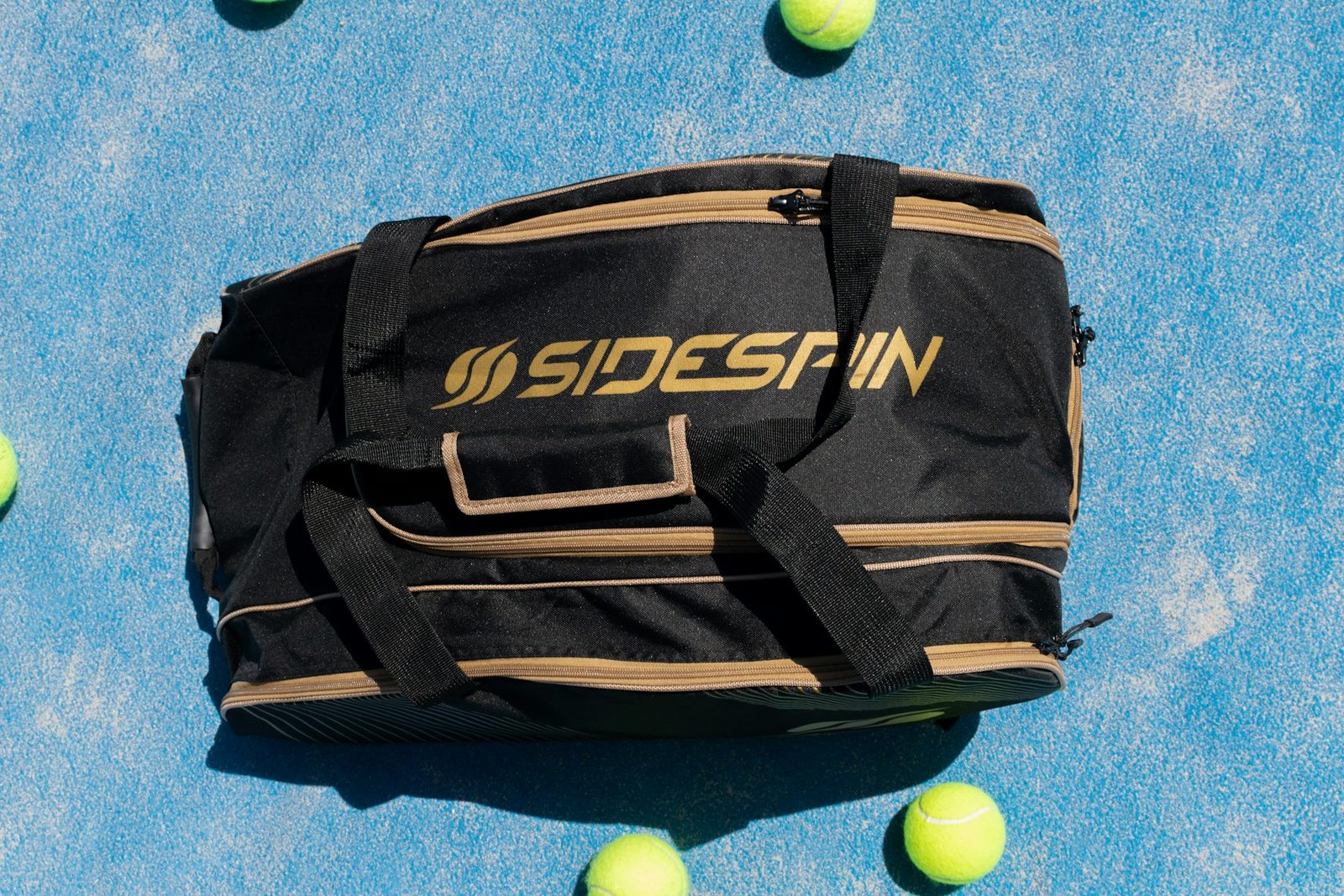
| Item | Why |
|---|---|
| Two racquets, ideally matched | A broken string ends your day otherwise |
| More water than you think | You may be there eight hours |
| Real food, not just gels | Between-match eating is the difference on day two |
| A change of shirt, and socks | Both matter more than they sound |
| Sunscreen and a hat | You will be outside all day, not for ninety minutes |
| A towel | Not always provided |
| Something to sit on and something to read | The waiting is real |
Two racquets strung the same is the one people skip and regret. What to eat and drink across a long day is covered in this guide to guide to tennis nutrition and hydration.
05Scoring, lines and no umpire
You will officiate your own match. Both players call the lines on their own side and announce the score, and that is assumed knowledge rather than something explained on the day.
- Announce the score before every serve, loudly, your score first.
- Call your own side only, promptly, and audibly.
- If you are not sure, the ball is good.
- Know the tiebreak procedure before you arrive.
- If you disagree and cannot resolve it, replay the point.
- If there is a roving official, you may ask them; that is what they are for.
The scoring system is covered in this guide to guide to tennis rules and scoring, and the conventions around calls and conduct in this guide to guide to tennis court etiquette. Read both before your first event; a large proportion of first-tournament unpleasantness comes from one player not knowing the conventions.

06Formats, and why they matter to a beginner
| Format | Matches if you lose first | Good for a first event? |
|---|---|---|
| Single elimination | One, then a consolation if offered | Only if there is a back draw |
| Single elimination with feed-in | At least two | Yes |
| Compass draw | Three or more | Very much yes |
| Round robin | Everyone in your group | The best first-tournament format |
Filter for round robin or compass draw events when you are choosing your first. Driving an hour to lose 6-2, 6-3 in fifty minutes and go home teaches you far less than three matches in a group, and it is a much worse advertisement for doing it again.
07The mental side
You will be more nervous than you expect, and it will affect the first three games rather than the whole match.
- Everybody there feels roughly the same; it is not visible from outside.
- Expect to play below your practice level. That is normal and not a verdict.
- Have a first-serve plan and a rally plan so you are not deciding under pressure.
- Between points, breathe and reset; the routine matters more than the thinking.
- Introduce yourself before the warm-up. It takes ten seconds and helps a lot.
The wider toolkit for this is in this guide to guide to the tennis mental game, and a short pre-match routine is in this tennis warm-up routine. TennisPAL has a good practical rundown of preparing for a first event.

08Afterwards
Whatever the result, you learned something you cannot learn in practice: how you play when it counts and nobody is helping you.
- Write down what actually went wrong, that evening, while it is fresh.
- Separate technical problems from decision problems; they need different work.
- Note what your nerves did and when they faded.
- Book the next one before the memory sours.
- Recovery matters more after a two-match day than you think.
Fitting events into a year sensibly is covered in this guide to guide to planning your tennis season, and what to do between them in this guide to recovering between sessions. Most players say their second tournament was substantially more enjoyable than their first, which is the point.

09Frequently asked questions
For USTA-sanctioned events, yes. Membership is required to enter, and you will normally select a division based on your NTRP rating. Unsanctioned club and community tournaments often have no such requirement.
Your honest NTRP level, or one below if you are genuinely unsure. Entering too high produces three quick losses; entering slightly low produces competitive matches and a much better first experience.
Most run across a full weekend. You may play one match Friday evening, two on Saturday and one or two on Sunday. Check you can commit to the whole thing before entering.
Usually around ten minutes with your opponent, including serves. That is far less than most people expect, which is why warming up properly off court beforehand matters.
You do. Most matches below the highest levels have no umpire, so both players call their own lines and announce the score. Knowing The Code before you arrive is assumed.

Claire Carter
Former WTA Tour Professional & Teaching Pro
Claire Carter is a former WTA Tour professional and a full-time teaching professional at Bay Club Redwood Shores, where she has coached juniors and adults for more than twelve years.
More about ClaireImage credits: Alex Dos Santos (Pexels), Bare Kind (Unsplash), Leandro Rossi (Pexels), ROMAN ODINTSOV (Pexels), SideSpin Padel (Unsplash), Testeur de CBD (Unsplash), cottonbro studio (Pexels). Photographs are illustrative.