
Coaching Tips
Planning Your Tennis Year: A Season Structure That Works
How to plan a tennis season as a club player: setting goals, building phases, peaking for events that matter, and actually tracking whether it worked.

Jump to a section
Want to improve your game?
Private and group coaching with Claire Carter in Redwood Shores.
Book a lessonMore tennis guides
Technique, gear, fitness and match play, written from the coach’s chair.
Browse all guidesMost club players practise the same way every week for years. Same warm-up, same rally, same three sets, same result. Then they wonder why their tennis stopped improving somewhere around year three.
The fix is not more practice. It is deciding, in advance, what a given stretch of weeks is for. That is all periodisation really means, stripped of the jargon.
01Why unplanned practice plateaus
Improvement requires working at the edge of what you can currently do. Ordinary social tennis is played comfortably within it, because that is what makes it enjoyable.
So you accumulate hours without accumulating skill. The player who improves is not usually the one playing most; it is the one who spent eight weeks deliberately working on their second serve while everyone else played sets.
02The four phases
| Phase | Length | Focus | Tennis vs off-court |
|---|---|---|---|
| Base | 8 to 12 weeks | Fitness, technical change, no pressure | More off-court |
| Build | 6 to 8 weeks | Apply changes under pressure; drilling | Balanced |
| Compete | 8 to 16 weeks | Match play; maintain, do not rebuild | More tennis |
| Transition | 2 to 4 weeks | Rest, other sports, deliberate break | Minimal |
The key discipline is not rebuilding technique during the competition phase. A change made in March will still be unreliable in April, and trying to fix your forehand mid-season is how players get worse during the part of the year they care most about.
03Work backwards from what matters
Start by identifying the two or three events in your year that you actually care about: a league season, a club championship, a tournament. Everything else arranges itself around those.
- Mark the dates you want to be playing well.
- Count back eight weeks; that is when the build phase starts.
- Count back another twelve; that is your base phase.
- Schedule the transition break immediately after your last event.
- Accept that you cannot be at your best all year, and stop trying.
For anyone playing league tennis, the season dates make this straightforward, and how the league structure works locally is in this guide to USTA leagues and NTRP ratings explained.
04Choosing what to work on
One or two things per block. Not five. The most common planning failure is a list of eight improvements, none of which get sustained attention.
| Category | Example goal | Realistic timescale |
|---|---|---|
| Technical | A reliable kick second serve | 8 to 12 weeks |
| Tactical | Approach the net on every short ball | 4 to 6 weeks |
| Physical | Improve change of direction | 8 to 12 weeks |
| Mental | A consistent between-point routine | 4 to 6 weeks |
| Match | Play twenty competitive matches this year | The season |
A good block pairs one technical goal with one tactical or mental goal, because they reinforce each other. Building a kick serve alongside a commitment to serve and volley, for example, gives each a reason to exist.
05The base phase is where change happens
This is the only part of the year when you can afford to be temporarily worse. A technical change makes you play badly before it makes you play well, and the base phase is when losing does not cost you anything.
- Do the technical work you have been avoiding.
- Build off-court strength; this is the phase for it.
- Play fewer matches and more structured practice.
- Use a wall or ball machine for volume, as in these tennis backboard drills.
- Accept ugly tennis for a few weeks.
Most club players never get this phase because they play matches year-round. That is precisely why their tennis looks the same as it did five years ago.
06Peaking, in practical terms
Peaking is mostly about doing less at the right moment. In the week or two before an event that matters, reduce volume while keeping some intensity.
- Cut total hours by roughly a third in the final week.
- Keep some sharp, short, high-quality hitting.
- Stop heavy strength work about a week out.
- Prioritise sleep more than usual.
- Do not learn anything new in the final fortnight.
The instinct before a big event is to train harder. It is almost always wrong: you arrive tired rather than sharp, and nothing you learn in the last two weeks will be reliable under pressure anyway.
07A worked example
Abstract phases are hard to act on, so here is what this looks like for a club player whose league season runs from April to July.
| Months | Phase | What you actually do |
|---|---|---|
| November to January | Base | Two gym sessions weekly; technical work; few matches |
| February to March | Build | Drilling under pressure; practice sets; reduce gym volume |
| April to July | Compete | League matches; maintain, do not rebuild technique |
| August | Transition | Two to three weeks off; play something else |
| September to October | Base again | Next technical project starts here |
Notice that the technical work happens in the months nobody is watching, and that the competitive months are deliberately conservative. That inversion is the whole idea, and it is the opposite of what most club players do.
08Track something countable
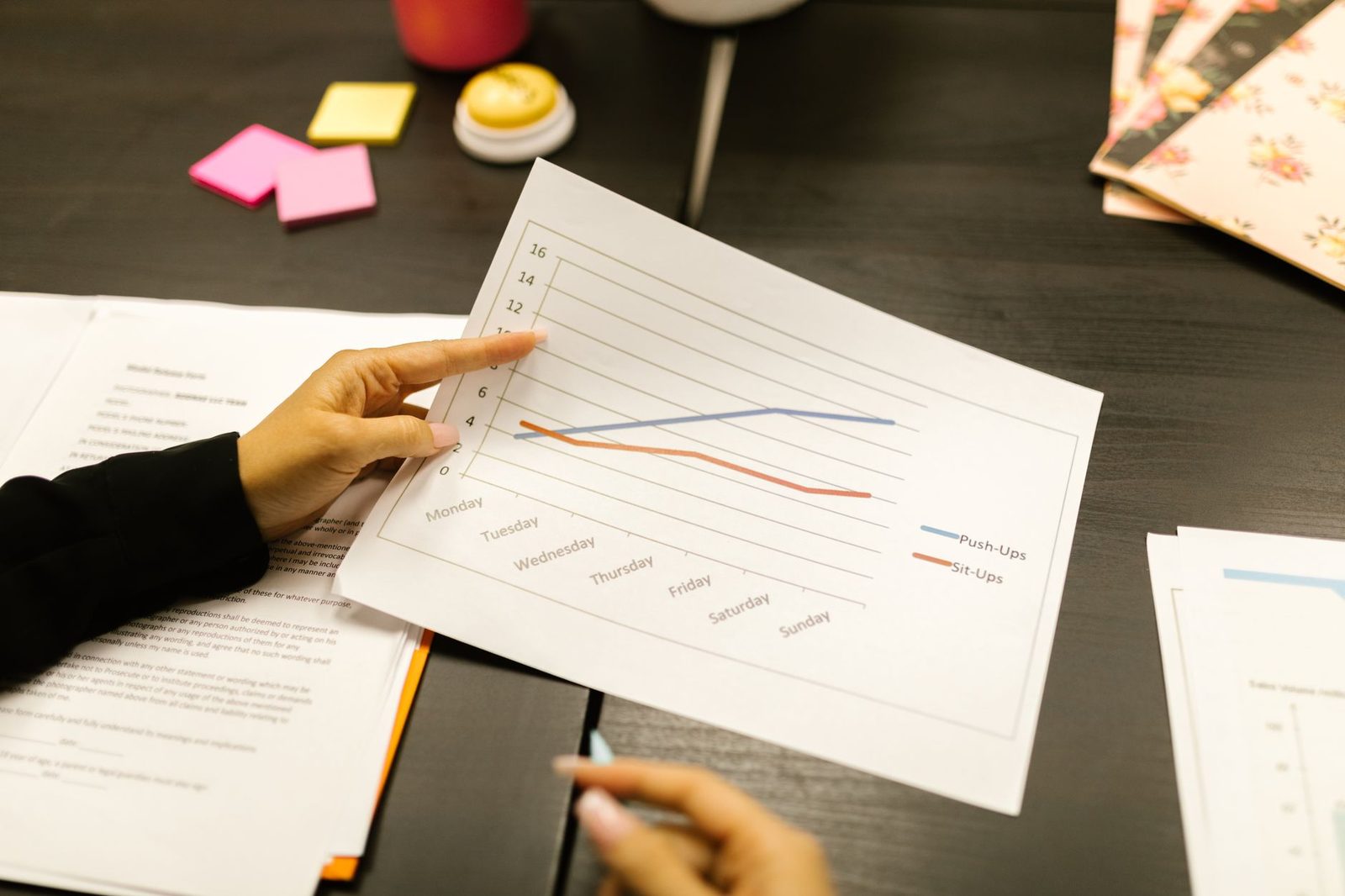
Match results are a poor measure of progress because they depend heavily on who you drew. Pick something you can count and that relates directly to what you are working on.
| Goal | What to count |
|---|---|
| Better second serve | Double faults per match |
| Come to net more | Net approaches per set |
| More consistency | Longest crosscourt rally in practice |
| Better fitness | How you feel in the third set, scored 1 to 10 |
| Mental steadiness | Games lost immediately after losing a big point |
Filming yourself occasionally is the other way to see change you cannot feel, covered in this guide to using video to improve your tennis. Write it down after matches. It takes two minutes and it turns a vague sense that things are or are not working into something you can actually act on. Tennishead has a good overview of periodisation if you want the fuller version of this.
09Take the transition break seriously
Two to four weeks off at the end of your competitive season is not laziness. It lets accumulated niggles settle, resets motivation, and makes the next base phase productive rather than a continuation of fatigue.
Play something else. Keep moving. Do not touch a racquet for a fortnight and see whether you miss it, because if you do, that is the enthusiasm that will carry the next base phase. If you would rather have the plan built with you than guess at it, a private lesson in Redwood Shores is a reasonable place to start.
10Frequently asked questions
Not an elaborate one, but some structure helps enormously. Most club players practise the same way every week for years and wonder why they plateau. Deciding what you are working on for the next eight weeks changes that.
Dividing the year into phases with different priorities, so you build a base, then sharpen, then compete, then recover. It is how serious athletes avoid training the same way year-round and peaking for nothing.
Reduce training volume in the week or two beforehand while keeping some intensity, so you arrive fresh rather than fatigued. Heavy work close to an event costs you more than it gains.
Six to eight weeks is a realistic block for a technical change. Shorter than that and the change has not embedded; much longer and you should be checking whether it is working.
Pick a measure before you start. Match results are noisy, so use something more direct: first serve percentage, number of times you came to net, consecutive crosscourt rallies. Something countable.

Claire Carter
Former WTA Tour Professional & Teaching Pro
Claire Carter is a former WTA Tour professional and a full-time teaching professional at Bay Club Redwood Shores, where she has coached juniors and adults for more than twelve years.
More about ClaireImage credits: Ahmed (Pexels), Anastase Maragos (Unsplash), BOOM 💥 Photography (Pexels), Eric Rothermel (Unsplash), Gonzalo Facello (Unsplash), Marius Matuschzik (Unsplash), RDNE Stock project (Pexels). Photographs are illustrative.