
Quick Start
Tennis Court Etiquette: The Rules Nobody Writes Down
Line calls, stray balls, waiting your turn and warm-up manners. The conventions every club player is assumed to know, and what The Code actually says.


Jump to a section
Want to improve your game?
Private and group coaching with Claire Carter in Redwood Shores.
Book a lessonMore tennis guides
Technique, gear, fitness and match play, written from the coach’s chair.
Browse all guidesTennis has an official rulebook and a second, unwritten one. The written rules cover scoring and lets. The unwritten set covers everything that actually causes friction between club players.
Most of it is common sense once stated. The problem is that it is rarely stated, so newcomers work it out by getting it wrong in front of people.
01Line calls: the big one
Without an umpire, each player calls their own side. That is the whole system, and it works only because of one convention.
If you are not certain the ball was out, it was in. Not probably in; in. You must be able to call it out with certainty, and if you cannot, the point goes to your opponent. This is uncomfortable and it is the correct behaviour.
- Call promptly and audibly. A late call is worse than a wrong one.
- Signal as well as call; hands and voices get lost in wind.
- Never call a ball on your opponent’s side of the net, even helpfully.
- If you genuinely did not see it, the ball is good.
- If you realise you called wrongly, give the point away. Immediately.
The corollary that people forget: you do not get to appeal your opponent’s call. You can ask once, politely, whether they were sure. You do not get to argue it.
02Balls from other courts
The most frequent source of low-level irritation at any busy club, and almost entirely solvable with two habits.
| Situation | Correct response |
|---|---|
| A ball rolls onto your court mid-point | Call “let” and replay the point if it interfered or was a hazard |
| Your ball goes onto another court | Wait until their point ends, then ask; never walk behind during a point |
| A neighbour asks for their ball back | Return it when your point ends, gently, directly to a player |
| Balls are piling up at your back fence | Clear them before serving; they are a rolled-ankle risk |
| You need to cross behind a court to leave | Wait for the point to finish, then cross quickly |
Returning a ball politely means at a speed the other player can catch. A firm drive back across two courts is not helpful, however accurate.

03Noise, movement and the point in progress
The rule underneath all of this is simple: nothing should move or make noise behind a player who is about to hit a ball.
- Do not walk behind a court while a point is live.
- Keep conversation off court, or at least at low volume between points.
- Do not coach from the sideline during a match; it is against the rules.
- Phones on silent. This should not need saying and it does.
- If you must cross, wait, then move quickly and acknowledge them.
04Warm-up manners
The pre-match warm-up is cooperative, not competitive. It is a shared five minutes to get both players ready, and treating it as an opportunity to intimidate someone is poor form.
- Hit to your opponent, not away from them.
- Do not hit winners in the warm-up.
- Feed them some volleys and overheads if they come in; they will do the same.
- Take your practice serves before you start, not after the first game.
- Let them take theirs too, even if you are ready.
The structure of a good warm-up is worth knowing for your own sake as well as your opponent’s, and it is set out in this tennis warm-up routine.
05Sharing courts and booking time
At public courts the conventions are looser and the potential for friction higher, because nobody has agreed to anything in advance.
| Convention | In practice |
|---|---|
| Observe posted time limits | Usually an hour for singles, 90 minutes for doubles |
| Yield when people are waiting | Finish the set or the hour, then vacate |
| Singles yields to doubles when busy | Common convention, not a rule |
| Do not hold a court with your bag | Turn up, or lose it |
| Take your rubbish and your ball cans | Obvious; frequently ignored |
Local court conditions and rules vary considerably, and the specifics for the area are covered in this guide to public tennis courts on the Peninsula.
06Doubles has its own conventions
Four people on a court multiplies the opportunities for friction, and most doubles etiquette exists to stop partners undermining each other.
- Either partner may call a ball on your side; agree beforehand who takes the lines closest to them.
- If partners disagree on a call, the ball is good. Always.
- Do not audibly coach your partner between points in a competitive match.
- Never criticise a partner’s error, and do not over-apologise for your own.
- The server’s partner calls the service line; the receiver’s partner calls the centre and side lines.
- Agree who takes the middle before you start, not during the third deuce.
The last one prevents more bad feeling than any other single habit, and the positional groundwork behind it is in this box leagues, ladders and round robins explained.
07Small courtesies that matter
- Announce the score before every serve, clearly, server’s score first.
- Apologise for net cords and frame shots; a raised hand is enough.
- Do not question a call twice.
- Do not celebrate an opponent’s double fault or unforced error.
- Turn up on time; a late arrival costs someone else their warm-up.
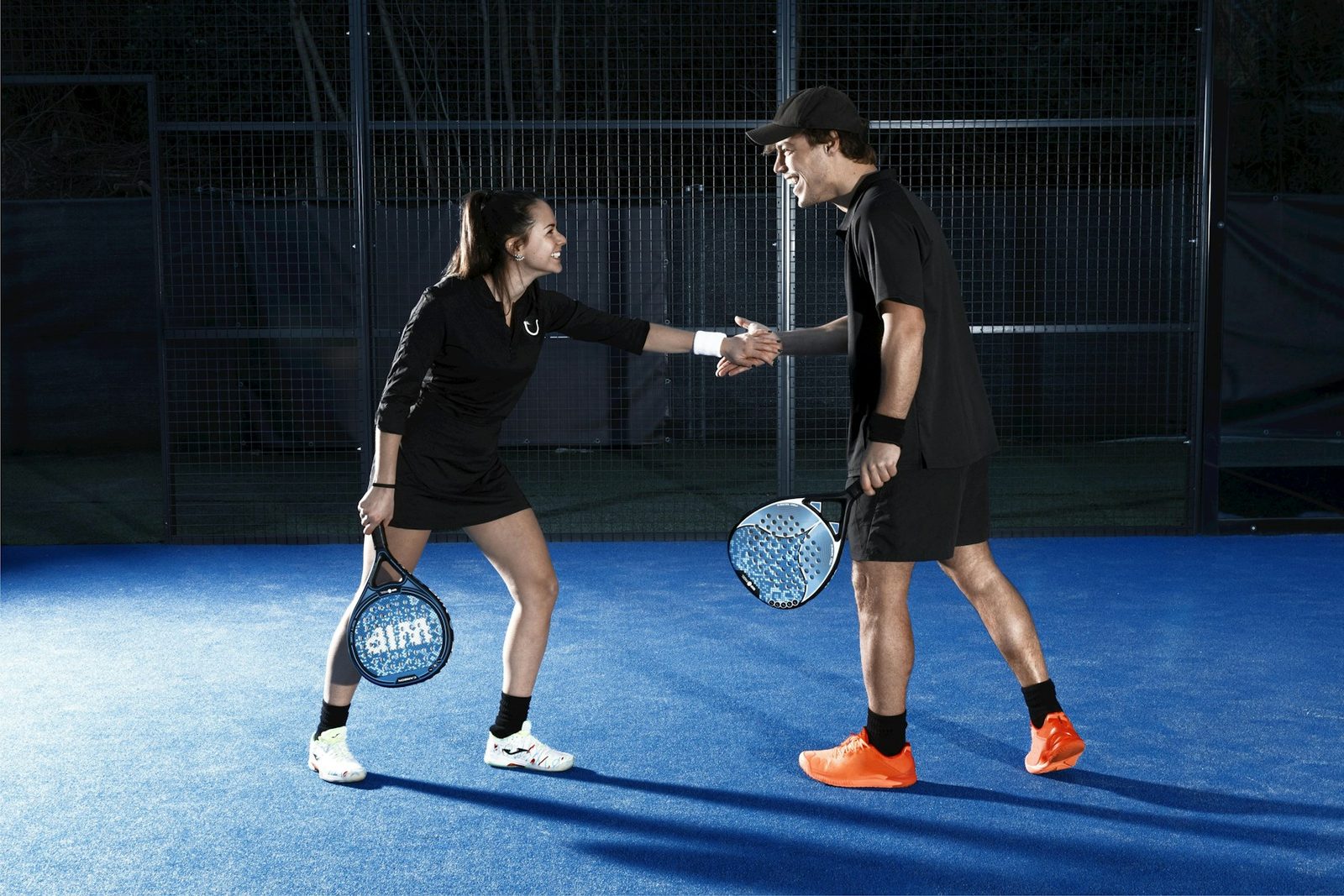
- Shake hands at the net afterwards and mean it.
Calling the score aloud before every point prevents about ninety per cent of scoring disputes, which are otherwise the second most common argument in club tennis. The system itself is covered in this guide to guide to tennis rules and scoring, and the vocabulary in this tennis terminology glossary.
08Where the conventions are written down
The unwritten rules are, in fact, written down. The USTA publishes The Code as part of its annual handbook, and it covers line calls, ball retrieval, the warm-up and conduct in more detail than most players ever read.
It is worth reading once, particularly before your first competitive match, because league and tournament play assumes you know it. The current Friend at Court handbook contains The Code in full alongside the rules of tennis.
If you are heading into organised competition, the level and format side is covered in this guide to USTA leagues and NTRP ratings explained, and the internal club formats in this box leagues, ladders and round robins explained.
09Frequently asked questions
Each player calls the lines on their own side of the net. You never call a ball on your opponent’s side, even if you had a better view of it.
The ball is good. If you cannot call it out with certainty, the benefit of the doubt goes to your opponent. This is the single most important convention in unofficiated tennis.
Call “let” immediately and stop the point if it is a safety issue or interfered with play. Return the ball when the neighbouring point has finished, not during it, and roll or hit it back at a pace they can handle.
No. Wait until the point on that court has finished, then ask. Walking behind a court during a point is both rude and genuinely dangerous.
Yes, by convention: a raised hand is enough. It is not an admission you did anything wrong, just an acknowledgement that luck rather than skill decided the point.

Claire Carter
Former WTA Tour Professional & Teaching Pro
Claire Carter is a former WTA Tour professional and a full-time teaching professional at Bay Club Redwood Shores, where she has coached juniors and adults for more than twelve years.
More about ClaireImage credits: Barney Goodman (Unsplash), Emre Simsek (Pexels), Jon Matthews (Unsplash), Lutfan Yazid (Unsplash), Matt Webster (Pexels), Onur (Pexels), Vincenzo Morelli (Unsplash). Photographs are illustrative.