
Fitness
A Tennis Warm-Up Routine That Actually Prepares You
A 15-minute tennis warm-up: light cardio, dynamic stretches, mini tennis and serves, plus why static stretching before you play is the wrong choice.


Jump to a section
Want to improve your game?
Private and group coaching with Claire Carter in Redwood Shores.
Book a lessonMore tennis guides
Technique, gear, fitness and match play, written from the coach’s chair.
Browse all guidesMost club players warm up by hitting a few balls harder and harder until something feels loose or something hurts. It is the default, and it is why so many injuries happen in the first quarter of an hour.
A proper warm-up takes fifteen minutes, needs no equipment, and does two separate jobs: it raises tissue temperature and it wakes up the movement patterns you are about to use at speed.
01The structure
| Stage | Time | What you do | Why |
|---|---|---|---|
| Light cardio | 3-5 min | Easy jog, skipping, jumping jacks | Raises heart rate and tissue temperature |
| Dynamic stretching | 5-7 min | Leg swings, arm circles, lunges, rotations | Takes joints through range under control |
| Mini tennis | 5 min | Rally inside the service boxes | Wakes up hands and eyes at low load |
| Full-court hitting | 5 min | Groundstrokes, then volleys | Grooves timing at match speed |
| Serves | 3-5 min | Progressive, half pace to full | The shoulder needs the longest runway |
The order matters more than the exact contents. General before specific, slow before fast, low load before high load. Everything else is detail.
02Stage one: get warm
The word warm-up is literal. You are trying to raise the temperature of muscle and connective tissue, which makes it more compliant and less likely to tear.
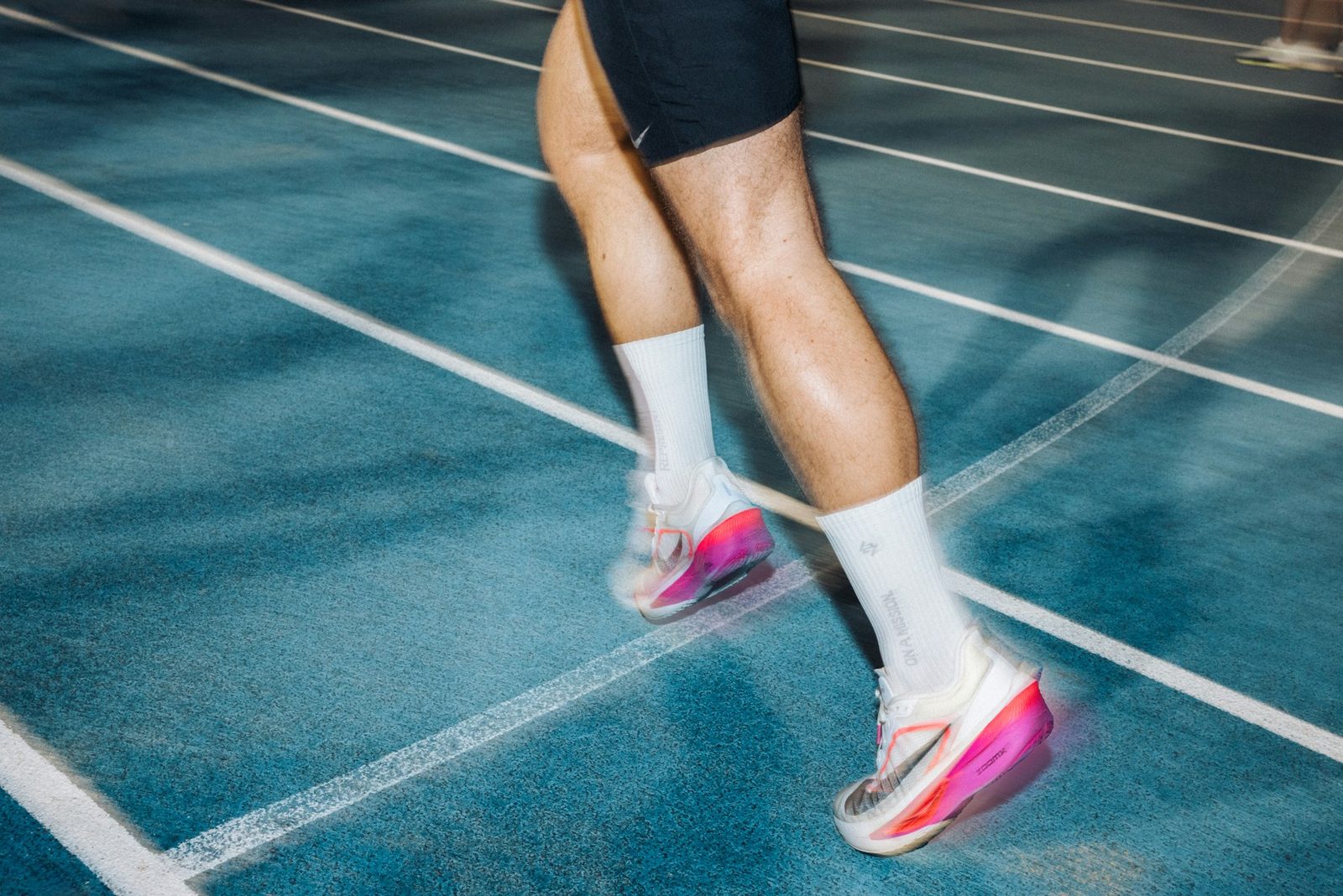
- Three to five minutes of easy jogging, around the court or on the spot.
- Skipping is excellent if you have a rope; it prepares the calves and ankles.
- Jumping jacks work fine and need nothing.
- You should be slightly breathless and just beginning to sweat.
- If you are cold at the end of this stage, do more.
03Stage two: dynamic stretching
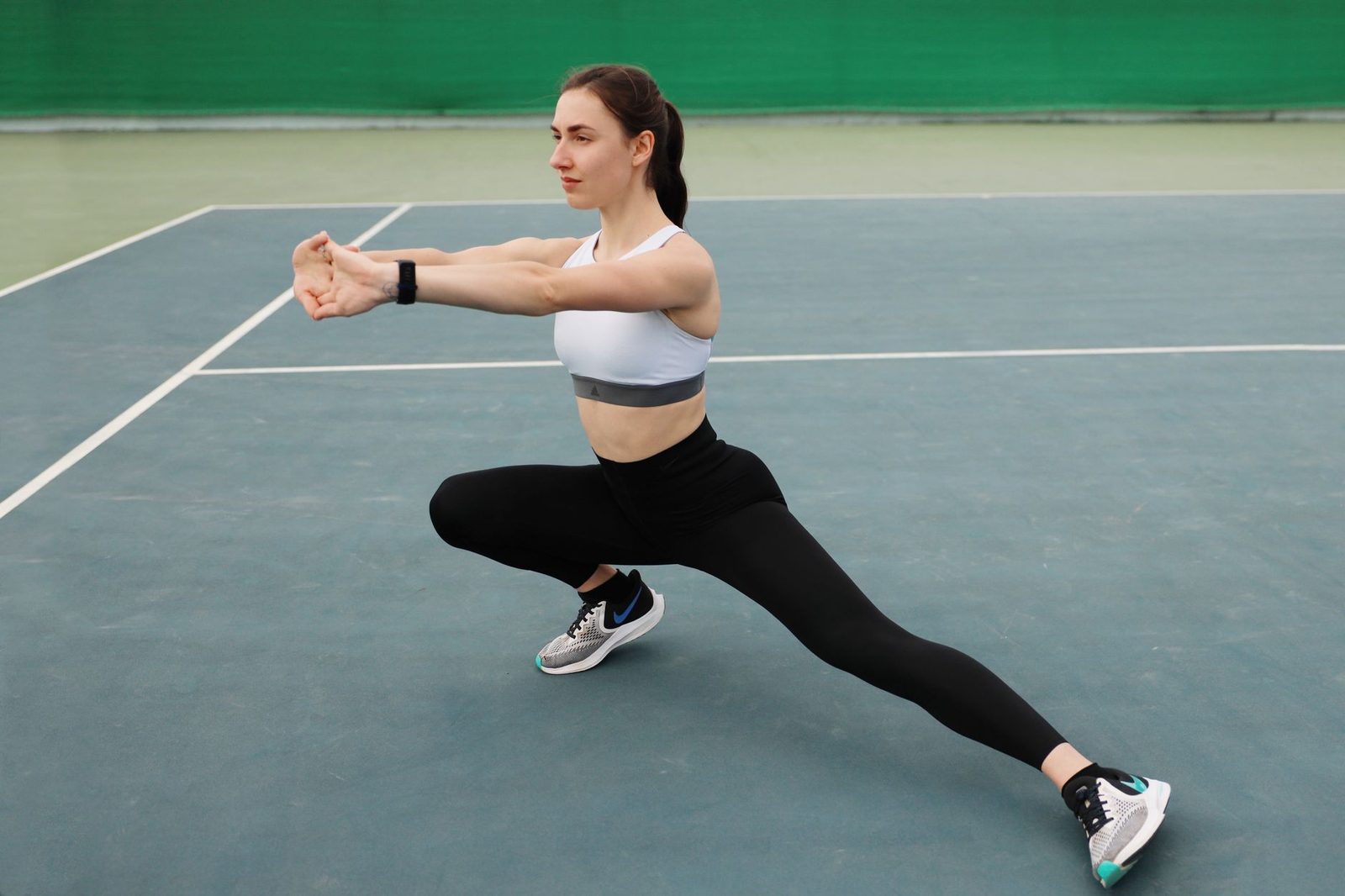
Movement through range, not held positions. Each of these is about ten to fifteen repetitions, done in a controlled way rather than swung wildly.
- Leg swings, front to back. Hold the fence, swing one leg through its range. Hamstrings and hip flexors.
- Leg swings, side to side. Adductors and abductors, which do most of the work in wide defensive shots.
- Walking lunges with a rotation. Hips, glutes and thoracic spine in one movement.
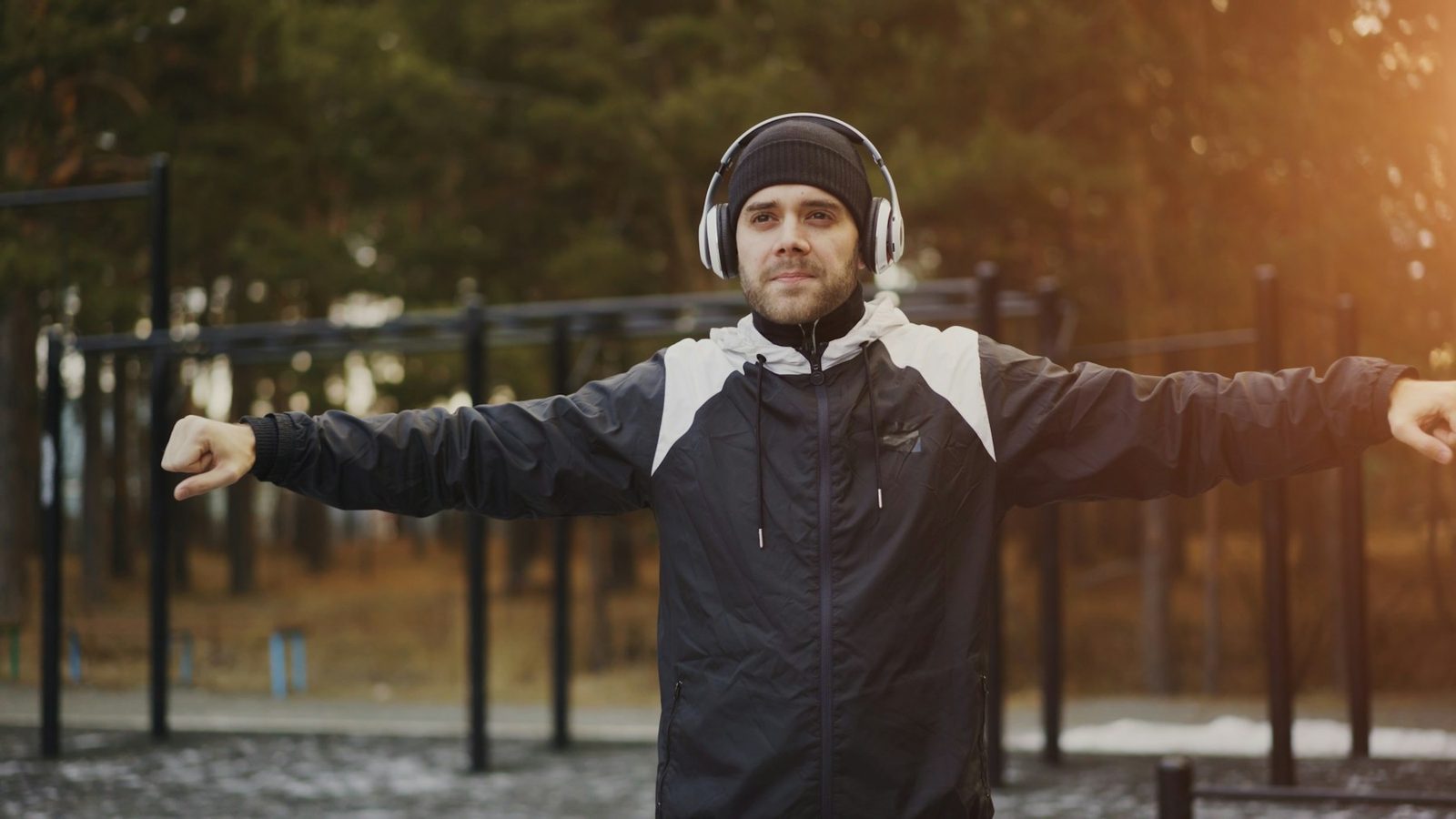
- Arm circles. Small to large, both directions. The shoulder needs this before it needs anything else.
- Trunk rotations. Feet planted, rotate through the middle. Every groundstroke starts here.
- High knees and heel flicks. Twenty metres of each, gently.
Keep the abdominals engaged and breathe through it. If any of it hurts rather than feels tight, that is information worth acting on rather than working through.
04The shoulder deserves special attention
The serve is the most demanding thing you will do all match and the shoulder takes the longest to prepare. It is also the joint that most often complains later.
- Arm circles, both directions, small building to large.
- Cross-body arm swings, loose rather than forced.
- External rotation with a light band if you have one; thirty seconds is enough.
- Shoulder blade squeezes; ten slow repetitions.
- Do this before you serve, not after your shoulder feels tight.
If your shoulder regularly aches after playing, the warm-up is one factor among several, and this guide to tennis shoulder pain and prevention covers the rest.
05Stage three: mini tennis
Rally inside the service boxes with short strokes and soft hands. Professionals all start here, and club players almost never do.
It warms the hands and eyes, establishes timing at a speed where mistiming costs nothing, and loads the body very little. Five minutes of mini tennis is worth more than five minutes of baseline bashing, and it is also a genuinely good touch drill.
06Stage four: full court, then serves
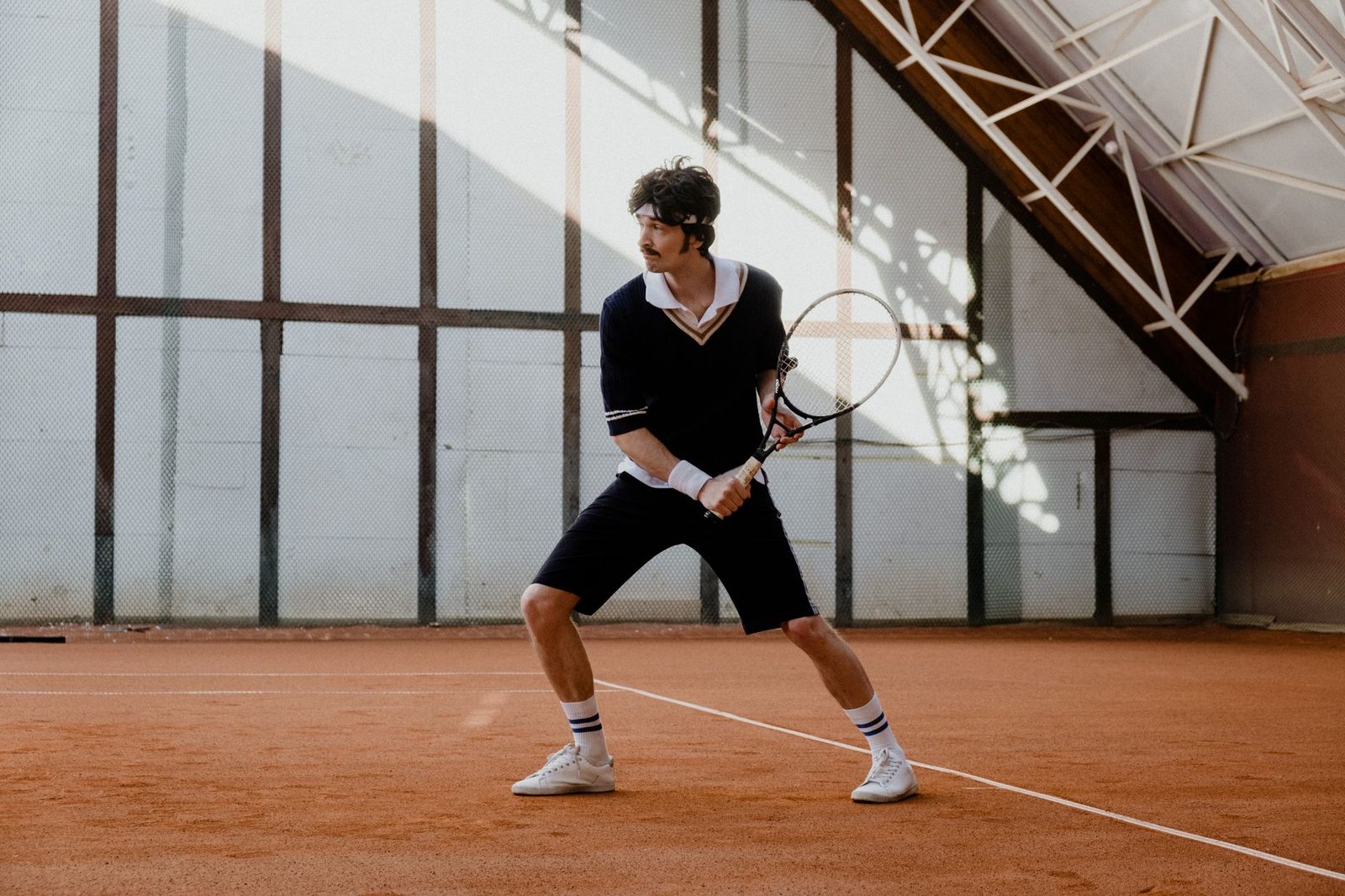
Move back gradually rather than jumping straight to the baseline. Two minutes at three-quarter court, then back.
- Crosscourt forehands, then crosscourt backhands, at controlled pace.
- A few down the line each side.
- One player at net for volleys, then swap.
- A handful of overheads if the shoulder feels ready.
- Serves last: shortened motion at half pace, building over eight to ten balls.
- Two or three returns each so the first one in the match is not the first one all day.
That last point is the most commonly skipped and one of the cheapest to fix. The return is half the points you will play, and it is covered in this guide to the return of serve.
07If you only have five minutes
Sometimes the court is booked for the hour and you arrive with the ball already in play. A compressed version is far better than nothing, and this is the order to cut things in.
- Keep: two minutes of jogging and skipping. Non-negotiable.
- Keep: leg swings both directions and arm circles. Ninety seconds.
- Keep: two minutes of mini tennis before you go back.
- Cut: the full-court hitting; play yourself into it instead.
- Never cut: progressive serves. Start the first game at three-quarter pace rather than serving cold at full power.
The principle is that you cut the tennis, not the movement. Hitting badly for ten minutes costs you a slow start; serving cold costs you a shoulder.
08What not to do
| Mistake | Why it is a problem | Instead |
|---|---|---|
| Long static stretches before playing | Not what you want before explosive work | Dynamic movement; save holds for afterwards |
| Starting with full-power serves | The shoulder is cold and the load is high | Progressive serves at the end |
| Skipping the warm-up when short on time | Most injuries occur early | Cut the hitting, not the movement |
| Warming up an hour before | The effect fades | Start 30 to 40 minutes before play |
| Only warming up the arms | Legs and trunk do most of the work | Lower body and rotation first |
09Cold weather, hot weather, older bodies
The routine scales rather than changes. In cold conditions everything takes longer and layers should stay on until you are genuinely warm. In heat the cardio stage can be shortened, but hydration starts well before you arrive, as set out in this guide to guide to tennis nutrition and hydration, and conditions themselves are covered in this guide to playing in wind and heat.
Older players need more warm-up rather than less, and benefit most from doing it consistently; the wider adjustments are in this guide to playing tennis after fifty. The clinical reasoning behind dynamic preparation is set out well by Therapeutic Associates Physical Therapy.
Afterwards is when static stretching earns its place, alongside the rest of what actually helps between sessions, covered in this guide to guide to recovering between sessions.
10Frequently asked questions
Around 15 minutes of preparation, started 30 to 40 minutes before you play. That typically breaks down as 3 to 5 minutes of light cardio, 5 to 7 minutes of dynamic stretching and 5 to 10 minutes of hitting.
Dynamic stretching yes, static stretching no. Holding a long static stretch immediately before explosive activity is not what you want. Save the long holds for after you play or for rest days.
Arm circles and shoulder rotations off court, then progressive serves on court: half pace with a shortened motion first, building to full over eight to ten balls. Never start with full-power serves.
Yes, and arguably more, because social play often starts cold with no structure. Most recreational injuries happen in the first fifteen minutes, and a five-minute warm-up removes most of that risk.
Rallying inside the service boxes with short, controlled strokes. It warms up the hands and eyes, grooves timing at low speed and puts almost no load on the body, which is why professionals start with it.

Claire Carter
Former WTA Tour Professional & Teaching Pro
Claire Carter is a former WTA Tour professional and a full-time teaching professional at Bay Club Redwood Shores, where she has coached juniors and adults for more than twelve years.
More about ClaireImage credits: Babak Eshaghian (Unsplash), Maksim Goncharenok (Pexels), RDNE Stock project (Pexels), Samuel Arkwright (Unsplash), Shelei Assunção (Pexels), Vitaly Gariev (Unsplash), cottonbro studio (Pexels). Photographs are illustrative.