
Fitness
Coming Back to Tennis After Years Away
How to return to tennis after a long break: what comes back fastest, what does not, how to avoid the injuries that end comebacks, and a sensible first month.

Jump to a section
Want to improve your game?
Private and group coaching with Claire Carter in Redwood Shores.
Book a lessonMore tennis guides
Technique, gear, fitness and match play, written from the coach’s chair.
Browse all guidesComing back to tennis after years away is a strange experience. The first few balls feel completely familiar, the next hour feels humiliating, and somewhere in week three it starts to click again.
The pattern is consistent enough to plan around. Here is what comes back quickly, what does not, and how to avoid the injuries that end most comebacks in the first month.
01What returns fast, and what does not
| Skill | Returns | Why |
|---|---|---|
| Groundstroke technique | Within a few sessions | Deeply grooved motor pattern |
| Hand-eye timing | One to three sessions | Recalibrates quickly |
| Volleys and touch | Two to four weeks | Feel needs regular contact |
| Serve | Four to eight weeks | Most complex motion; degrades fastest |
| Footwork and court coverage | Six to twelve weeks | Depends on fitness, not memory |
| Match fitness | Two to three months | Rebuilt, not recalled |
| Competitive sharpness | Longest of all | Only match play restores it |
The mismatch in that table is what catches people out. Your hands remember how to hit a forehand long before your legs can get you to the ball, so you spend the first few weeks hitting decent shots from bad positions.
02The injury risk is front-loaded
Most comeback injuries happen in the first month, and almost always for the same reason: playing at your remembered intensity with your current conditioning.
Your technique remembers how hard you used to hit. Your tendons, which adapt slowly, have no such memory. That gap between capability and conditioning is where calf strains, Achilles problems, shoulders and elbows go wrong.
- Start with two sessions a week, not four.
- Cap early sessions at an hour, even if you feel fine.
- Warm up for a full ten minutes; this is not optional now.
- Limit serving in the first few weeks; it loads the shoulder hardest.
- Expect soreness for two days afterwards early on, and plan around it.
The two most common comeback complaints have their own guides: tennis elbow prevention and recovery and tennis shoulder pain and prevention. Both are far easier to prevent in week one than to treat in month three.
03A sensible first month
| Week | Tennis | Off court |
|---|---|---|
| 1 | One session, 45 min, rallying only | Two short mobility sessions |
| 2 | Two sessions, 60 min, add volleys | Start light strength work |
| 3 | Two sessions, add gentle serving | Continue strength; add footwork drills |
| 4 | Two sessions plus one social set | Full routine |
| 5 onward | Add match play gradually | Two strength sessions weekly |
It looks conservative and it is deliberately so. The players who are still playing six months later are almost always the ones who built up slowly, not the ones who played three times in their first week.
04Rebuild the serve deliberately
The serve degrades more than anything else and it is the shot most people try to resume at full pace. Do not.
- Weeks one and two: no serving at all, or twenty at half pace.
- Week three: fifty serves at three-quarter pace, focusing on the toss.
- Week four: full motion, still not full power.
- Week five onward: build pace gradually, and stop when the shoulder tires.
- Rebuild the second serve before the first; it is what actually holds up matches.
If the motion itself has drifted during your break, the sequence is in this step-by-step serve technique guide, and the spin serve that makes a second serve reliable is in this guide to slice and kick serves.
05The mental part nobody warns you about
This is the genuinely hard bit, and it is not physical. You remember what you could do. You can watch yourself failing to do it, and unlike a beginner you know exactly how far short you are falling.
Two things help. First, measure against last week rather than against your best year. Second, use the break as licence to change something you never got round to: a slice you never had, coming to the net more, a proper second serve. Rebuilding is easier than rewriting, and it gives you something to progress at other than recovering old ground.
The wider mental toolkit applies here too, and it is in tennis mental game strategies.
06What you can keep from before
Something worth holding onto through the frustrating early weeks: not everything degrades. Tactical understanding, shot selection and the ability to read an opponent are largely intact, and they are the things that take beginners years to acquire.
That is why returning players often beat opponents who have been playing continuously but never thought much about how points are constructed. Your legs may be behind, but your reading of the game is not, and leaning on that while the physical side catches up is the fastest route back to winning matches.
The patterns worth remembering are in singles strategy and point construction, and if you played mostly singles before, doubles is a gentler re-entry: half the court to cover and a partner to share it with, as set out in this guide to doubles court positioning.
07Your equipment has moved on
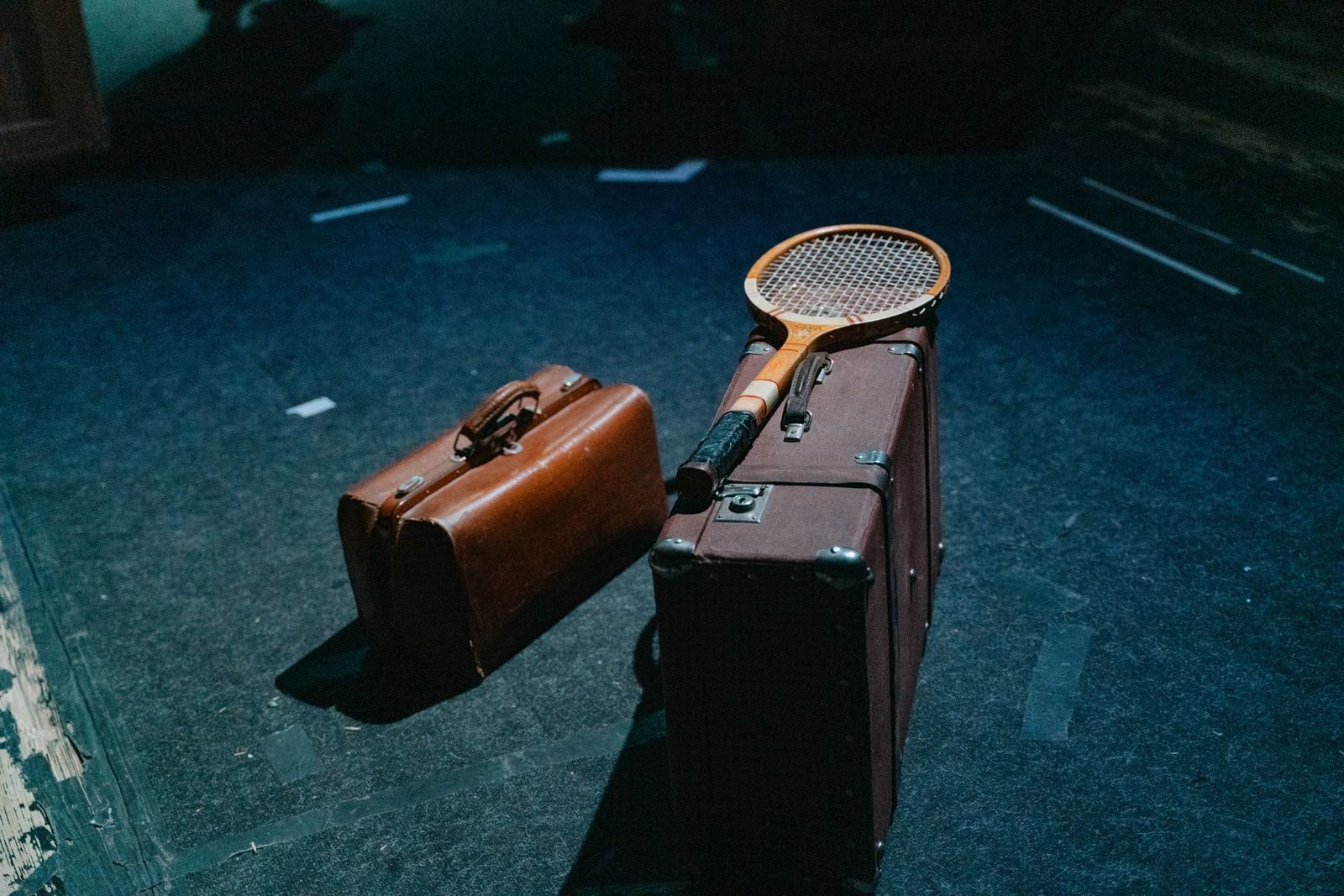
If your racquet has been in a cupboard for a decade, the strings are dead regardless of appearance, and the frame may well be heavier and smaller-headed than anything sold today.
- Restring before your first session; strings lose tension unused.
- Consider a new grip at minimum. It costs almost nothing.
- Demo a modern frame before assuming you need one, but do demo.
- Buy new court shoes. Old ones have hardened and lost cushioning.
- Check the ball situation; balls in an opened can from years ago are finished.
The specification detail is in this guide to choosing a tennis racquet, footwear is in this guide to choosing tennis shoes, and balls in this guide to tennis balls.
08The fastest route back
A group clinic beats solo hitting for most returning players. It gives you structure, a level-matched group, regular attendance and someone watching your technique, and it costs considerably less than private lessons.
Once you are rallying comfortably, level-matched league tennis is the natural next step and this guide to USTA leagues and NTRP ratings explained explains how the rating system works. Van der Meer Tennis has a good guide for returning players covering similar ground.
And if you would rather have someone tell you honestly which parts of your old game are worth rebuilding, a private lesson in Redwood Shores is a reasonable first step.
09Frequently asked questions
Ball-striking usually returns within a few sessions because it is a deeply grooved motor skill. Match fitness, footwork and the serve take considerably longer, typically a couple of months of regular play.
The serve and the footwork. The serve is the most complex motion in the sport and degrades fastest; footwork depends on fitness and reaction speed rather than memory. Groundstrokes feel familiar long before either of those does.
Build volume gradually rather than resuming at your old level, warm up properly every session, and add some off-court strength work. Most comeback injuries come from playing at your remembered intensity with your current conditioning.
One or two are usually worth it. A coach will spot the habits that have crept in during the break and, more usefully, tell you which parts of your old game are worth rebuilding and which are not.
Coming back is easier physically and harder mentally. The strokes return quickly, but the gap between what you remember being able to do and what you can currently do is frustrating in a way beginners never experience.

Claire Carter
Former WTA Tour Professional & Teaching Pro
Claire Carter is a former WTA Tour professional and a full-time teaching professional at Bay Club Redwood Shores, where she has coached juniors and adults for more than twelve years.
More about ClaireImage credits: Dakota Oubré (Unsplash), Elena Yunina (Pexels), Julie Sd (Unsplash), RDNE Stock project (Pexels), Vitaly Gariev (Unsplash), icon0 com (Pexels). Photographs are illustrative.