
Gear
Tennis Balls: Types, Pressure and When to Replace Them
Pressurised versus pressureless tennis balls, how long each lasts, the junior colour progression, and how to tell when a ball is finished.

Jump to a section
Want to improve your game?
Private and group coaching with Claire Carter in Redwood Shores.
Book a lessonMore tennis guides
Technique, gear, fitness and match play, written from the coach’s chair.
Browse all guidesTennis balls are the one piece of equipment every player buys repeatedly and almost nobody thinks about. They are also the equipment choice that most affects how the game feels, because a dead ball changes timing, bounce and how hard you have to work for depth.
There is not much to know, but the little there is saves money and improves practice.
01Pressurised versus pressureless
This is the fundamental split, and the two types behave in opposite ways over time.
| Pressurised | Pressureless | |
|---|---|---|
| Construction | Hollow core, pressurised gas inside | Thicker solid rubber, no internal pressure |
| Feel when new | Lively, responsive | Slightly dull and heavy |
| How it ages | Loses bounce as gas escapes | Gains bounce as the rubber softens |
| Typical lifespan | One to two weeks of regular play | A year or more |
| Best for | Matches and competitive play | Practice, ball machines, coaching baskets |
| Cost over time | Higher; replaced constantly | Lower per hour of use |
The counterintuitive part is that pressureless balls get bouncier with age rather than deader, because the felt wears down and the rubber softens. They eventually become too lively and lose their felt entirely, which is when they need replacing.
02How long a can actually lasts
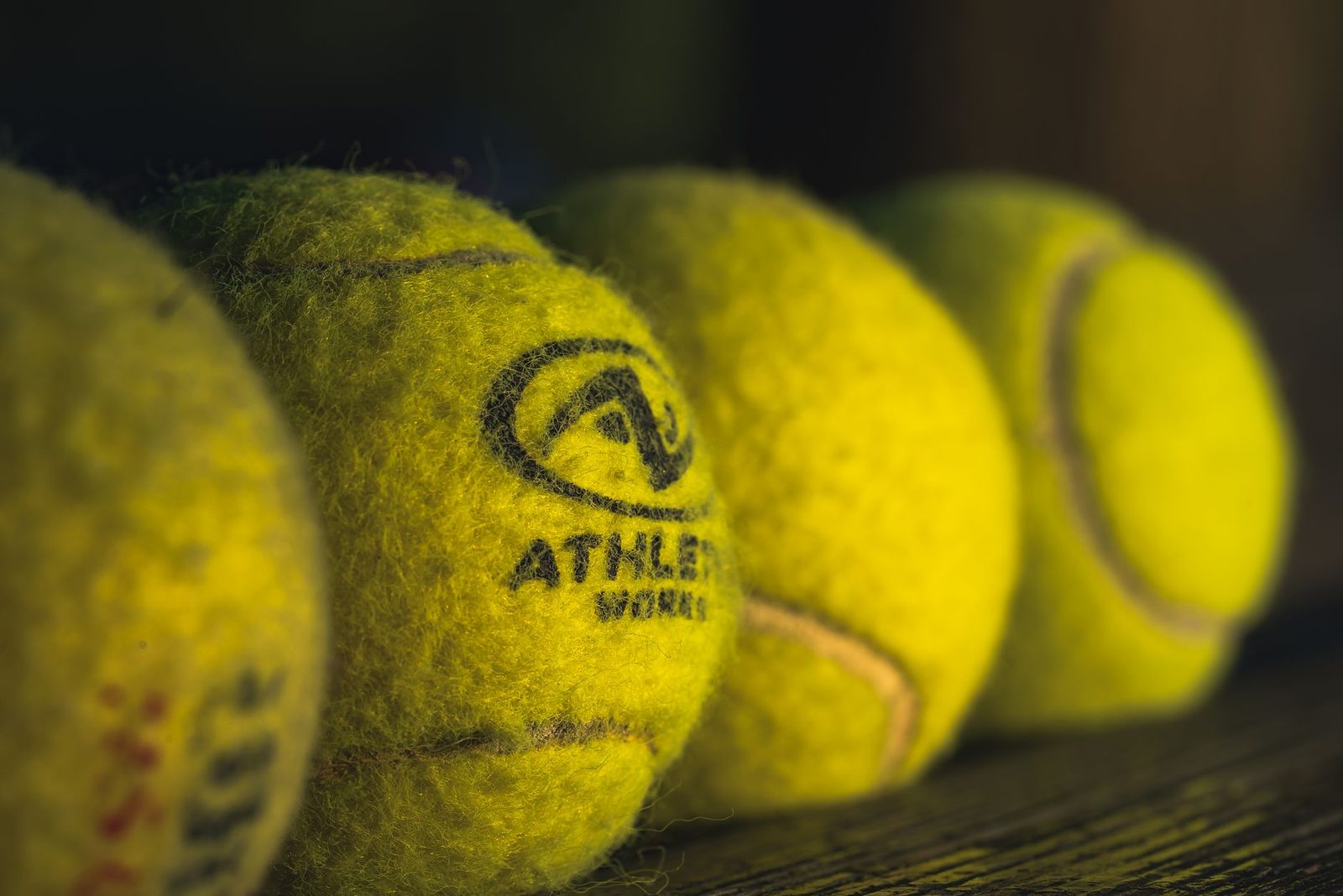
Less time than most players assume. A can of pressurised balls opened for a competitive match is effectively finished after that match. For social play, one to two weeks is realistic. Strong hitters flatten them faster than gentle ones.
- Competitive singles: often one match, sometimes less.
- Regular club play: one to two weeks.
- Occasional social hitting: up to a month.
- Practice with a machine or basket: use pressureless instead.
This is why coaches keep a large basket of pressureless balls for feeding and a can of fresh pressurised balls for match play. They are different jobs.
03How to tell a ball is finished
Two signs, and the felt is the more obvious one.
- Bald patches. When the felt wears smooth the ball flies faster and grips the strings less, so spin drops off.
- Low bounce. Drop a new ball and an old one from head height side by side. The difference is usually obvious.
- Feels heavy. A dead ball requires more effort for the same depth, which is a common hidden cause of arm soreness.
- Visibly misshapen. Rare, but it happens after machine use.
- It sounds wrong. Experienced players hear a dead ball before they feel it.
The arm soreness point is worth taking seriously. Playing with dead balls means swinging harder for the same result, which is one of the contributing factors discussed in this tennis elbow prevention and recovery.
04The junior colour progression
Red, orange and green balls are not toys. They are lower-compression balls designed so children can rally and construct points instead of chasing a ball that is too fast for them.
| Ball | Speed relative to standard | Court | Typical age |
|---|---|---|---|
| Red | Slowest, roughly a quarter speed | Mini court | 4 to 8 |
| Orange | Around half speed | Three-quarter court | 8 to 10 |
| Green | Around three-quarter speed | Full court | 9 to 11 |
| Yellow | Standard | Full court | 10 and up, once ready |
Green balls are also genuinely useful for adult beginners, and more clubs are using them that way. A slower ball means longer rallies, and longer rallies mean more repetitions and more enjoyment. The full junior pathway is in this parent’s guide to starting a child in tennis.
05How many balls should you own?
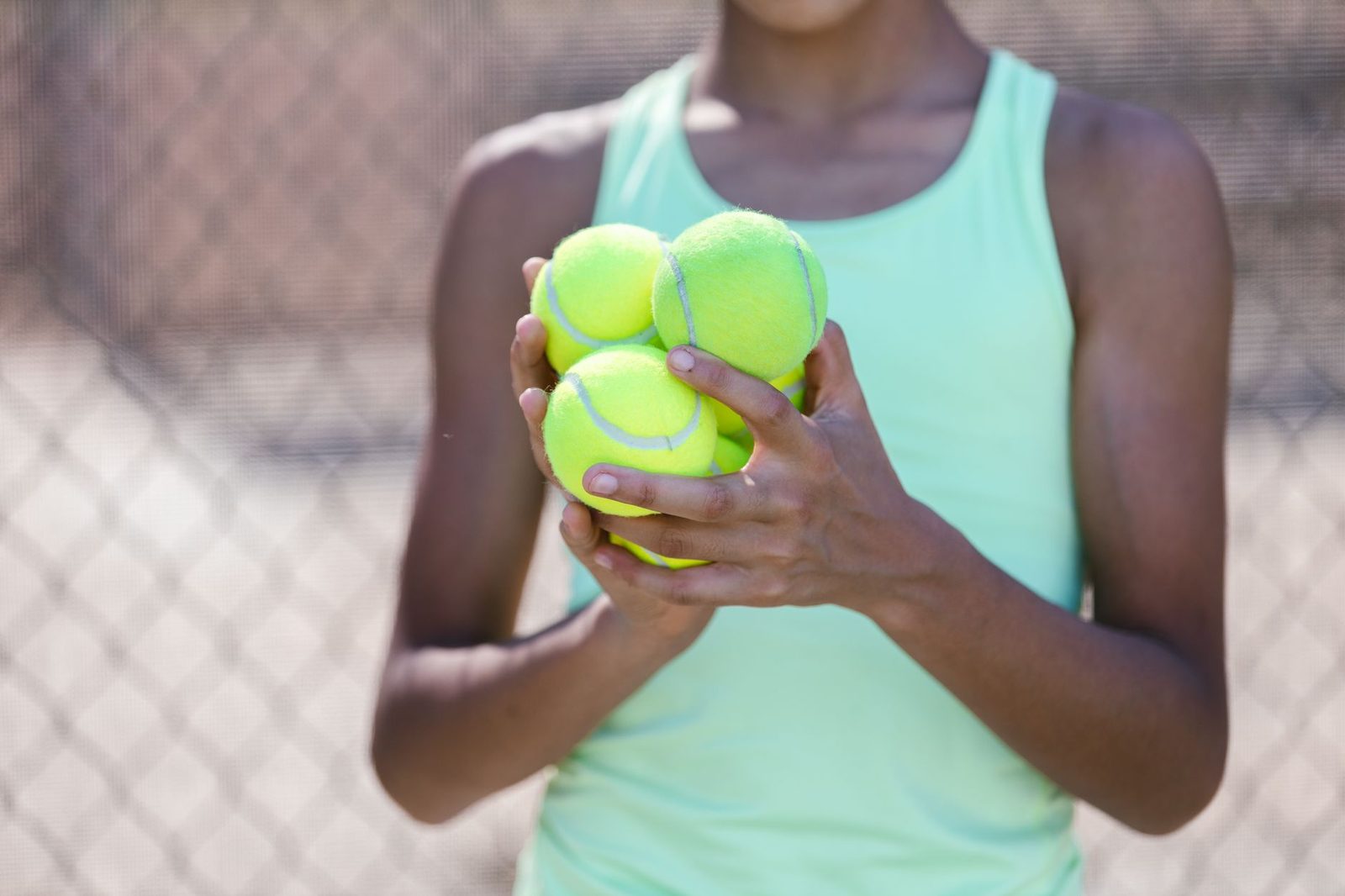
More than you think. The single biggest waste of practice time is chasing a small number of balls around a court, and it is entirely avoidable.
- Match play: one fresh can of three or four.
- Rallying with a partner: six is a workable minimum.
- Solo wall practice: a dozen, ideally retired match balls.
- Serve practice: as many as you can carry; fifty is not excessive.
- Coaching or machine work: a hopper of sixty to a hundred pressureless balls.
A cheap hopper or pick-up tube pays for itself within a few sessions, because bending to collect balls by hand is what actually ends most solo practice, not fatigue from hitting.
06Does the brand matter?
Less than the type and freshness, but not nothing. The main practical differences between well-known brands are felt durability and how quickly the ball loses pressure, and those vary more between product lines than between manufacturers.
- Premium lines generally hold pressure and felt longer than budget ones.
- Tournament-grade balls are heavier-feeling and more durable than practice balls.
- Cheap bulk balls are fine for wall practice and hopeless for matches.
- If your league or club specifies a ball, use it; consistency matters more than brand.
The more useful habit is simply opening a fresh can for matches that matter. A new ball changes how the court plays more than most equipment decisions you will ever agonise over.
07Altitude, surface and other variables
- High altitude balls exist for places above roughly 4,000 feet, where thinner air makes standard balls fly.
- Extra-duty felt is for hard courts; regular duty is for clay and indoor, where extra felt would pick up too much surface.
- Cold weather makes any ball feel heavier and bounce lower.
- Wet balls gain weight quickly and are hard on the arm; swap them if you can.
The duty distinction is the one worth acting on. Using regular-duty balls on a hard court wears them out noticeably faster.
08Storage and getting more out of them
- Keep balls out of car boots. Heat cycling accelerates pressure loss.
- Store at room temperature rather than in a cold garage.
- Rotate practice balls so one set does not take all the wear.
- Keep a separate basket of pressureless balls for solo work.
- Retire dead balls to a wall-practice bag rather than throwing them away.
That last one is genuinely useful. Balls too dead for a match are perfectly serviceable against a wall, and a wall session needs a lot of them. These tennis backboard drills give you a structure, and if you use a machine, this guide to using a ball machine effectively covers why pressureless matters there. Tennis Creative has more detail on ball lifespan if you want to go deeper.
09Frequently asked questions
A can of pressurised balls typically lasts one to two weeks of regular play, and as little as a few hours of hard competitive hitting. Pressureless balls last far longer, often a year or more, because they have no internal pressure to lose.
Pressurised balls have a hollow core filled with pressurised gas, which gives them a lively bounce that fades as the gas escapes. Pressureless balls use thicker rubber and no internal pressure, so they feel duller at first but keep bouncing for far longer.
Slowly, yes. A sealed can holds pressure well but not perfectly, and balls stored for years will be noticeably flatter when opened. For normal purchase-and-use timescales it is not something to worry about.
Pressureless. The machine’s wheels squeeze each ball repeatedly, which flattens pressurised balls very quickly and makes them an expensive choice for machine practice.
They are the junior progression, with lower compression and slower flight. Red is slowest for the youngest players, orange is intermediate, and green is close to a standard ball but around 25 per cent slower, used as the final step before yellow.

Claire Carter
Former WTA Tour Professional & Teaching Pro
Claire Carter is a former WTA Tour professional and a full-time teaching professional at Bay Club Redwood Shores, where she has coached juniors and adults for more than twelve years.
More about ClaireImage credits: Ahmed (Pexels), Ben Hershey (Unsplash), Chris F (Pexels), Elizabeth Dunne (Unsplash), Jay Brand (Pexels), RDNE Stock project (Pexels), cottonbro studio (Pexels). Photographs are illustrative.