
Fitness
Tennis Ankle and Wrist Injuries: Prevention and Recovery
Why ankles and wrists get hurt in tennis, how to reduce the risk, what the PRICE protocol is for, and when a niggle needs a professional rather than rest.


Jump to a section
Want to improve your game?
Private and group coaching with Claire Carter in Redwood Shores.
Book a lessonMore tennis guides
Technique, gear, fitness and match play, written from the coach’s chair.
Browse all guidesElbows and shoulders get all the attention in tennis, but ankles and wrists are what most often end a season abruptly. One goes in a single step; the other creeps up over months.
They are different problems with different solutions, and both are substantially preventable.
01Why tennis is hard on ankles
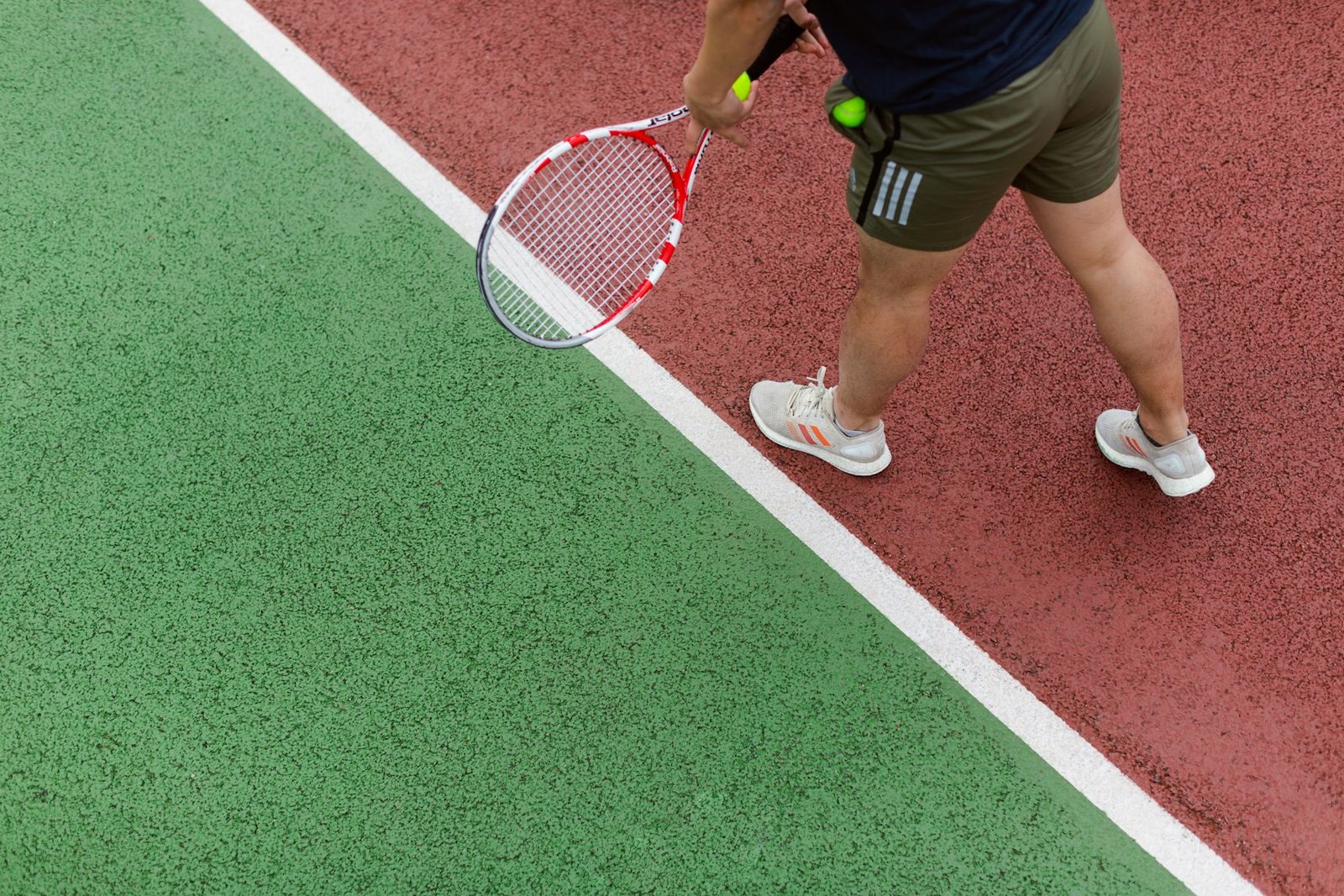
Tennis is a sport of sudden lateral movement, deceleration and changes of direction on an unforgiving surface. That is close to a list of the mechanisms that sprain ankles.
- Wide balls force a hard lateral push and an awkward landing.
- Sudden stops load the joint at the edge of its range.
- Loose balls on court are a genuine and entirely avoidable hazard.
- Worn shoes with collapsed support change how the foot lands.
- A previous sprain is the single strongest predictor of the next one.
That last point deserves emphasis. Most ankle injuries in club tennis are not first sprains; they are recurrences of one that was never properly rehabilitated.
02Reducing ankle risk
| Measure | Effect | Note |
|---|---|---|
| Balance and proprioception work | Strong | Single-leg balance; two minutes a day |
| Calf and peroneal strengthening | Strong | The muscles that resist rolling |
| Court-specific shoes in good condition | Strong | Running shoes lack lateral support |
| Taping or a lace-up brace | Moderate | Most valuable after a previous sprain |
| Clearing loose balls | Moderate and free | The most ignored measure of all |
| Proper warm-up | Moderate | Cold ankles do not respond as fast |
Single-leg balance is the highest-value item on that list and takes two minutes. Stand on one leg while brushing your teeth; progress to doing it with eyes closed. It rebuilds the position sense that a sprain damages.
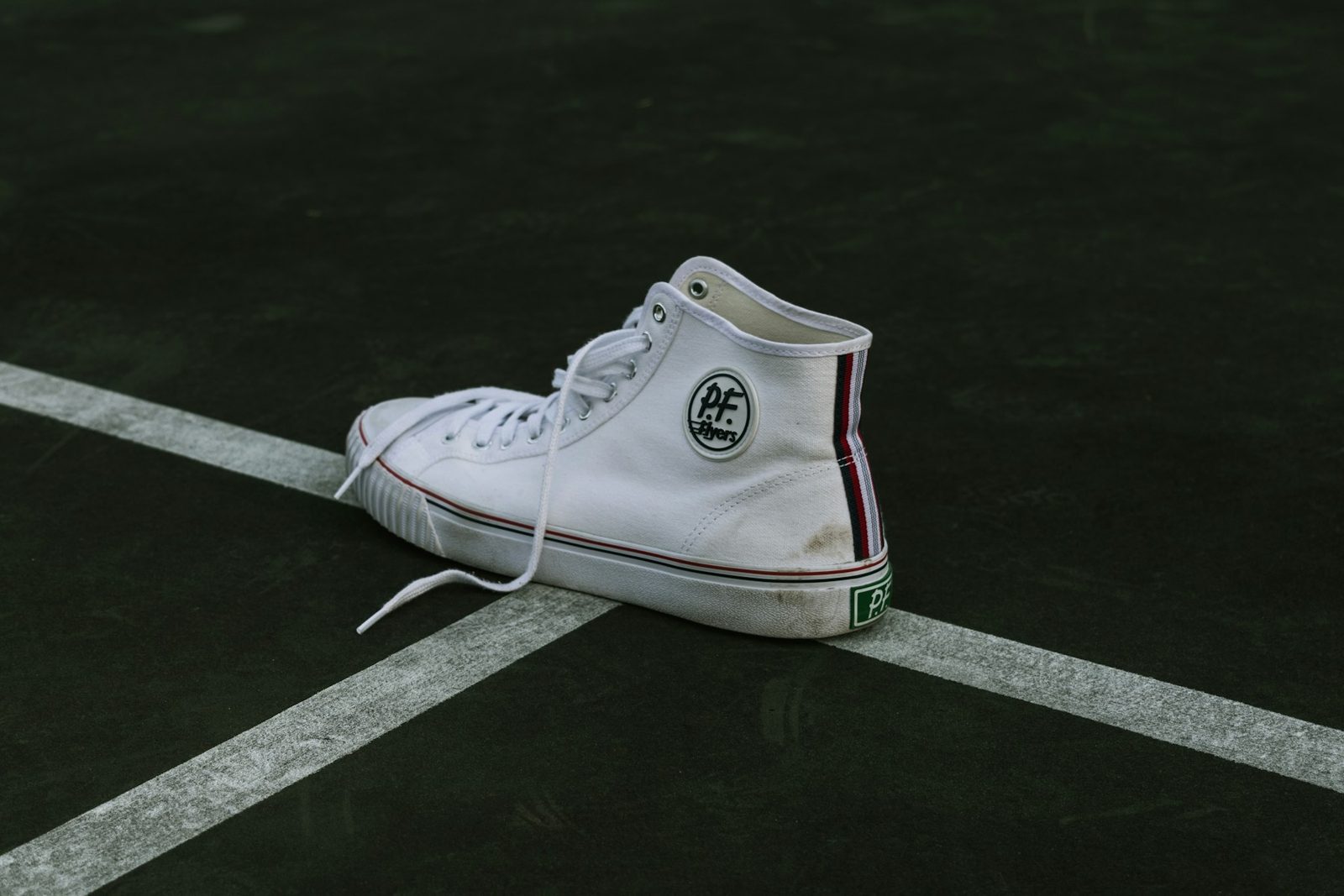
Footwear is the other easy win, and running shoes are the common mistake because they are built for forward motion rather than lateral load; the reasoning is in this guide to choosing tennis shoes for your court surface. Movement quality matters too, and the patterns in these tennis footwork drills reduce the number of desperate lunges you have to make.
03If you do roll an ankle
- Stop playing. Continuing on a fresh sprain is how a two-week problem becomes a three-month one.
- Apply PRICE for the first 48 to 72 hours: protection, rest, ice, compression, elevation.
- Get it assessed if you cannot bear weight, if you heard a pop, or if swelling is severe.
- Begin gentle range-of-motion work early, once acute swelling settles.
- Rebuild balance and strength before returning, not after.
- Expect two to six weeks for most sprains, longer for severe ones.
The step people skip is the balance work, and it is the step that prevents the next one. Returning when the pain stops rather than when the stability returns is why sprains recur.

04Wrists are a different problem
Ankle injuries are usually acute. Wrist problems in tennis are usually cumulative, which means they are also more predictable and more preventable.
The wrist is a small joint asked to stabilise a long lever at high speed, thousands of times a session. Tendon irritation is the common outcome, particularly on the little-finger side of the wrist in players with heavy topspin grips.
| Contributor | Why it matters | Fix |
|---|---|---|
| Grip too small | Forces harder squeezing and more wrist work | Measure; add an overgrip |
| Very western forehand grip | Loads the wrist heavily at contact | Consider semi-western |
| Stiff frame and stiff strings | Transmits more shock | Softer setup, lower tension |
| Weak forearm musculature | Nothing absorbs the load | Two sessions a week of grip work |
| Sudden increase in playing volume | Tissue adapts slower than enthusiasm | Build gradually |
| Late contact point | Wrist takes the strain instead of the body | Technical work |
Grip size is the first thing to check, because it is cheap, quick, and more often wrong than people expect; sizing is covered in this guide to tennis grips alongside grip types. The string and frame side is in this guide to tennis strings.
05Strengthening the forearm and wrist
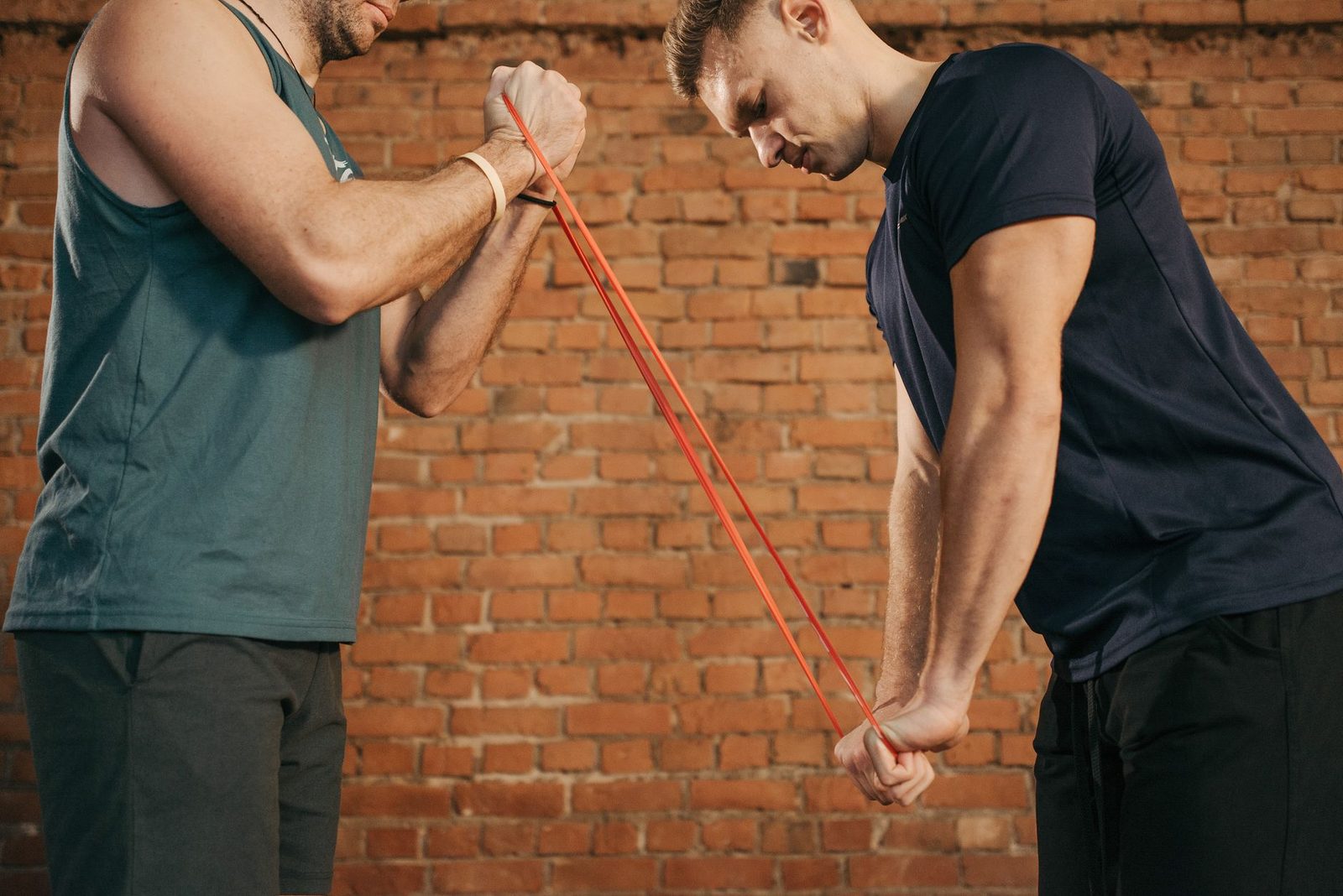
Ten minutes, twice a week, is enough to make a real difference. None of it needs a gym.
- Wrist flexion and extension with a light dumbbell, forearm supported, fifteen repetitions each way.
- Radial and ulnar deviation, the side-to-side movement, which is where tennis loads the wrist most.
- Pronation and supination with a hammer or a weighted bar held at the end.
- Grip work with a soft ball or a gripper; endurance rather than maximum strength.
- Eccentric wrist extension, lowering slowly, which is the standard approach for tendon problems.
- Progress slowly. Tendons adapt more slowly than muscle.
This work overlaps almost entirely with what prevents elbow trouble, covered in this guide to preventing and treating tennis elbow, and sits inside the broader programme in this off-court fitness training for tennis.
06Loading, not resting, is usually the answer
The instinct with a niggling wrist or a grumbling ankle is complete rest. For acute injuries in the first few days, that is right. Beyond that, it is usually wrong.
Tendon and ligament tissue adapts to load and deconditions without it. Two weeks of total rest often produces a joint that feels fine at rest and hurts again within one session, because nothing about its capacity changed.
- Reduce load rather than removing it, where pain allows.
- Keep the rest of your training going; do not detrain everything.
- Increase gradually: roughly ten per cent more per week is a common rule of thumb.
- Mild discomfort that settles quickly is usually acceptable; sharp pain is not.
- If you are unsure where that line sits, that is a good reason to get advice.
07When to get it looked at
Most niggles resolve with sensible loading. Some do not, and the distinction matters.
- You cannot put weight on it, or there was an audible pop at the time.
- Swelling is severe or comes on very quickly.
- Pain persists beyond two weeks despite reduced load.
- There is numbness, tingling or weakness.
- The same injury keeps returning.
- Pain wakes you at night.
Recurrence is the signal most players ignore for longest. A third sprain of the same ankle is not bad luck; it is an unrehabilitated first sprain. Mass General Brigham has a clear overview of common tennis injuries and when they warrant assessment.
The rest of the injury picture is covered in these guides to managing tennis knee pain and tennis shoulder pain and prevention, and what to do between sessions is in this guide to recovering between sessions. Preparing properly before you play is the cheapest prevention available, and it is set out in this tennis warm-up routine.
08Frequently asked questions
Most sprains recover in two to six weeks. Severe ones can take up to twelve. Returning before the ankle is stable is the main reason sprains become recurrent.
Protection, Rest, Ice, Compression and Elevation, applied for the first 48 to 72 hours after an acute injury. It manages swelling in the early phase; it is not a treatment plan on its own.
Taping or a lace-up brace can reduce the risk, particularly for players who have already sprained an ankle. They are most useful as a bridge while strength and balance are rebuilt, rather than as a permanent substitute.
Usually repetitive overload rather than a single incident, often tendon irritation. Common contributors are a grip that is too small, a frame or string setup that is too stiff, and a very western forehand grip that loads the wrist heavily.
If you cannot bear weight, if there was an audible pop, if swelling is severe, if pain persists beyond a couple of weeks, or if the same problem keeps returning. Recurrence is the signal most players ignore.

Claire Carter
Former WTA Tour Professional & Teaching Pro
Claire Carter is a former WTA Tour professional and a full-time teaching professional at Bay Club Redwood Shores, where she has coached juniors and adults for more than twelve years.
More about ClaireImage credits: Annushka Ahuja (Pexels), Patrick Hodskins (Unsplash), Pavel Danilyuk (Pexels), Ryutaro Tsukata (Pexels), ThisisEngineering (Unsplash), Towfiqu barbhuiya (Unsplash). Photographs are illustrative.