
Racquet Setup & Maintenance
Should You String Your Own Racquet?
Buying your own stringing machine sounds like an obvious way to save money — but for many players the numbers do not work. Here is what machines cost, how difficult stringing really is, and when doing it yourself genuinely makes sense.

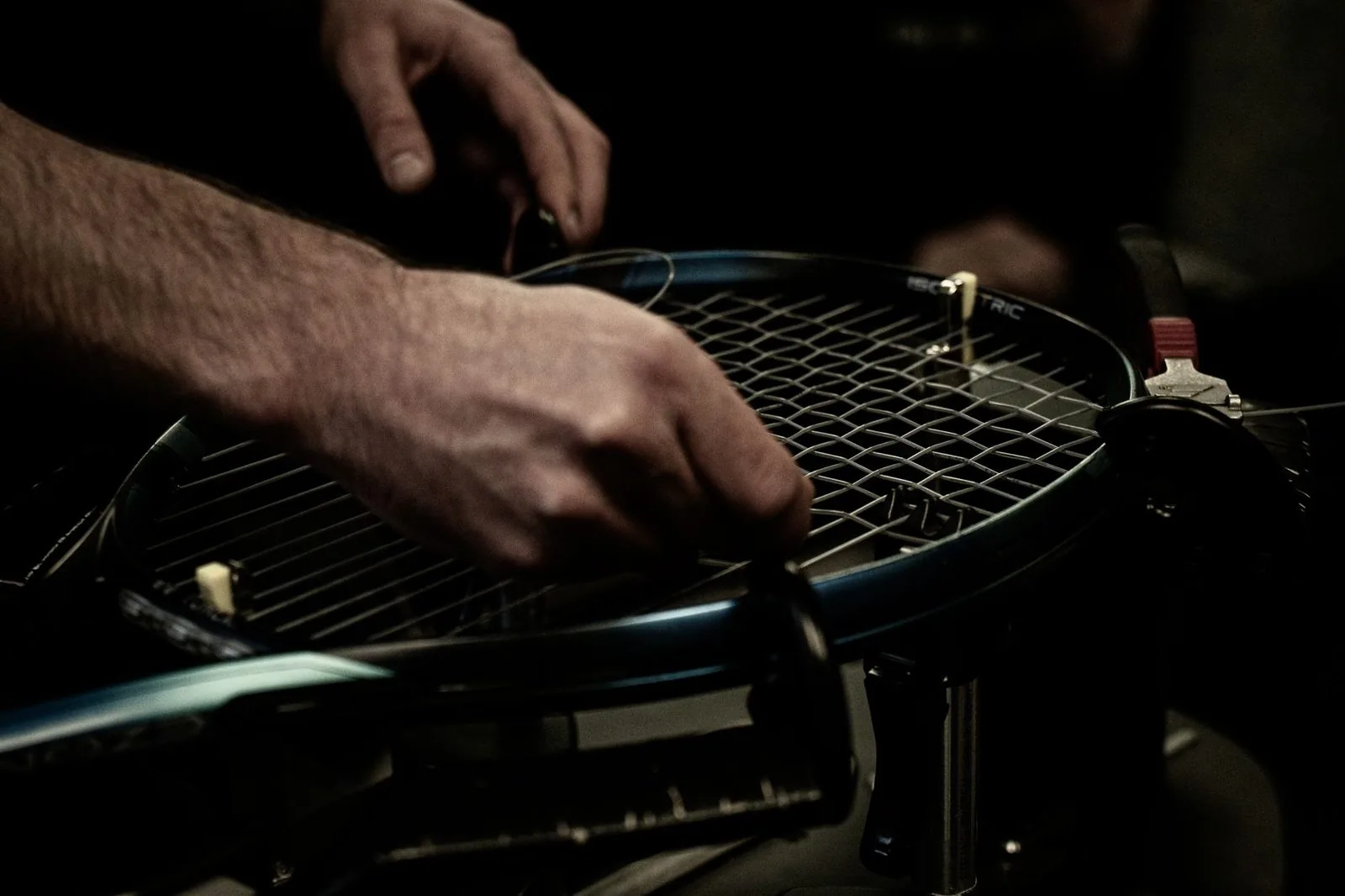
Is Buying a Stringing Machine Worth It?
The honest short answer, before the detail.
Usually yes if
- You break strings regularly
- You restring 6–10+ times a year
- Several people in the household play
- You enjoy experimenting with strings and tension
Usually no if
- You restring only 2–4 times a year
- Convenience matters more than experimentation
- You need competition racquets prepared consistently
- You do not enjoy equipment setup
Jump to a section
Need help with your racquet?
Strings, tension and frame choice all interact. The gear guides work through each one in plain language.
Explore tennis guidesWant to improve your game?
Private and group coaching with Claire Carter in Redwood Shores.
Book a lessonStringing your own racquets is one of those decisions that looks obviously economical and often is not. The maths depends almost entirely on how often you actually restring, and most players overestimate that.
Here is what the equipment costs, what the job involves, and where the genuine break-even point sits.
01How much does a tennis stringing machine cost?
Machines fall into three tiers. The tensioning method is what separates them, but two other things matter just as much: how the frame is mounted, and how well the clamps hold.
Drop weight
$150–$400
Occasional home stringing
- Affordable entry point
- Simple, few parts to fail
- Gravity sets tension, so no calibration drift
Trade-off: the slowest of the three to work with.
Crank
$400–$800
Regular home stringers
- Good balance of price and speed
- Durable mechanism
- Manual control over the pull
Trade-off: lockout design needs periodic calibration.
Electronic
$800–$3,000+
Frequent stringers, clubs and shops
- Constant-pull tensioning
- Faster and more repeatable
- Pre-stretch and knot settings
Trade-off: hard to justify below shop-level volume.
Two features matter more than the tensioning method. A six-point mounting system supports the frame at more contact points and reduces the risk of distortion, and good fixed clamps hold tension far more reliably than cheap flying clamps.
The three parts that decide quality
Strip away the tiers and every machine does the same three jobs. Seeing them separately makes the specification sheets much easier to read.
The mounting system and clamps can matter just as much as the tensioning mechanism.
02When does a stringing machine pay for itself?
Shops generally charge $15 to $30 for labour, with string on top. That labour charge is what you are actually saving, because you buy string either way.
Machine cost
$400
Labour you avoid
$15–$30
Restrings a year
6–10+
At that rate the machine clears its cost in roughly one to two years. At three restrings a year it takes closer to a decade.
| Your situation | Restrings/year | Likely decision |
|---|---|---|
| Play weekly | 1–2 | Keep using a stringer |
| Play twice weekly | 2–3 | Usually not worth buying |
| Play three times weekly | 3–4 | Borderline |
| Frequent player or string breaker | 6–10+ | Worth considering |
| Several players in the household | 10–20 | Strong case for buying |
The honest summary is that a single club player who restrings three times a year will not save money. A family with three players who all break strings will save considerably, and quickly.
03What stringing your own racquet actually involves
Six stages, in a fixed order. None of them are difficult in isolation; the skill is in doing all six consistently, every time.
- 01
Mount
Secure the frame, supported at six points where the machine allows.
- 02
Measure & cut
Prepare the right length of string for a one- or two-piece job.
- 03
String the mains
Tension and clamp each main string, working outward from the centre.
- 04
Tie off
Secure the mains at the designated tie-off grommets.
- 05
Weave the crosses
Alternate over and under the mains, tensioning as you go.
- 06
Tie off & inspect
Finish the knots, trim the excess and check the string bed is even.
Weaving the crosses is the slow part and the part that improves most with practice. It is also where a first attempt loses most of its time.
04Is racquet stringing hard to learn?
Easy to learn
- Basic mounting
- The mains
- The crosses
- Standard knots
Harder to master
- Consistent tension
- Repeatable results
- Speed
- Difficult string patterns
The basics are genuinely learnable from the machine’s manual and a few videos. What takes longer is consistency: the same tension and the same feel every time, which is what a good professional stringer is actually selling.
Your first few string jobs will be playable but slightly uneven. That is fine for a practice racquet and less fine for a match frame.
Advice for your first attempts
- Practise on an old racquetBefore you touch one you care about.
- Start with synthetic gutForgiving, cheap and easy to weave.
- Avoid natural gut initiallyExpensive and easily damaged by a mistake.
- Keep a stringing logWhat you strung, at what tension, and how it played.
- Check calibration periodicallyDrift is common, particularly on lockout machines.

05What you need besides the stringing machine
The machine is not the whole cost, and the accessories are the part people forget when comparing prices online.
- Starting clampFor starting procedures and certain one-piece patterns.
- AwlFor opening blocked or tight grommets.
- Quality cuttersClean cuts; blunt cutters fray polyester.
- Needle-nose pliersFor pulling tie-off knots tight.
- Stringing-pattern referenceEvery frame differs; guessing damages racquets.
- Replacement grommetsThey crack, and a cracked grommet cuts a new string.
- String on a reelFar cheaper per set than individual packets.
Buying string on a reel is where a meaningful share of the saving actually comes from, since a reel typically works out at a fraction of the per-set price.
06Start with the right string
Which string you learn on changes how hard the job feels. These three behave very differently under the hands.
Synthetic gutBest beginner choice
- Affordable
- Forgiving of small errors
- Easy to weave
PolyesterMore challenging
- Stiffer to handle
- Harder to weave cleanly
- Common among advanced players
Natural gutNot for first attempts
- Expensive
- More delicate
- Needs careful handling
Mains and crosses
The two directions behave differently and wear differently, which is worth understanding before you choose what goes on the reel.
Mains run the length of the frame and move most; crosses weave over and under them. Notching where they intersect is the first sign of wear.
Which string to put on the reel is the bigger decision, and it is worth reading properly before you commit to a few hundred metres of anything. This complete guide to tennis strings covers gauge, material and how each one plays.
07Be careful with string tension
Having a machine at home makes it very easy to experiment, and the most common experiment is stringing tighter for control. That is worth thinking about before you start.
More control
Higher tension tends toward control, with a smaller comfortable margin.
The frame’s recommended range is printed on the throat, and it is the sensible place to start.
Lower tension tends toward power and comfort, with less predictable placement.
More comfort & power
None of that is a rule. Racquet model, string material, how hard you swing and how your arm feels all change the answer, and higher is not automatically better in either direction.
One caution is worth stating plainly. Higher tension and stiffer polyester transmit more shock to the arm. If you have any history of arm trouble, the direction of travel should usually be looser and softer rather than tighter, and the reasoning is set out in this guide to preventing and treating tennis elbow. Owning the machine should make you more careful about this, not less, because nobody is there to talk you out of it.
Frame choice interacts with all of this too, which is worth revisiting in this guide to choosing a tennis racquet if you are changing setups often.
08Benefits beyond saving money
People who string their own racquets rarely cite money as the main benefit once they have been doing it a while.
- ControlExperiment with tension in two-pound steps without paying each time.
- SpeedA broken string on Saturday morning stops being a week-long problem.
- UnderstandingYou learn how different strings actually behave in your frame.
- EnjoymentFor some players the workbench becomes part of the hobby.
That last point is worth testing before you spend anything. Ask a club stringer whether you can watch or try one, because not everyone enjoys a repetitive hour of weaving.
09DIY vs professional stringing
String it yourself if you
- Break strings frequently
- Own several racquets
- Have multiple players in the household
- Like testing equipment setups
- Have time to learn properly
- Want full control over tension
Use a professional if you
- Restring only occasionally
- Want consistent, repeatable results
- Do not enjoy technical equipment work
- Need match racquets prepared reliably
- Prefer the convenience
- Would rather not maintain and calibrate a machine
For current labour costs and what goes into the price, reString has a useful breakdown. And if cost is the reason you are considering this at all, this guide to tennis gear on a budget covers where the savings in tennis actually are.
10The final verdict
The verdict
For most recreational players, paying a good stringer still makes more sense.
If you break strings regularly, maintain several racquets, string for multiple players, or simply enjoy experimenting with equipment, owning a machine can become both economically and practically worthwhile.
11Frequently asked questions
Entry-level drop-weight machines start at around $150 to $400. Mid-range crank machines run roughly $400 to $800, and electronic machines start around $800 and rise well beyond $3,000. The mounting system and the clamps affect the quality of the result as much as the price tier does.
Expect two to three hours for your first attempt and around 45 to 90 minutes once you have done a dozen. Experienced stringers work faster than that, but most people stringing at home should plan for about an hour.
It depends almost entirely on frequency. Shops typically charge $15 to $30 for labour, so a machine pays for itself after roughly ten to fifteen restrings. If you restring two to four times a year, paying a stringer is cheaper and far less trouble.
The basics are learnable from the machine’s manual and a few videos. Doing it well and consistently takes practice. The usual beginner outcome is a playable string job with slightly uneven tension, which is perfectly fine for a practice racquet.
Yes, if you mount it badly or over-tension it. Six-point mounting systems reduce the risk considerably, and following the correct stringing pattern for that specific frame matters. Practise on an old racquet before touching one you care about.
Almost any, but not every string is equally easy to work with. Synthetic gut is forgiving, polyester is stiffer and harder to weave cleanly, and natural gut is delicate enough that a single mistake can ruin a set. Check that your clamps are adjusted for the gauge you are using, since clamps set too tight can damage softer strings.

Claire Carter
Former WTA Tour Professional & Teaching Pro
Claire Carter is a former WTA Tour professional and a full-time teaching professional at Bay Club Redwood Shores, where she has coached juniors and adults for more than twelve years.
More about Claire