
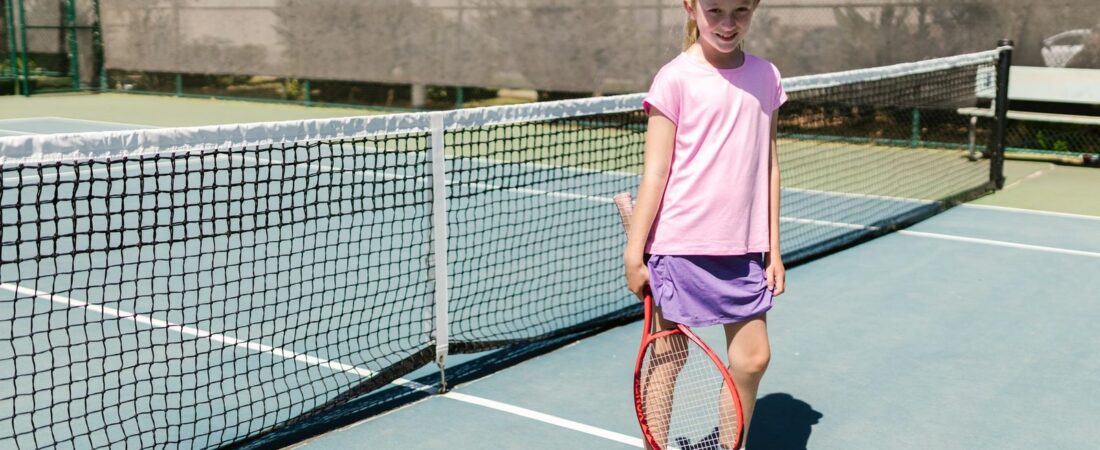
Tennis is a genuinely good sport for children. It builds coordination and balance, it can be played for eighty years, and unlike most team sports nobody sits on a bench.
It is also a sport where parents are given a great deal of confusing advice. This guide covers the practical decisions: when to start, what equipment, what the ball colours mean, and how to avoid the mistakes that make children quit.
When to start
Around four or five, children can enjoy red ball sessions, though at that age it is really coordination games with a racquet involved. Structured coaching that resembles tennis usually starts around six or seven.
The honest answer is that starting age matters far less than parents think. What matters is whether the child enjoys it enough to keep going, because ten years of moderate enjoyment beats two years of intense early progress followed by quitting.
Red, orange and green explained
Modern junior tennis uses a progression of slower balls on smaller courts, so children can rally and play points from the first session rather than spending two years failing to control a full-speed ball.
| Stage | Typical age | Court | Ball |
|---|---|---|---|
| Red | 4 to 8 | Mini court | Softest and slowest, very low bounce |
| Orange | 8 to 10 | Three-quarter court | Slightly livelier |
| Green | 10 upward | Full court | Lower compression than a standard ball |
| Yellow | 10+ once ready | Full court | Standard ball |
The point of the system is that a child can hit the ball at a comfortable height and actually construct a rally. Rushing a child to yellow ball before they can control green is the most common way to slow their development while appearing to accelerate it.
Buying the right racquet
Junior racquets are sized by length in inches, and length should follow height rather than age. The simple test: have the child hold the racquet down by their side. The head should sit just above the floor without touching it.
| Child height | Racquet length | Rough age |
|---|---|---|
| Up to 40 in | 19 in | 3 to 5 |
| 40 to 44 in | 21 in | 5 to 6 |
| 44 to 49 in | 23 in | 6 to 8 |
| 49 to 55 in | 25 in | 8 to 10 |
| 55 to 63 in | 26 in | 10 to 12 |
| Over 63 in | 27 in, adult | 12+ |
Do not buy long for them to grow into. A racquet that is too heavy or too long forces compensations in the swing that are far harder to fix later than the cost of a correctly sized frame. Tennis Warehouse maintains a detailed junior sizing guide, and the adult equivalent of all this is in guide to choosing a tennis racquet.
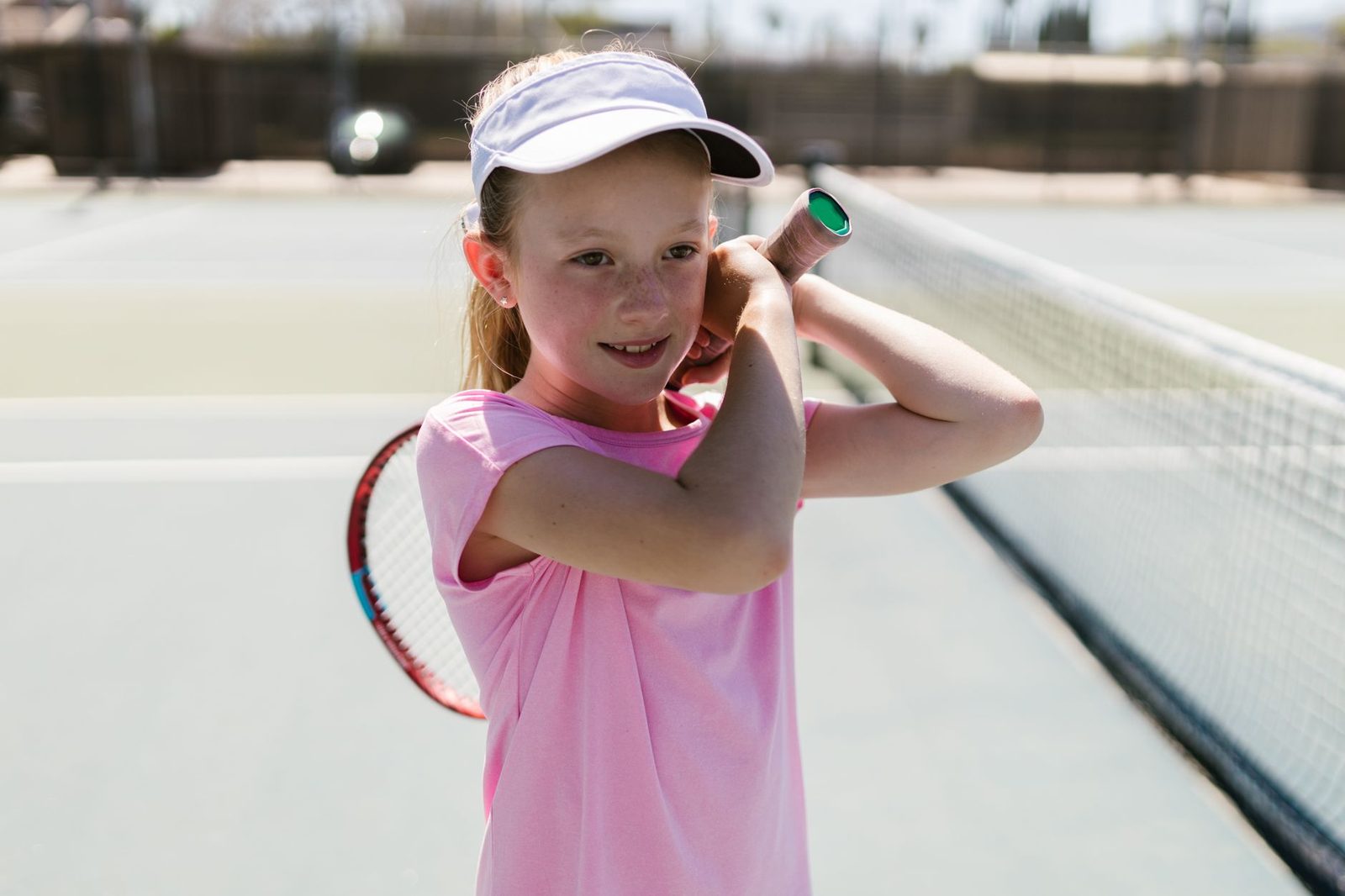
Group or private lessons?
| Group | Private | |
|---|---|---|
| Cost | Considerably lower | Higher |
| Enjoyment | Usually higher; friends matter | Depends heavily on the coach |
| Ball-striking volume | Lower per child | Much higher |
| Social development | Strong | None |
| Best for | Starting out and staying engaged | Fixing a specific technical issue |
Start with groups. Add occasional private lessons later if the child becomes genuinely keen and there is a specific thing to work on. What lessons typically cost locally is set out in this guide to tennis lesson costs in the Bay Area.
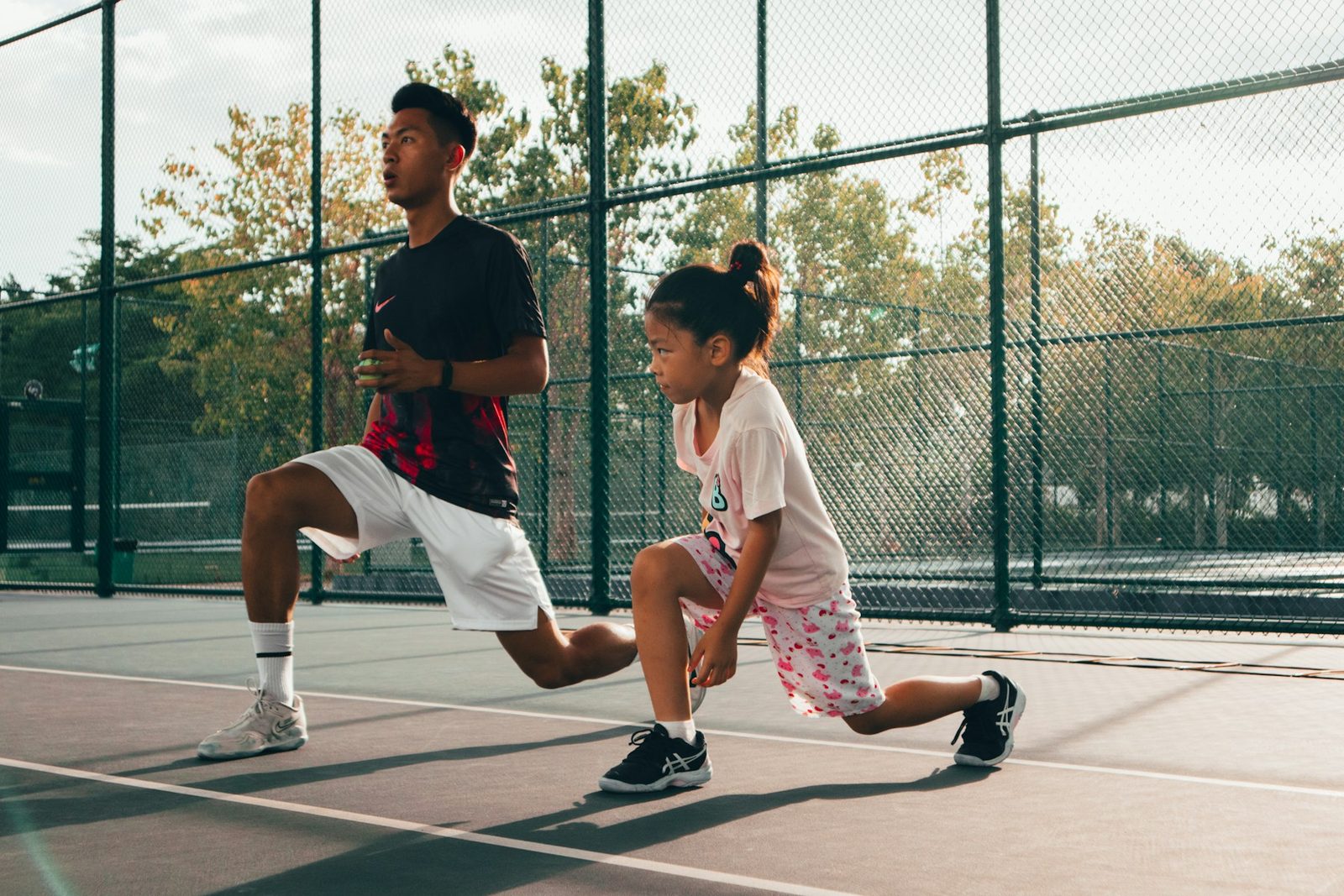
What a good junior session looks like
- Children are hitting balls most of the time, not queueing.
- The coach is positive and specific rather than either silent or shouting.
- There are games and points, not only drills.
- Equipment matches the children: right balls, right court size, right racquets.
- The children look like they want to be there.
That last point is the one to weight most heavily. Technical detail matters less at this stage than whether a child leaves wanting to come back. What to look for in a coach more generally is covered in this guide to choosing a tennis coach.
The parent’s job
This is worth being direct about, because it is where well-meaning parents most often go wrong. The longer-term version of the same problem is covered in this guide to why juniors quit tennis and how to keep them playing.
- Handle the logistics: sessions, kit, food, sleep. That is a real contribution.
- Ask whether they enjoyed it, not whether they won.
- Do not coach from the sideline. It confuses the child and undermines the coach. If you are thinking of coaching them yourself, this guide to coaching your own child in tennis covers how to do it without damaging the relationship.
- Let the coach handle technique so the child hears one voice.
- Resist comparing them to other children, out loud or otherwise.
- Keep your own competitive feelings well away from their tennis.
Children are extremely good at detecting which outcome makes a parent happy, and they will optimise for it. If winning makes you visibly pleased, losing becomes frightening, and frightened children stop enjoying the sport.
When competition starts
At some point a keen child will want to enter a tournament. Expect them to lose early, expect it to sting, and expect that to be a normal part of it rather than a verdict on their ability.
The competitive structure, the levels and how ratings work in Northern California are covered in this junior tennis pathway in Northern California. The short version: start at the entry level, play locally before travelling, and prioritise the number of matches played over the number won.
Keeping it fun for the long run
Most children who quit tennis do so between eleven and fourteen, and it is usually because it stopped being enjoyable rather than because they lacked ability. Fun is not the opposite of development; it is the mechanism of it, because it is what produces the hours.
Let them play other sports too. Early specialisation in a single sport carries genuine injury and burnout risks, and the general athleticism built elsewhere transfers back. The movement foundations in these tennis footwork drills are worth more at twelve than any refinement of technique.
Frequently asked questions
What age can a child start tennis?
Around four or five for the earliest red ball sessions, which are really coordination and fun. Structured coaching usually begins around six or seven. There is no advantage in starting formal lessons earlier than a child is interested.
What is red, orange and green ball tennis?
A progression of slower, lower-bouncing balls on smaller courts. Red is for roughly ages four to eight on a mini court, orange for around eight to ten on a three-quarter court, and green for about ten upward on a full court before moving to standard balls.
What size racquet does my child need?
Size by height, not age. Held down by their side, the racquet head should sit just above the floor without touching. Roughly: 19 to 21 inches for the youngest, 23 inches around six to eight, 25 inches around eight to ten, 26 inches from ten, and 27 inches once they are adult height.
Should I buy a bigger racquet for them to grow into?
No. It is the most common and most damaging equipment mistake in junior tennis. A racquet that is too long forces a child to compensate with their whole body, and those compensations are difficult to remove later.
How do I know if my child actually enjoys it?
Watch whether they want to go, not whether they perform well. Children who enjoy the sessions will keep improving; children who are performing to please a parent usually stop within a couple of years, often around the point it gets competitive.
Written by Claire Carter, a former WTA Tour professional and full-time teaching pro at Bay Club Redwood Shores, where she has coached juniors and adults for more than twelve years.
Image credits: Fei Chao (Unsplash), Mario Gogh (Unsplash), RDNE Stock project (Pexels), nik radzi (Unsplash). Photographs are illustrative.