
Returning Serve
Tennis Return of Serve: How to Neutralise a Big Server
How to return a big serve: ready position, where to stand, the block return, and how to attack a second serve. A practical guide with drills.

Jump to a section
Want to improve your game?
Private and group coaching with Claire Carter in Redwood Shores.
Book a lessonMore tennis guides
Technique, gear, fitness and match play, written from the coach’s chair.
Browse all guidesThe return is the second most important shot in tennis and the least practised. Most players spend an hour a week on their forehand and almost no time on the shot they play on half of all points.
It is also the shot where technique matters least and decision-making matters most. Where you stand, how early you split, and how much you shorten your swing will do more for your returning than any grip change.
01Start from a proper ready position
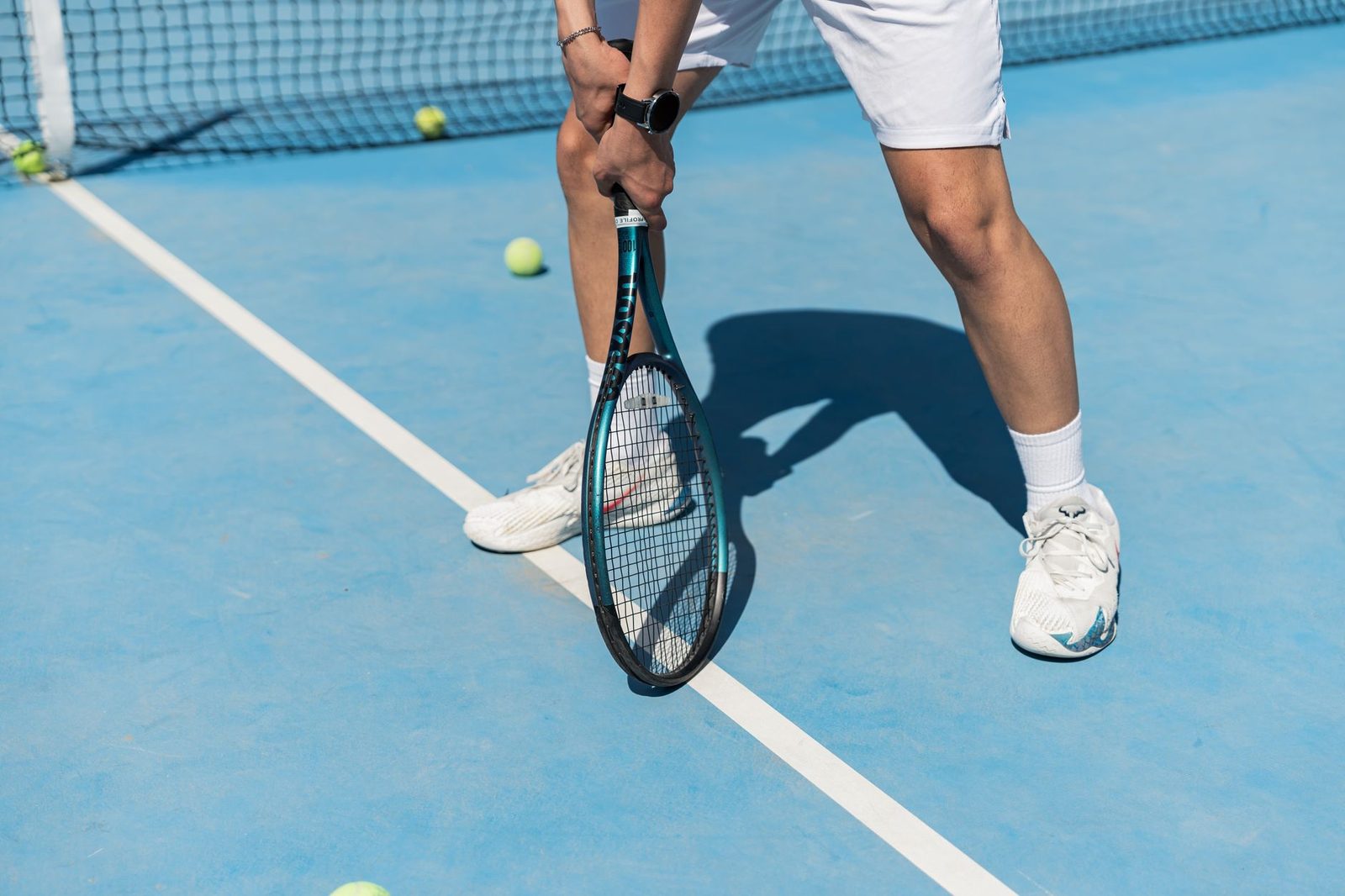
Weight forward on the balls of your feet, knees bent, racquet held out in front at around waist height. Hold a continental or neutral grip so you can go to either side without changing anything.
The split step is non-negotiable. Time it so you land as the server strikes the ball, not before and not after. Land early and you are flat-footed again by contact; land late and you have not loaded at all.
02Where to stand
| Situation | Where to stand | Why |
|---|---|---|
| Standard first serve | About 3 ft behind the baseline | Balanced default position |
| Very big first serve | A further 1 to 2 steps back | Extra milliseconds turn a shank into a clean block |
| Second serve | On or inside the baseline | Takes time away and pressures the server |
| Heavy kick second serve | Step in and take it early, or well back | The worst place is right where it bounces up |
| Doubles return | Slightly closer in | You need a low return, not a deep one |
Moving between those positions between points is not indecision, it is the plan. Servers notice, and it puts doubt into their second serve.
03The block return
Against genuine pace there is no time for a swing, so do not attempt one. The block return uses the server’s power: a very short take-back, a firm continental grip, contact out in front, and a short follow-through through the line of the ball.
- Split step as they strike.
- Turn the shoulders. That is your entire backswing.
- Meet the ball in front with a firm wrist.
- Push through the contact toward your target.
- Recover immediately; you are still in a defensive point.
Aim deep and down the middle unless you have a specific reason not to. A deep neutral return takes away the server’s angle and buys you time to get back into position.
04The chip and slice return
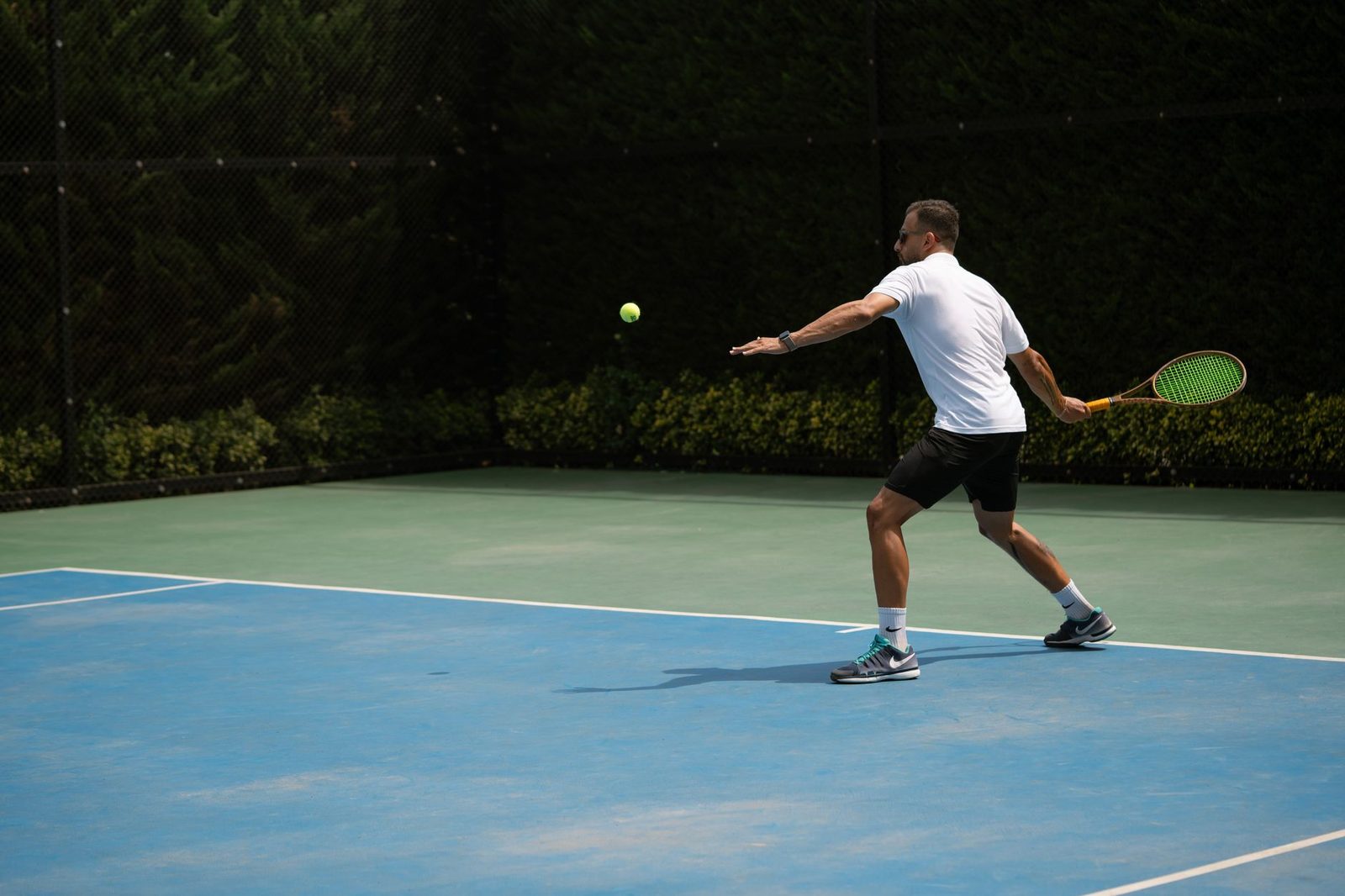
On the backhand side especially, a slice return is often more reliable than a drive. It is a shorter motion, it handles pace well, and the low skidding bounce is awkward for a server following the ball in.
Use the same continental grip, start the racquet slightly above the ball and cut down and forward through it. Keep the face only slightly open, because too much opening floats the ball and invites an attack. There is a fuller breakdown of the motion in this slice backhand technique guide.
05Attacking the second serve
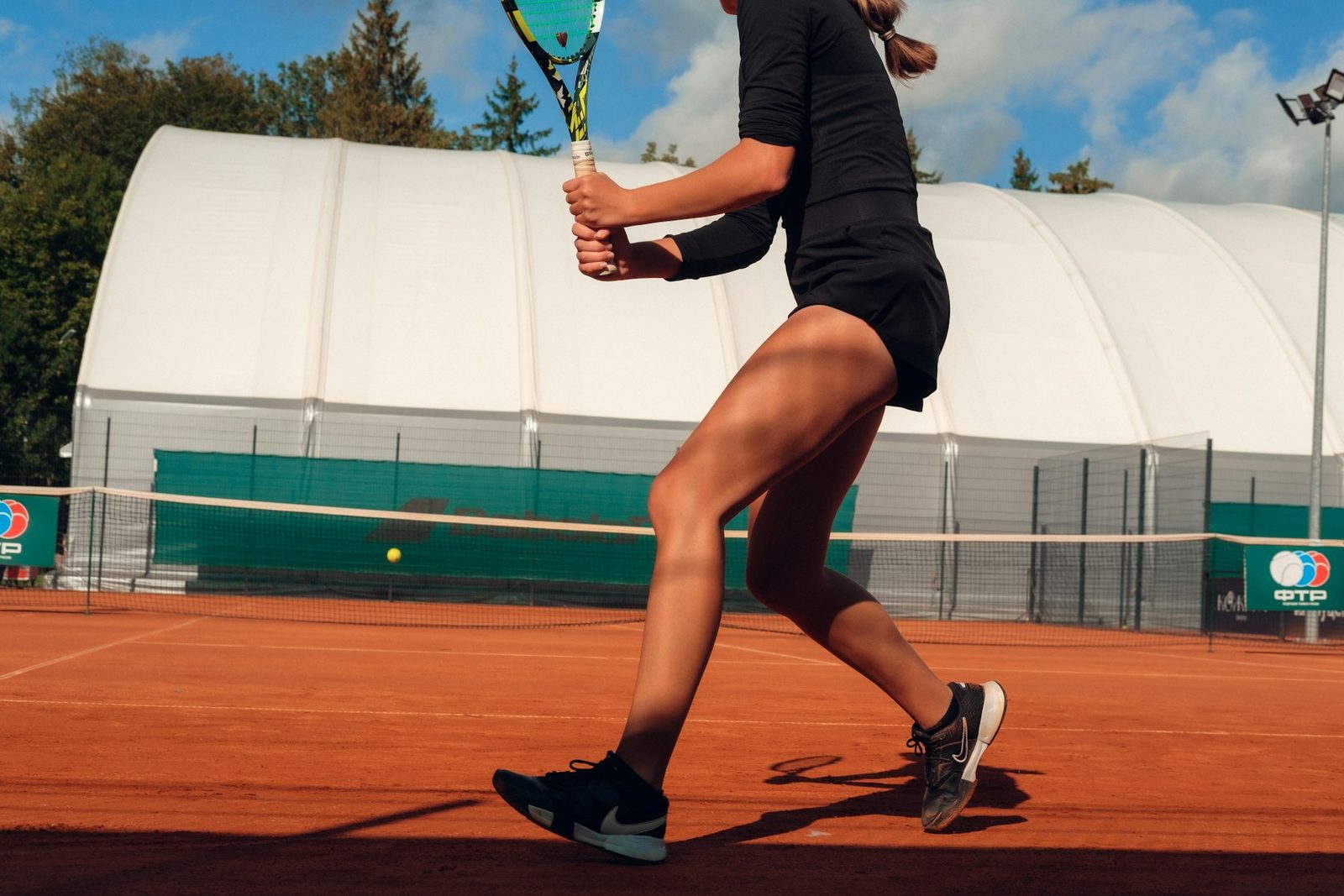
This is where matches are won at club level, and where most players leave points on the table. A second serve is usually slower, shorter and more predictable than a first serve, and yet most returners receive it from the same deep position.
| Second serve type | Best reply | Target |
|---|---|---|
| Short and slow | Step in and drive | Deep to the weaker side |
| High kick | Take it early on the rise, or move well back | Deep down the middle |
| Wide slice | Slice back crosscourt | Low and wide, opening the court |
| Nervous double-fault risk | Stand in and look aggressive | Any deep ball; the pressure does the work |
06Reading the server
Most club servers telegraph. Watch the toss rather than the racquet: a toss well out to the hitting side usually means slice, a toss over the head means kick, and a toss further in front means a flat serve.
- Track patterns across a match. Many players serve the same ball on big points.
- Notice the ball toss height change between first and second serve.
- Watch the stance. A pronounced platform stance often precedes a kick serve.
- If they hit the same spot three times in a row, cheat toward it.
Patrick Mouratoglou’s coaching notes on the return cover the reading side of this in more depth.
07Returning in doubles
The doubles return is a different shot with a different goal. You are not trying to hit a winner or even to hit deep. You are trying to get the ball low, past the net player, so your team can move forward.
- Aim crosscourt and low, over the lowest part of the net.
- Depth matters less than height. A low short return beats a deep floating one.
- Watch the net player. If they are poaching, go down the line once to make them honest.
- The lob return is underused and works well against a team that closes hard.
The whole exchange is a battle for the net, and the return is the first move in it. That positional logic is set out in this guide to doubles court positioning, and the net player opposite you is doing exactly what is described in this poaching in tennis doubles.
08Three drills
- Shadow blocks. Twenty split-step-and-block repetitions each side, no ball. Builds the shortened motion.
- Two-position returns. Alternate a deep first-serve return with a step-in second-serve return, ten each. Trains the movement between positions.
- Target returns. Cones deep down the middle and deep crosscourt. Ten returns to each. Depth is the metric, not pace.
None of this works without the split step timing that underpins everything, which is covered in these tennis footwork drills. And understanding what the server is trying to do makes reading them far easier: this step-by-step tennis serve technique guide explains it from the other side of the net.
09Frequently asked questions
Start roughly three feet behind the baseline, positioned between the two most common serve locations. Against a big first serve, move back another step or two to buy reaction time. On the second serve, step well inside the baseline to take time away from the server.
Shorten the backswing drastically and block the ball back using the server’s own pace. Use a continental grip so you do not need to change grips, split step as they strike, and make contact out in front. Trying to take a full swing is the most common reason returns get shanked.
Hold a continental or a neutral grip in the ready position so you can go either way. Committing to a forehand grip before the ball is struck costs you the split second you need if the serve goes to your backhand.
On second serves, and on any first serve that lands short. A weak second serve is the single biggest scoring opportunity in a match, and most club players waste it by returning from the same deep position they used for the first serve.
Shadow the split step and short block motion, twenty repetitions each side. A wall works too: stand close and take balls early with a compact punch, which trains exactly the shortened swing a return needs.

Claire Carter
Former WTA Tour Professional & Teaching Pro
Claire Carter is a former WTA Tour professional and a full-time teaching professional at Bay Club Redwood Shores, where she has coached juniors and adults for more than twelve years.
More about ClaireImage credits: Ahmed (Pexels), Alexander Lunyov (Unsplash), Isabella Mendes (Pexels), Shahin Mren (Pexels), cottonbro studio (Pexels), mehrab zahedbeigi (Pexels). Photographs are illustrative.