
Practice
Tennis Volley Drills: 10 Drills for a Sharper Net Game
Ten tennis volley drills for solo, partner and coach-fed practice, plus the grip, footwork and the three technique errors that cause floating volleys.

Jump to a section
Want to improve your game?
Private and group coaching with Claire Carter in Redwood Shores.
Book a lessonMore tennis guides
Technique, gear, fitness and match play, written from the coach’s chair.
Browse all guidesA volley is a punch, not a swing. That single idea fixes more net games than any other piece of coaching, and almost every drill below exists to reinforce it.
These ten drills are grouped by what you have available: a wall and nothing else, a partner, or a coach feeding balls. Work through the technique section first if your volleys tend to float.
01The three things every good volley has
| Element | What it should look like | Common error |
|---|---|---|
| Grip | Continental, both sides, roughly 4/10 pressure | Squeezing the handle, or switching to an eastern forehand grip |
| Contact point | Out in front, racquet head above the wrist | Contact beside or behind the body, racquet head dropped |
| Motion | Short punch forward, shoulder-driven | Full backswing, then a chop down through the ball |
The continental grip is non-negotiable at the net. It is the only grip that lets you play forehand and backhand volleys without changing anything, and at net speed there is simply no time to change. Find it by holding the racquet like a hammer, with the base knuckle of your index finger on the top bevel.
Grip pressure matters as much as grip shape. Squeeze too hard and the racquet face stops absorbing pace, so the ball rockets off the strings and long. Around four out of ten is the number most coaches use, firm enough that the wrist does not collapse on contact, loose enough that the strings can do their job.
02Solo volley drills
1. Wall rapid-fire
Stand 8 to 10 feet from a wall and volley continuously, alternating forehand and backhand. Thirty seconds on, thirty off, six rounds. The wall returns the ball faster than any partner will, so a backswing becomes physically impossible. That is the point.
2. Racquet-face catches
Bounce a ball on the strings, then catch it dead by softening the hand at the moment of contact. The same soft-hand skill produces the drop shot, covered in this tennis drop shot guide. Twenty catches each side. This teaches the soft hands needed for a drop volley, which is pure feel and cannot be muscled.
3. Shadow split-steps
No ball. Split step, step diagonally forward into a volley position, recover. Twenty repetitions each side. Volleys are lost in the footwork far more often than in the hands.
03Partner volley drills
4. Volley to volley
Both players at the net, roughly at the service line, keeping a controlled rally going. Count consecutive volleys and try to beat the number next time. Start at half pace: this is a control drill, not a duel. Twenty in a row is a reasonable first target, and most pairs are surprised how hard that is when neither player is allowed to end the rally.
5. Volley versus groundstroke
One player at the net, one at the baseline. The baseline player drives, the net player absorbs and redirects. Swap after two minutes. This is the most match-realistic volley drill there is.
6. Two-target accuracy
Place cones in both corners of the opposite service box. Your partner feeds, you alternate targets. Ten to each side. Accuracy at the net beats power at the net in virtually every situation.
7. The low-ball drill
Your partner feeds deliberately low, at or below net height. You must lift the ball with a slightly open racquet face and bent knees rather than scooping with the wrist. Unglamorous, and it wins matches.
04Coach-fed and pressure drills
8. The approach ladder
Start at the baseline. Hit an approach shot off a feed, move in, volley, then close and finish with a second volley. Three balls per repetition, eight repetitions. This trains the whole transition rather than an isolated shot, which matters because almost nobody arrives at the net from a standing start in a real match. The first volley is nearly always struck while still moving forward, and that is the version worth rehearsing.
9. Reaction volleys
The coach feeds quickly and unpredictably to both sides from close range. No time to think, only to react. Twenty balls, then rest. This is the drill that exposes a grip change you did not know you were making.
10. Poach and finish
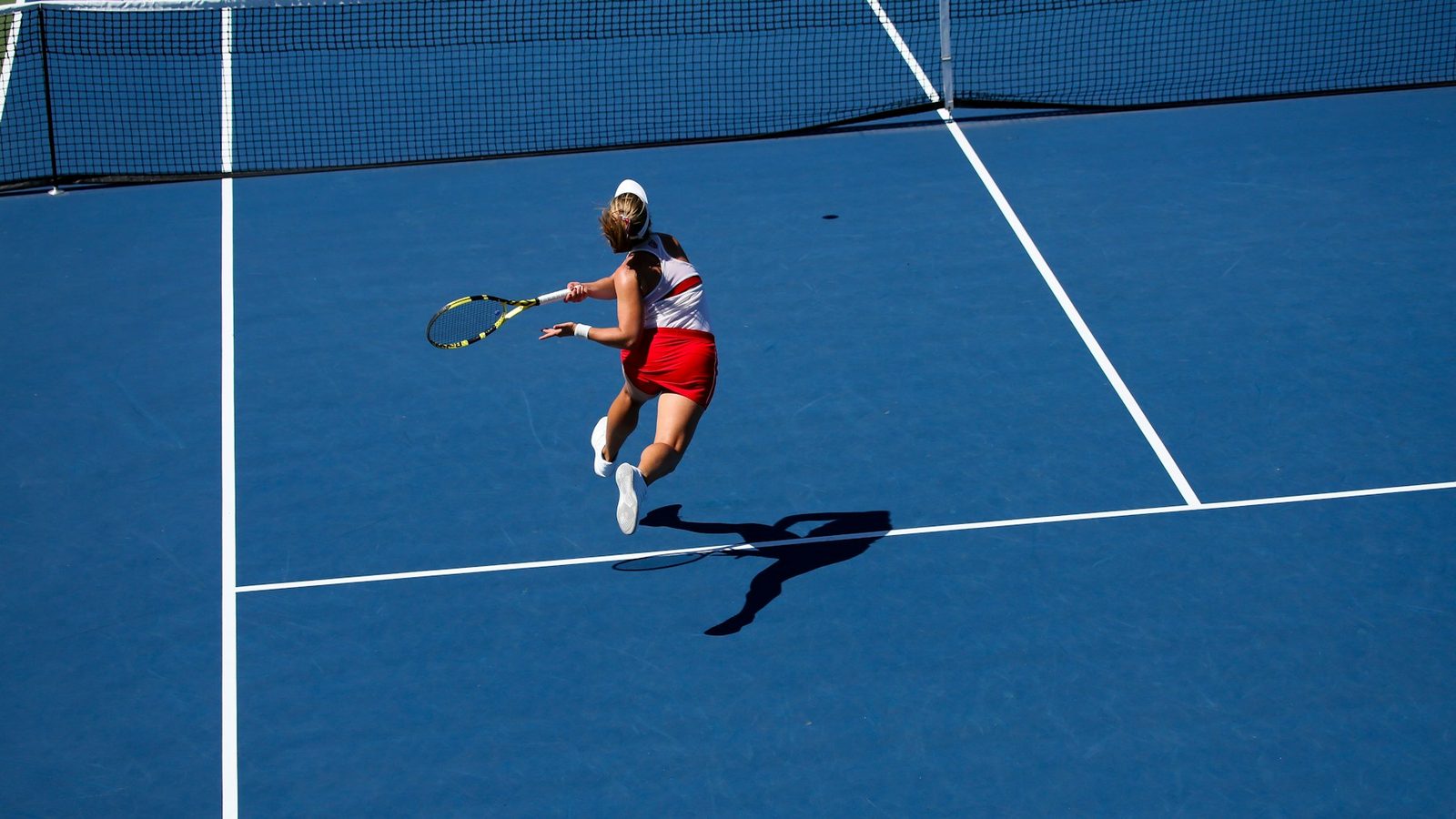
From a doubles net position, cross on a feed and volley into the open court. Coming in directly behind your serve is a related pattern, covered in this serve and volley guide. It combines movement and contact under the same pressure you will face in a match. Knowing where to stand before the ball arrives is the other half of the job, and that is covered in doubles court positioning. The tactical thinking behind when to make that move is covered in this complete guide to poaching in tennis doubles.
05Which drill should you do?
| Your problem | Best drill | Practice time |
|---|---|---|
| Volleys float long | Wall rapid-fire | 10 min, twice a week |
| No touch on drop volleys | Racquet-face catches | 5 min, daily |
| Late to the ball | Shadow split-steps | 5 min before every session |
| Volleys land short | Two-target accuracy | 15 min, weekly |
| Struggle with low balls | The low-ball drill | 10 min, weekly |
| Panic at the net in matches | Reaction volleys | 10 min, weekly |
06Three errors that ruin a good net game
- Standing too far back. Getting there in the first place is covered in this approach shot and transition guide. The service line is the worst place on the court to volley from. Either commit and close to within about seven feet of the net, or stay back.
- Skipping the split step. Without it you are flat-footed at the moment the ball is struck, and every volley becomes a lunge.
- Swinging. If your racquet goes behind your shoulder, the ball has already gone past your best contact point.
Getting to the net safely usually starts with a low approach, and the slice backhand technique guide covers the shot that sets it up. For a broader technical breakdown of grip and net positioning, the International Tennis Federation publishes coaching material used by national federations worldwide.
07A 15-minute net session
| Time | Drill | Focus |
|---|---|---|
| 0 to 3 min | Shadow split-steps | Footwork and balance |
| 3 to 6 min | Racquet-face catches | Soft hands and feel |
| 6 to 11 min | Wall rapid-fire or volley to volley | Compact punch |
| 11 to 14 min | Two-target accuracy | Placement under fatigue |
| 14 to 15 min | Easy volleys | Cool-down |
If you have no partner and no coach this week, the wall covers most of it. If you are newer to the game and the net still feels intimidating, start with these tennis drills for beginners and come back to this page. The volley progressions in these tennis backboard drills for solo practice run on the same principles, and the free tennis instructional videos show the technique at full speed. To have your net game assessed properly in person, book a session at Bay Club Redwood Shores.
08Frequently asked questions
The continental grip, for both forehand and backhand volleys. It lets you hit both sides without changing grip, which matters because at the net you rarely have time to switch. Hold it at roughly four out of ten pressure, firm but not clenched.
Almost always because the racquet is taken back too high and then chopped down through contact. Keep the racquet head above the wrist, make contact in front of the body, and punch forward rather than downward.
Yes. A wall is excellent for volleys. Stand 8 to 10 feet away and hit continuous controlled volleys. The fast rebound forces the compact, no-backswing motion that good volleying depends on.
For most volleys, around 6 to 9 feet from the net. Closer and you are vulnerable to the lob; further back and you will be taking balls below net height around the service line, which is the hardest place to volley from.
Ten to fifteen focused minutes twice a week produces noticeable change within a month. Volleys respond faster to practice than groundstrokes because the motion is short and there is less to coordinate.

Claire Carter
Former WTA Tour Professional & Teaching Pro
Claire Carter is a former WTA Tour professional and a full-time teaching professional at Bay Club Redwood Shores, where she has coached juniors and adults for more than twelve years.
More about ClaireImage credits: Bhong Bahala (Unsplash), Chris wade NTEZICIMPA (Pexels), Gonzalo Facello (Unsplash), Jim Weatherford (Unsplash), Muammar Jefri (Pexels), Ridwan Nugraha (Pexels), Valentin Balan (Unsplash). Photographs are illustrative.