
Backhand
The Two-Handed Backhand: Technique and Drills
Two-handed backhand technique: grips for both hands, why the non-dominant hand does most of the work, footwork, common mistakes and four drills.

Jump to a section
Want to improve your game?
Private and group coaching with Claire Carter in Redwood Shores.
Book a lessonMore tennis guides
Technique, gear, fitness and match play, written from the coach’s chair.
Browse all guidesThe two-handed backhand is the more forgiving of the two backhands and by some distance the more common. It is easier to time, easier to control, and far easier on high balls.
It is also widely misunderstood in one specific way: most club players drive it with the wrong hand. Fixing that single thing transforms more backhands than any other adjustment.
01The grips
Two hands means two grips, and they do different jobs.
| Hand | Position | Grip | Job |
|---|---|---|---|
| Right (bottom) | Nearest the butt cap | Continental | Stabilises and guides the racquet face |
| Left (top) | Above the right hand | Eastern or semi-western forehand | Drives the shot and generates topspin |
The mental model that helps most: your top hand is hitting a left-handed forehand, and your bottom hand is along for the ride. If your top hand grip feels like a backhand grip, it is probably wrong.
02The non-dominant hand does the work
This is the central point. Coaching estimates vary, but the non-dominant hand is generally reckoned to do around 60 per cent of the work on a two-hander, and some coaches push that figure considerably higher.
When the dominant bottom hand takes over, the shot becomes a stiff push. The racquet head stops accelerating, the topspin disappears, and the ball floats. Almost every weak two-hander at club level has this cause.
03Preparation and footwork
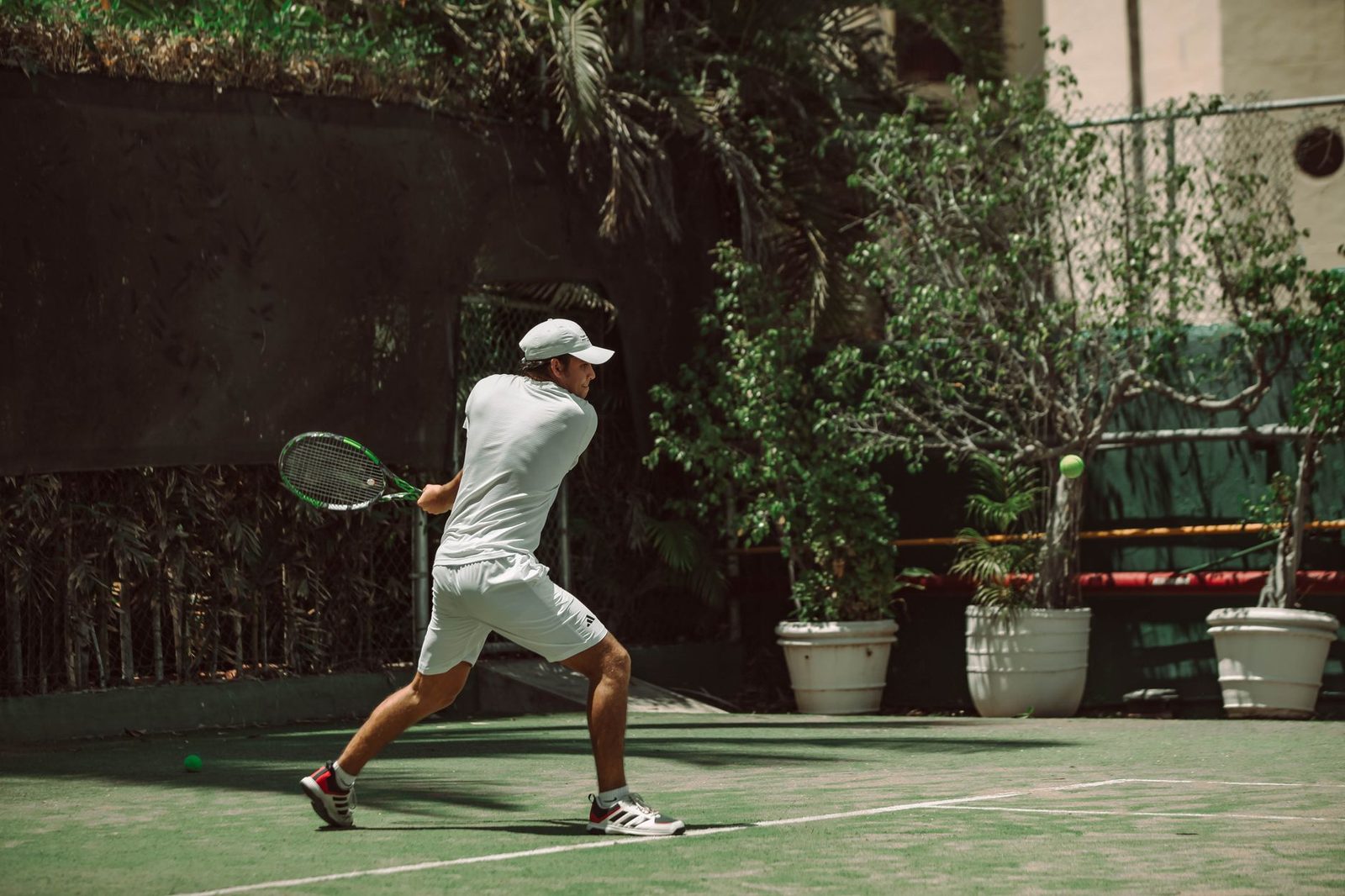
Turn early and turn fully. Because both hands are on the racquet, your shoulders have to rotate further than on a forehand to get the racquet back, which means late preparation punishes the backhand harder.
- Recognise the ball and turn the shoulders immediately.
- Load into the outside leg, the left leg for a right-hander.
- Take small adjusting steps to set the contact point.
- Step in or rotate open depending on the ball and your balance.
- Contact out in front, around hip height.
- Finish with the racquet over the front shoulder, then recover.
04The swing itself
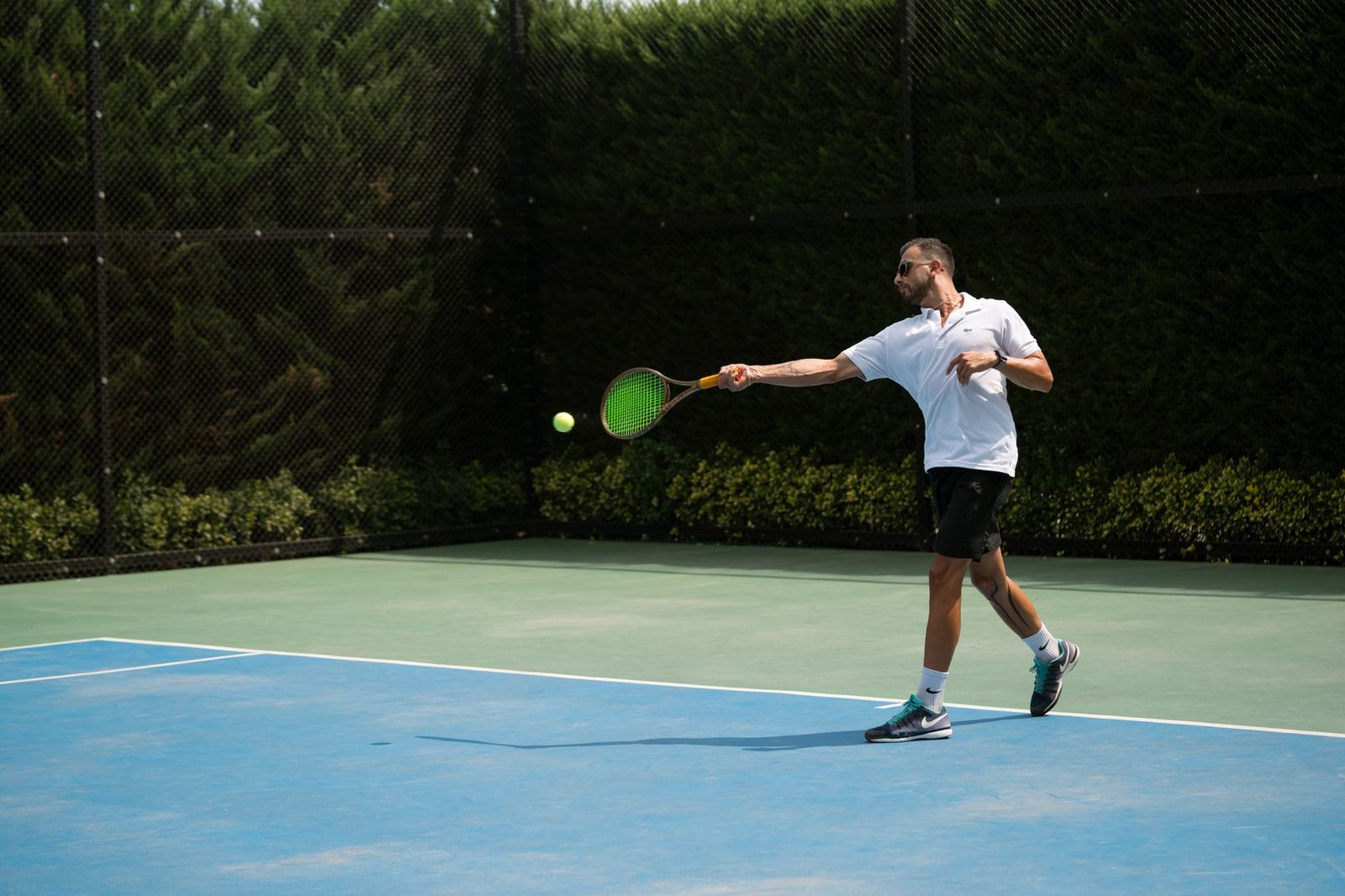
Drop the racquet head slightly below the ball, then drive up and forward with the top hand. The follow-through finishes high, over the front shoulder, with both hands still on the racquet.
Keep the arms relatively close to the body through the swing. Two-handers that reach away from the body lose leverage and become inconsistent, particularly on wide balls where the temptation to stretch is strongest.
05Open stance or step in?
The two-hander works from both stances, and knowing which to use is worth as much as any technical cue. Stepping in transfers weight forward and suits balls you have time to move to. Open stance lets you hit while still moving and recover faster, which suits wide balls and fast exchanges.
Most club players default to stepping in on everything, which works until they are rushed, at which point they arrive late and cramped. Practising the open-stance version deliberately fixes a surprising number of backhand errors that look technical but are actually positional.
06One hand or two?
| Two-handed | One-handed | |
|---|---|---|
| Ease of learning | Easier; more stable | Harder; demands precise timing |
| High balls | Manageable | Difficult without a slice |
| Reach on wide balls | Shorter | Longer |
| Returning big serves | Better; compact and stable | Harder |
| Transition to slice | Needs a grip and hand change | Natural; same grip family |
| Best for | Most players, and nearly all juniors starting out | Players with excellent timing who want reach and variety |
The single-handed version of the shot is covered in this one-handed backhand guide. If you already have a two-hander, keep it. Switching costs a year of disruption for a benefit most club players never recover. Add a reliable slice instead, which gives you most of the variety a one-hander offers at a fraction of the cost.
07Common mistakes
| Mistake | Symptom | Fix |
|---|---|---|
| Dominant hand dominates | Stiff, flat, floating ball | Drill non-dominant-hand-only backhands |
| Late shoulder turn | Late contact; balls go crosscourt weakly | Turn before the ball bounces on your side |
| Arms away from the body | Inconsistent, especially on wide balls | Keep elbows in; move the feet instead of reaching |
| No leg load | Arm-only shot with no depth | Load the outside leg deliberately |
| Standing up through contact | Balls fly long | Stay down; finish before you rise |
| Avoiding high balls | Backing off or slicing everything | Take it earlier, or step back and let it drop |
08Four drills
1. Non-dominant hand only
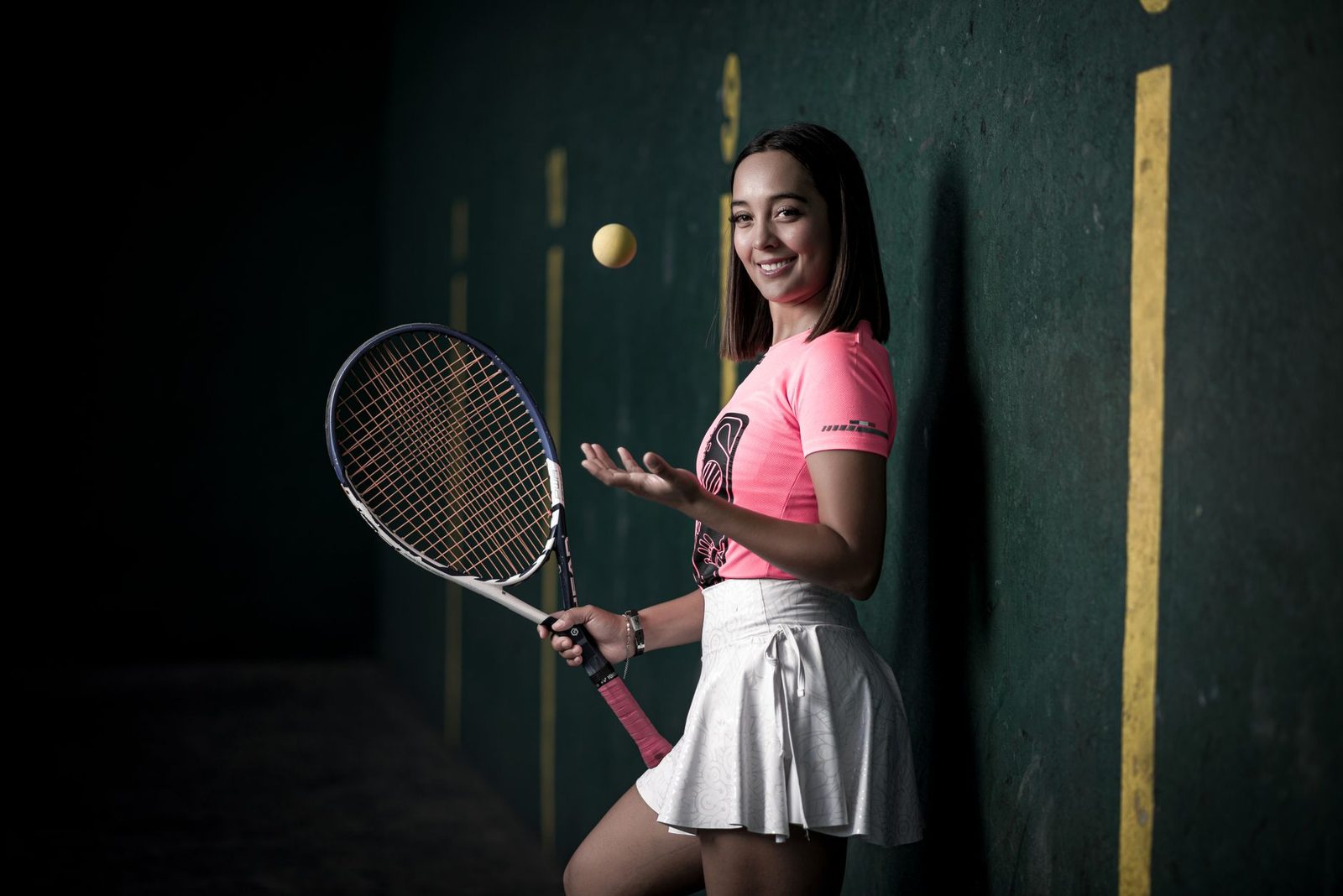
Hit backhands using only your top hand on the racquet, from a gentle feed. Twenty balls. It feels weak and awkward for about five minutes, then it feels like the shot you have been trying to hit. This is the single most valuable backhand drill there is.
2. Shadow turns
No ball. Turn, load, swing, finish over the shoulder. Fifteen repetitions. Focus entirely on how far the shoulders rotate.
3. Crosscourt consistency
Rally backhand to backhand crosscourt. Ten in a row, then twenty. The backhand crosscourt exchange is the most common pattern in club singles, so it is worth more practice than most players give it.
4. High-ball decisions
Have a partner feed deliberately high. Alternate taking the ball early on the rise and stepping back to let it drop. The point is to build the decision, not to master one response.
09When to slice instead
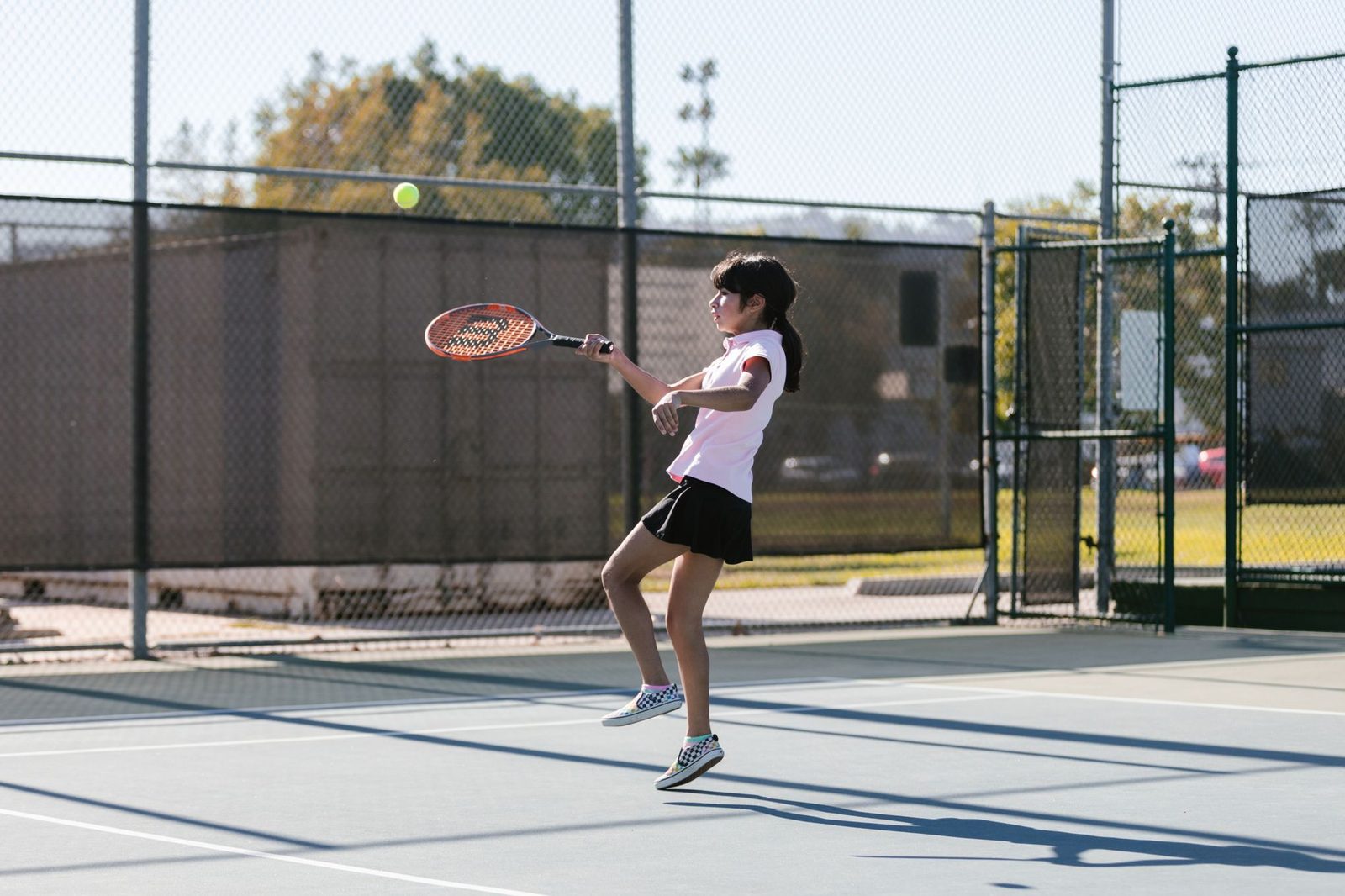
Having a two-hander does not mean using it on everything. A slice is the better choice on genuinely high balls, on low balls, when you are stretched, and when approaching the net. The full technique is in this slice backhand technique guide.
For a second technical perspective on grips and swing shape, My Tennis HQ has a photo-led breakdown of both backhand types. And the forehand counterpart to this guide is here: complete guide to forehand technique.
Solo repetition works well for the backhand because the motion is compact; these tennis backboard drills include alternating groundstroke drills that build it. If the shot keeps breaking down under pressure rather than in practice, that is a different problem, and tennis mental game strategies addresses it.
10Frequently asked questions
The bottom hand, your dominant hand, holds a continental grip. The top hand, your non-dominant hand, holds an eastern or semi-western forehand grip. Think of the top hand as hitting a left-handed forehand if you are right-handed.
The non-dominant top hand does most of it, commonly estimated at around 60 per cent or more. The dominant bottom hand mainly guides and stabilises. Players who drive with the bottom hand tend to produce a stiff, blocked shot with little topspin.
Two hands. The extra hand adds stability and control while strength and timing develop, and it makes high balls far more manageable. A one-handed backhand is a legitimate choice later, but it is considerably harder to learn well.
Usually because the non-dominant arm is passive and the shoulders do not turn enough. Try hitting backhands with the non-dominant hand alone for a few minutes; most players immediately feel which muscles should be driving the shot.
Take it earlier, before it climbs above shoulder height, or step back and let it drop into your strike zone. The third option is a slice, which is often the highest-percentage reply to a genuinely high ball.

Claire Carter
Former WTA Tour Professional & Teaching Pro
Claire Carter is a former WTA Tour professional and a full-time teaching professional at Bay Club Redwood Shores, where she has coached juniors and adults for more than twelve years.
More about ClaireImage credits: Gonzalo Facello (Pexels), Pitt Rom (Pexels), RDNE Stock project (Pexels), ROMAN ODINTSOV (Pexels), Sebastian Angarita (Pexels), Shahin Mren (Pexels), The Drink Break (Unsplash). Photographs are illustrative.