
Lob
How to Beat a Lobber and Hit a Better Overhead
How to beat a lobber in tennis: overhead technique, the scissor kick, positioning, taking the lob early, and the tactics that stop the pattern.

Jump to a section
Want to improve your game?
Private and group coaching with Claire Carter in Redwood Shores.
Book a lessonMore tennis guides
Technique, gear, fitness and match play, written from the coach’s chair.
Browse all guidesEvery club has one: the player who lobs everything. They are frustrating, they are effective, and they are beatable, but not by hitting harder or complaining about it.
Beating a lobber comes down to three things: taking the ball earlier, hitting a reliable overhead, and placing that overhead so lobbing you stops being a profitable strategy.
01Why lobbing works so well at club level
- Most players have a weak overhead, so the lob has a low cost.
- Backpedalling is awkward and produces off-balance contact.
- A lob resets the point, undoing your good work in one shot.
- It is physically easy to hit, so it stays reliable when your opponent is tired.
That last point matters. A lobber does not get worse in the third set. If your answer to the lob is effort rather than technique, you will lose the war of attrition.
02Fix the footwork first
Almost every missed overhead is a footwork error. The moment the ball goes up, turn sideways and point at it with your non-hitting hand. That single habit improves more overheads than any change to the swing.
- Turn sideways immediately. Do not stay square to the net.
- Point at the ball with your off hand. It tracks the ball and sets your shoulders.
- Side-step or cross-step back. Never backpedal facing forward.
- Get behind the ball so you are hitting forward, not reaching backward.
- Strike with the arm fully extended, contact well out in front.
Backpedalling is how players fall over. Turning and moving sideways is both faster and safer.
03The overhead itself
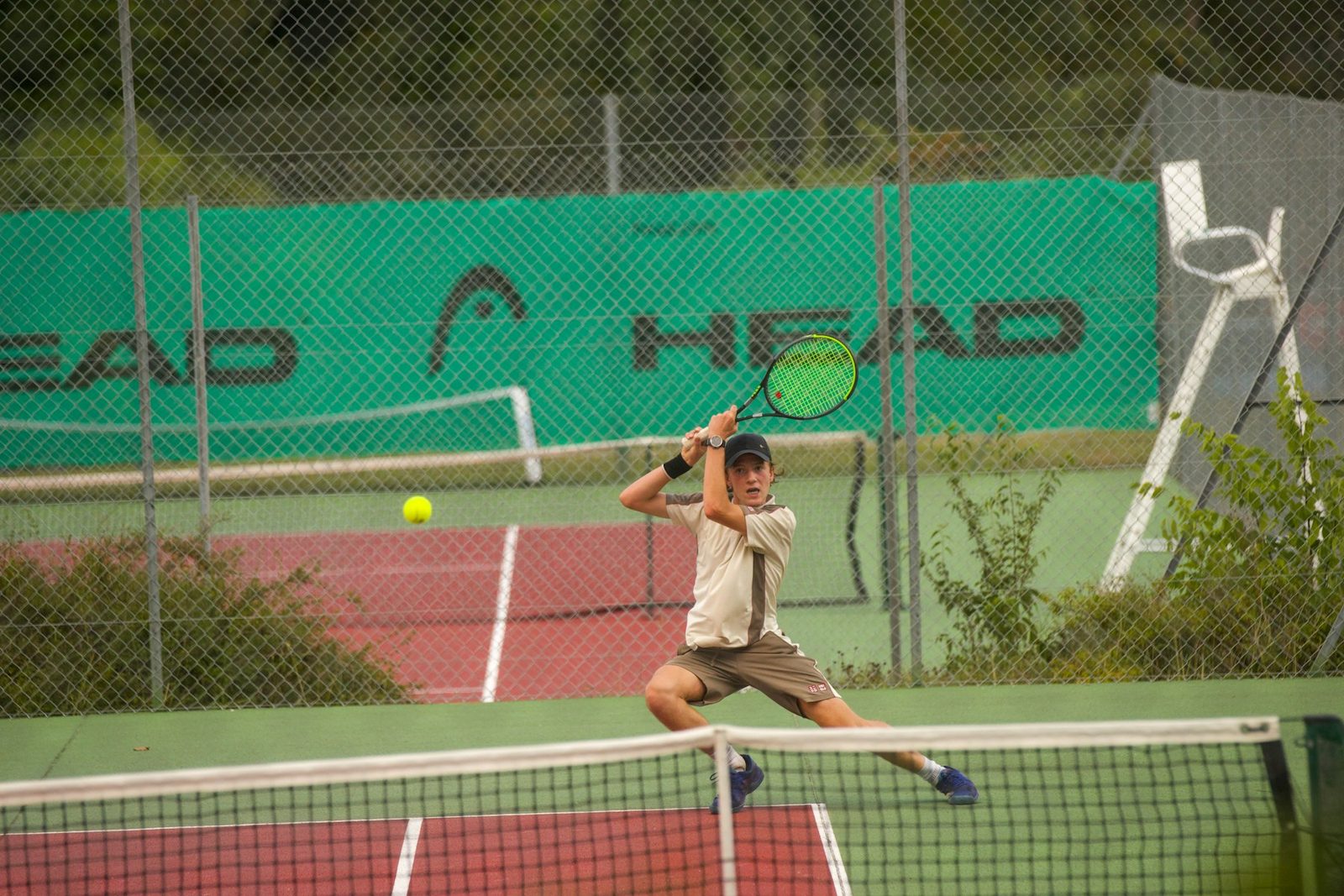
The smash is a compressed serve. Continental grip, racquet up early into a trophy position, contact at full extension, forearm pronating through the ball.
| Fault | Cause | Fix |
|---|---|---|
| Hitting into the net | Contact behind the head | Get further behind the ball |
| Smashing long | Face too open, swinging up not through | Contact in front, swing forward and down |
| Mis-hitting the frame | Ball not tracked; no off-hand point | Point at the ball throughout |
| Weak, arm-only smash | No shoulder turn or leg drive | Turn sideways; load the back leg |
| Falling backwards | Backpedalling | Side-step, or use the scissor kick |
Because the motion is a serve, improving one improves the other. The mechanics in this step-by-step tennis serve technique guide apply almost directly.
04The scissor kick, for deep lobs
When the lob is deep enough that you are moving backwards at contact, the scissor kick is what keeps you balanced. Turn sideways with your dominant leg behind you, racquet up, off hand pointing. As you swing, the back leg springs up and the front leg kicks forward, counterbalancing your backward momentum. You land on the front leg.
It looks athletic and it is genuinely a control technique rather than a flourish: without it, hitting while moving backwards means striking off balance.
05Take the lob before it becomes a lob
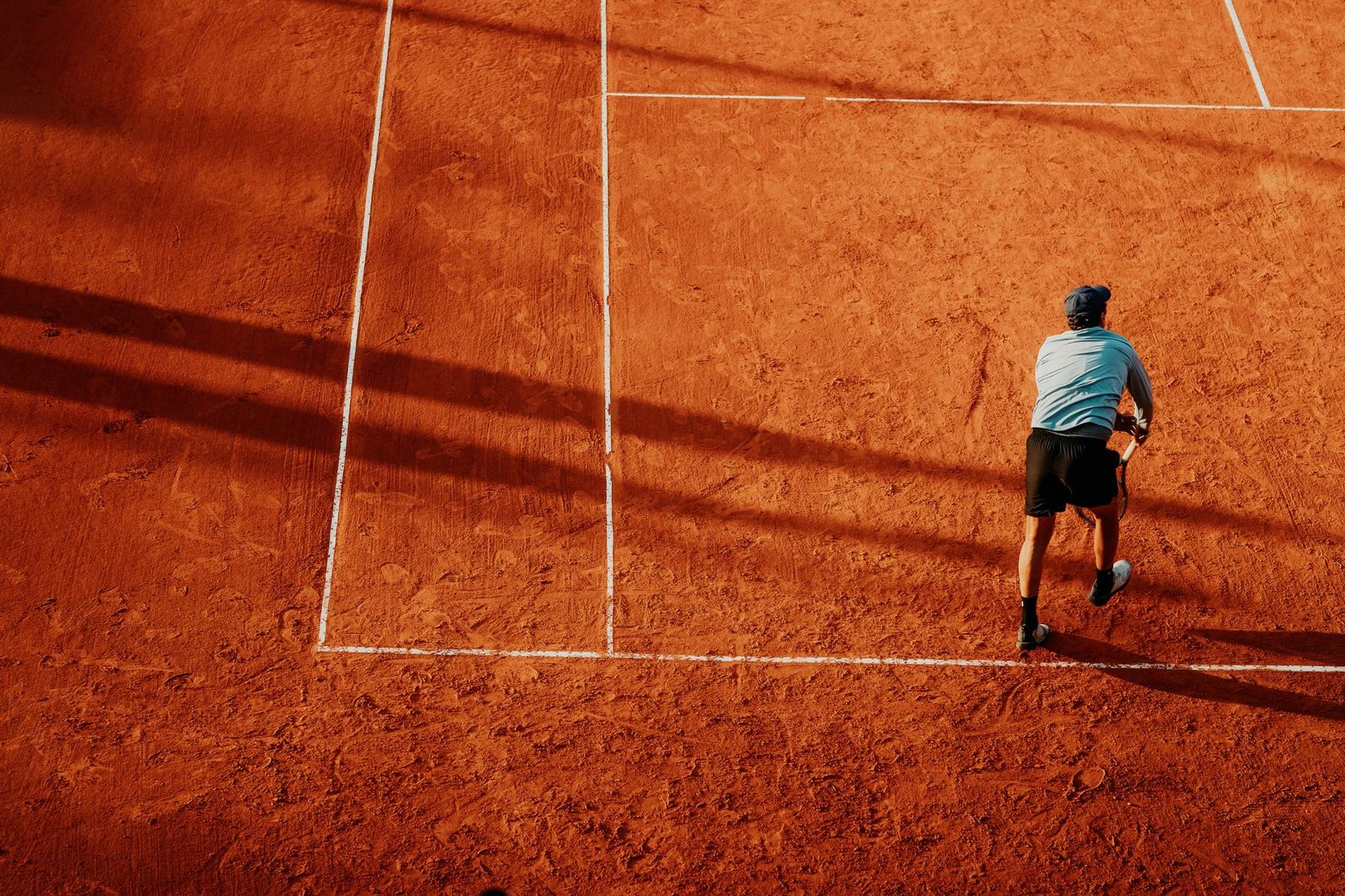
The best answer to a lobber is often not the overhead at all. If you can reach the ball at head height or below while it is still travelling, take it as a swinging volley or a high volley. That removes the bounce, removes their recovery time, and puts the pressure straight back.
- Watch for the giveaway: a very open racquet face and a low-to-high lifting motion.
- Move forward on a lob that is clearly short rather than waiting for it.
- At shoulder height, a swinging volley is often easier than an overhead.
- In doubles, call it early so your partner covers the space behind you.
06Placement that stops the pattern
A smash hit straight back at a lobber is a smash they can lob again. Placement is what makes them stop.
| Your position | Target | Reason |
|---|---|---|
| Comfortable, inside the service line | Short angle, either side | They cannot lob from a wide, low position |
| Deep, behind the service line | Deep down the middle | Reduces your error risk and keeps you in the point |
| Stretched or off balance | Deep and high, then recover | Reset rather than gamble |
| Facing a doubles pair | At the feet of the closer player | No time to lob a low ball |
The strategic point: you do not have to win the point with the smash. You have to make the lob unprofitable. Two or three deep, well-placed overheads will usually end the pattern for the rest of the match.
07Learn to lob yourself
One of the quieter reasons players hate lobbers is that they cannot lob back. If the only reply you have to being pinned at the baseline is another baseline ball, your opponent has no reason to change anything.
- Offensive topspin lob: hit low to high with a full swing, over a net player who has closed too tight. It dips and is nearly unreturnable.
- Defensive lob: open face, high and deep down the middle. Buys the time to recover position.
- Disguise it. Prepare as if for a normal groundstroke and change only at the last moment.
- Aim over the backhand shoulder. Overheads are much harder on the non-dominant side.
Adding a lob to your own game changes how opponents position against you, which is the point. It is also the fastest way to understand why the shot is so effective when it is used against you.
08Lob defence in doubles
In doubles the lob is aimed at the net player and the damage is positional as much as tactical. Agree in advance who takes the overhead in the middle, usually the player with the better smash.
If a lob goes over your partner, you switch sides rather than both chasing it. And if lobs keep landing, take one step back rather than abandoning the net entirely. The full positional framework is in this guide to doubles court positioning.

For the technical background on the shot itself, the overview of the smash is a reasonable primer. Building the overhead properly, though, is mostly repetition, and it is one of the shots that improves fastest with a private lesson in Redwood Shores.
09Frequently asked questions
Take the lob out of the air where you can, so it never bounces and never gains time. Improve the overhead so lobbing you carries a cost. And place your smashes deep and wide rather than trying to end every one, so the pattern stops being profitable for them.
The continental grip, the same as the serve. It lets the forearm pronate naturally through contact, which produces both power and the ability to angle the ball rather than only hitting straight.
Only if it is very deep and you have been pushed well behind the service line. Letting it bounce gives your opponent time to reset. Where you can reach it comfortably, take it in the air.
It is the technique for smashing a deep lob while moving backwards. You turn sideways, load the back leg, then jump so the back leg drives up and the front leg kicks forward, counterbalancing your backward momentum so you can strike the ball cleanly and land safely.
Usually because of footwork rather than the swing. Backpedalling instead of turning and side-stepping leaves you off balance and reaching. Turn sideways immediately, point at the ball with your non-hitting hand, and get behind it.

Claire Carter
Former WTA Tour Professional & Teaching Pro
Claire Carter is a former WTA Tour professional and a full-time teaching professional at Bay Club Redwood Shores, where she has coached juniors and adults for more than twelve years.
More about ClaireImage credits: Ahmed (Pexels), Daniel Neves Cotta (Pexels), Gera Cejas (Pexels), Gonzalo Facello (Pexels), Nicolò Canu (Unsplash), Vinh (Unsplash), cottonbro studio (Pexels). Photographs are illustrative.