
Coaching
Coaching Your Own Child in Tennis: What Works
The rewards and pitfalls of coaching your own child at tennis, how to keep the parent and coach roles separate, and when to hand over to someone else.

Jump to a section
Want to improve your game?
Private and group coaching with Claire Carter in Redwood Shores.
Book a lessonMore tennis guides
Technique, gear, fitness and match play, written from the coach’s chair.
Browse all guidesPlenty of good tennis players were first taught by a parent, and plenty of children quit the sport because of one. The difference is rarely tennis knowledge. It is almost always about whether the two roles stayed separate.
This is not an argument against coaching your own child. It is a guide to doing it in a way the relationship survives.
01What works well, and when
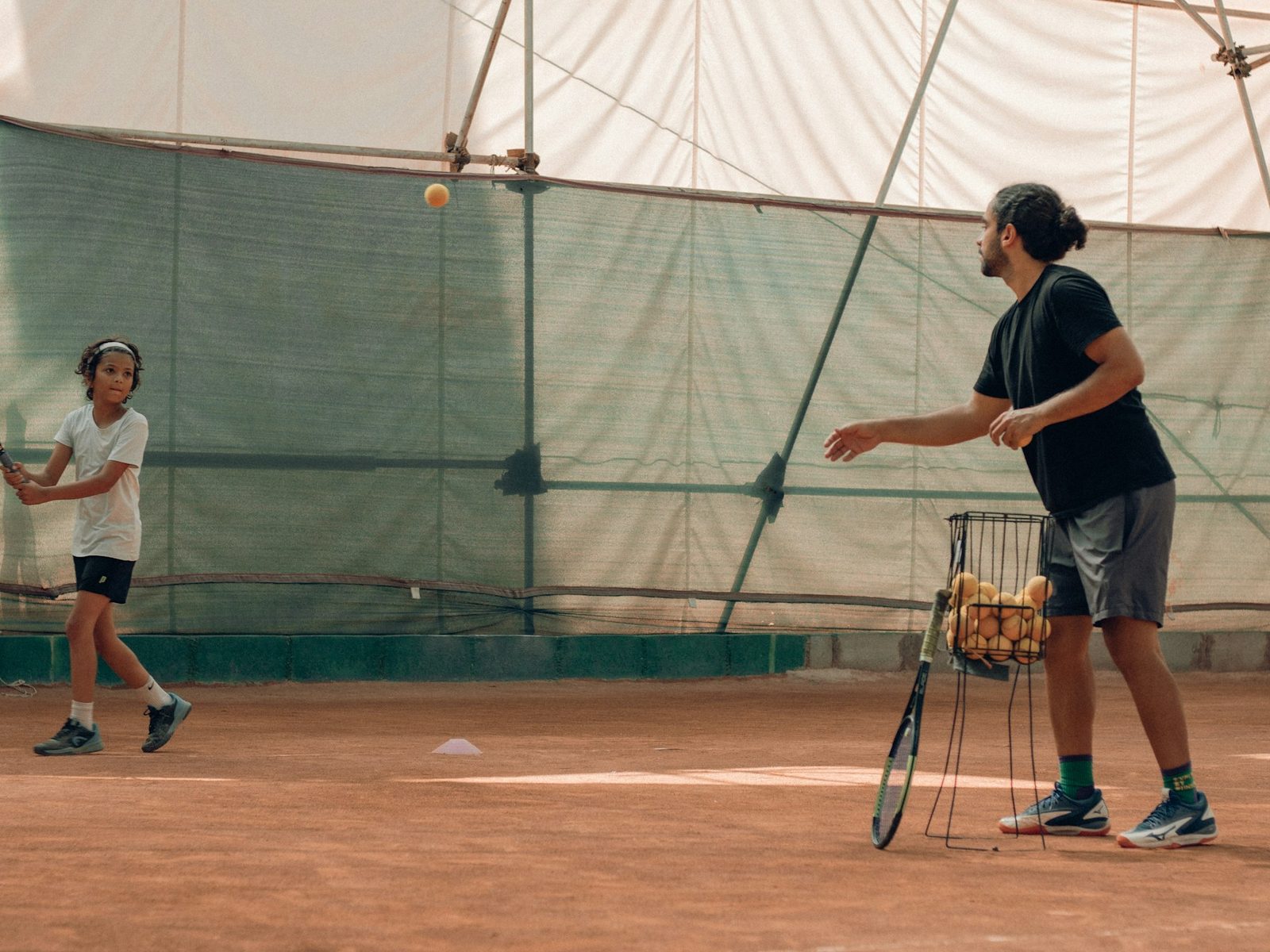
The early years are the sweet spot. When a child is four to eight, the job is getting them comfortable with a racquet, keeping it fun and providing volume. That does not require a qualification, and a parent has an advantage a coach never will: unlimited access and no hourly rate.
- You can play little and often, which suits young children far better than a weekly lesson.
- You already know how to keep your own child engaged.
- It is free, which matters when nobody knows yet whether they will stick with it.
- It is time together, which is a good in itself regardless of the tennis.
The ball progression makes this genuinely achievable for a non-coach: red and orange balls are slow enough that a parent can feed and rally productively. The formats are explained in this parent’s guide to starting a child in tennis.
02The role confusion problem
This is the central risk and it is worth stating plainly. A coach can be disappointed in your performance. A parent should not be. When one person is both, children frequently cannot tell which reaction they are getting, and they assume the worse one.
What that produces is a child who plays to avoid parental disappointment rather than because they enjoy it. That works for a few years and then stops working, usually somewhere around thirteen, which is exactly when most juniors quit.
| Situation | The coach’s job | The parent’s job |
|---|---|---|
| After a bad shot | One technical cue | Nothing |
| After a lost match | Note one thing to work on, later | “Did you enjoy it?” |
| During a match | Nothing; it is against the rules | Water, snacks, calm presence |
| In the car home | Nothing | Talk about something else |
| At dinner | Nothing | Be a parent |
Notice how much of the coach column is empty. That is deliberate.
03Practical boundaries that work
- Tennis talk ends at the court gate. The car and the dinner table are parent territory.
- Ask permission to coach. “Do you want a tip, or do you just want to hit?” is a genuinely useful question.
- Keep the other parent out of it. One coaching voice is enough, and families where the second parent focuses on everything except tennis tend to do better.
- Never coach during a match. It is against the rules and it adds pressure at the worst moment.
- Let them lose without commentary. Silence after a defeat is usually the most supportive thing available.
The second one is worth trying immediately. Children who are asked whether they want feedback engage with it very differently from children who simply receive it.
04You do not need to be a good player
A frequent worry among parents is that their own tennis is not good enough to help. At the early stages that matters far less than people assume.
What a young child needs is someone who will feed them balls patiently, keep the session light, and turn up regularly. None of that requires a good forehand. The transitional balls make it easier still, because a red or orange ball travels slowly enough that almost any adult can rally with a six-year-old.
What you should not do is teach technique you are unsure about. Guessing at mechanics embeds faults that are hard to remove later, and it is the one area where a small amount of professional input early saves a great deal of correction afterwards.
05Keep it fun for longer than feels necessary
The most common parental error is getting serious too early. Technical correction at seven produces marginal gains and a measurable drop in enjoyment, and enjoyment is what generates the hours that actually make a player.
- Play games with scoring rather than running drills.
- Let them beat you sometimes, and do not be obvious about it.
- Keep sessions short. Twenty engaged minutes beats an hour of drift.
- Finish while they still want to carry on.
- Let them play other sports; early specialisation carries real burnout risk.
06When to hand over
There is usually a clear moment, and most parents notice it slightly after it arrives.
| Signal | Why it matters |
|---|---|
| They start competing seriously | Technical demands rise beyond most parents’ knowledge |
| Tennis is causing friction at home | The relationship matters more than the forehand |
| They stop listening to you specifically | Normal developmentally; not a failure |
| You are correcting more than encouraging | The ratio has tipped the wrong way |
| You are unsure whether advice is right | Guessing at technique embeds faults |
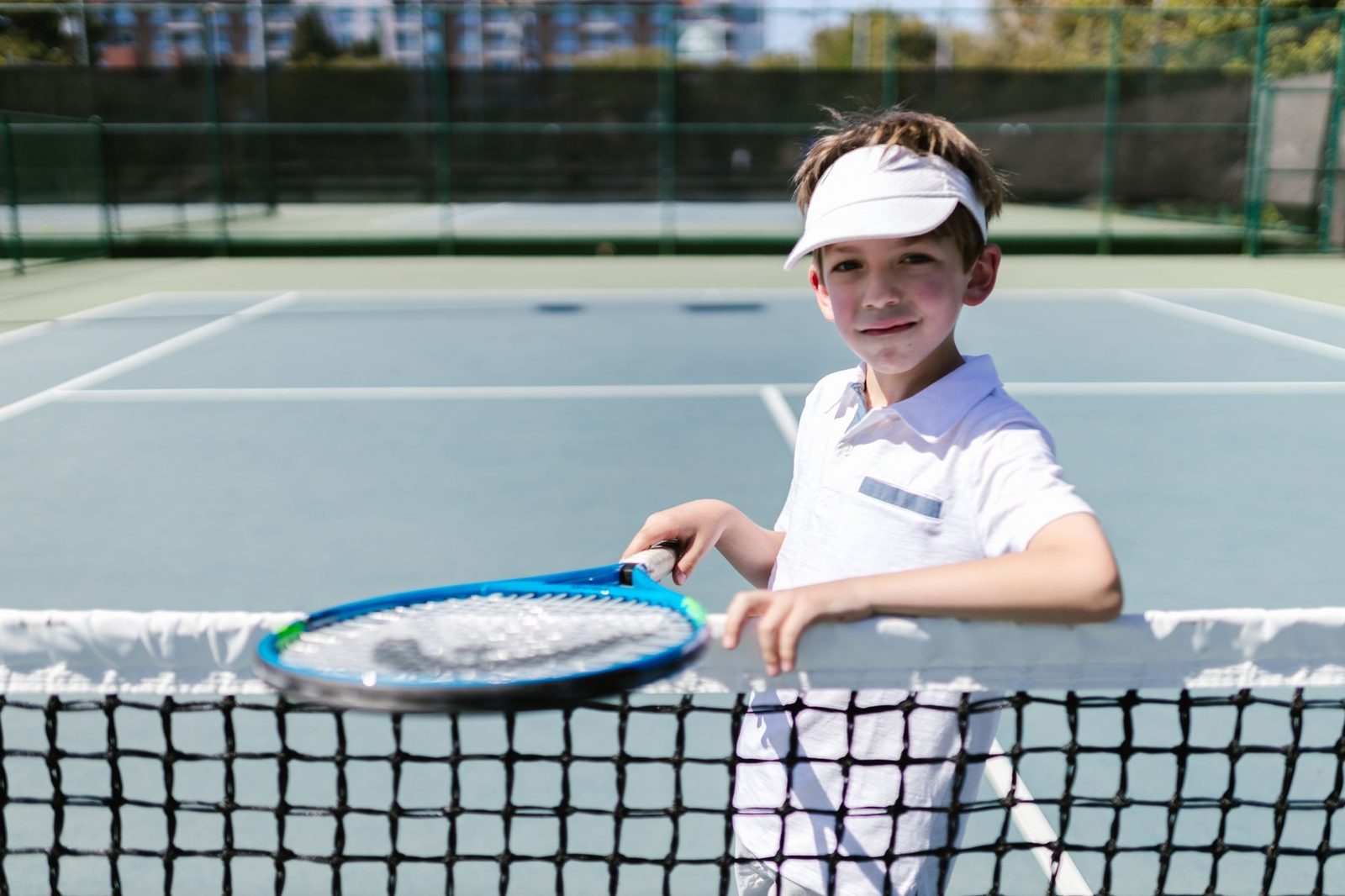
Handing over is not giving up. The most useful thing many tennis parents do is stop coaching and start being reliably supportive instead, which is a harder job than it sounds. What to look for in a coach is covered in this guide to choosing a tennis coach, and what it typically costs is in this guide to tennis lesson costs in the Bay Area.
07Staying useful after you hand over
Your role does not end; it changes, and the new version genuinely matters. The evidence on what actually keeps children in the sport is in this guide to keeping juniors in tennis.
- Handle logistics: sessions, kit, food, sleep. This is a real contribution.
- Let the coach own technique so your child hears one voice.
- Ask about enjoyment rather than results.
- Support other players’ children too; it changes the atmosphere.
- Keep your own competitive feelings well away from their tennis.
The Association for Applied Sport Psychology has a useful discussion of whether to coach your own child that is worth reading before you decide either way.
08The measure that matters
Not their ranking, not their technique, and not whether they beat the child from the next street. The measure is whether they still want to play in five years.
Almost every decision in this article follows from that. If the answer to “do they ask to go?” is yes, you are doing it right, whatever their forehand looks like. Where the competitive pathway leads, if they want it, is set out in this junior tennis pathway in Northern California.
09Frequently asked questions
It can work well at the early stages, when the job is mostly making tennis fun and getting repetitions in. It gets harder as the child becomes competitive, because the parent and coach roles start to conflict.
Blurring the two roles. A child who cannot tell whether they are talking to a parent or a coach loses the safe space that a parent is supposed to be, and that is a much bigger loss than any technical benefit.
When your child starts competing seriously, when the technical demands exceed your knowledge, or when tennis conversations start causing friction at home. Any one of those is a good reason.
Some families manage it well, usually by drawing very clear boundaries: tennis talk happens on court and stops at the car door. It also helps enormously if the other parent stays out of the coaching entirely.
Watch whether your child asks to play or has to be asked. Enthusiasm that comes from them is the signal that the balance is right. If you are the one initiating every session, that is worth paying attention to.

Claire Carter
Former WTA Tour Professional & Teaching Pro
Claire Carter is a former WTA Tour professional and a full-time teaching professional at Bay Club Redwood Shores, where she has coached juniors and adults for more than twelve years.
More about ClaireImage credits: Dakota Oubré (Unsplash), Lesli Whitecotton (Unsplash), RDNE Stock project (Pexels), Rezli (Unsplash), Vasiliki Theodoridou (Unsplash). Photographs are illustrative.