
Fitness
Tennis Shoulder Pain: Causes, Prevention and Recovery
Why serving causes shoulder pain, how impingement and rotator cuff problems develop, and the prevention work that keeps players on court. Not medical advice.


Jump to a section
Want to improve your game?
Private and group coaching with Claire Carter in Redwood Shores.
Book a lessonMore tennis guides
Technique, gear, fitness and match play, written from the coach’s chair.
Browse all guidesShoulder pain is the second most common complaint in club tennis after the elbow, and it has one dominant cause: serving. The serve is the most physically demanding motion in the sport and it accounts for a very large share of the strokes played in any match.
This is general information for players, not medical advice. If you have shoulder pain, see a doctor or physiotherapist for assessment. Nothing here replaces that.
01What tends to go wrong
The shoulder is the most mobile joint in the body, and that mobility is bought at the cost of stability. It relies on small muscles, principally the rotator cuff, to hold the arm bone centred in a shallow socket while much larger muscles move it at speed.
Under repeated overhead load, two things commonly happen. The tissue in the space beneath the top of the shoulder blade gets compressed, which is broadly what people mean by impingement. And the rotator cuff tendons themselves become irritated from repeated high-speed deceleration, because they do as much work slowing the arm down after contact as speeding it up before.

02Why the serve is the culprit
| Factor | Why it loads the shoulder | What helps |
|---|---|---|
| Arm-only serve | The shoulder does work the legs and trunk should share | Build the serve from the ground up |
| High serving volume | Cumulative load with no adaptation time | Split serve practice across days |
| Poor scapular control | The shoulder blade does not rotate out of the way | Upper back and scapular strengthening |
| Weak rotator cuff | Nothing decelerates the arm after contact | Band work, twice weekly |
| Limited thoracic mobility | The mid-back cannot rotate, so the shoulder over-reaches | Thoracic rotation drills |
| Sudden increase in play | Load outpaces tissue adaptation | Build volume gradually |
The first row matters most. A serve powered by the legs and trunk spreads the work across the whole kinetic chain; a serve powered by the arm concentrates it in the one joint least able to cope. The sequence is set out in this step-by-step serve technique guide.
03The prevention work that actually helps
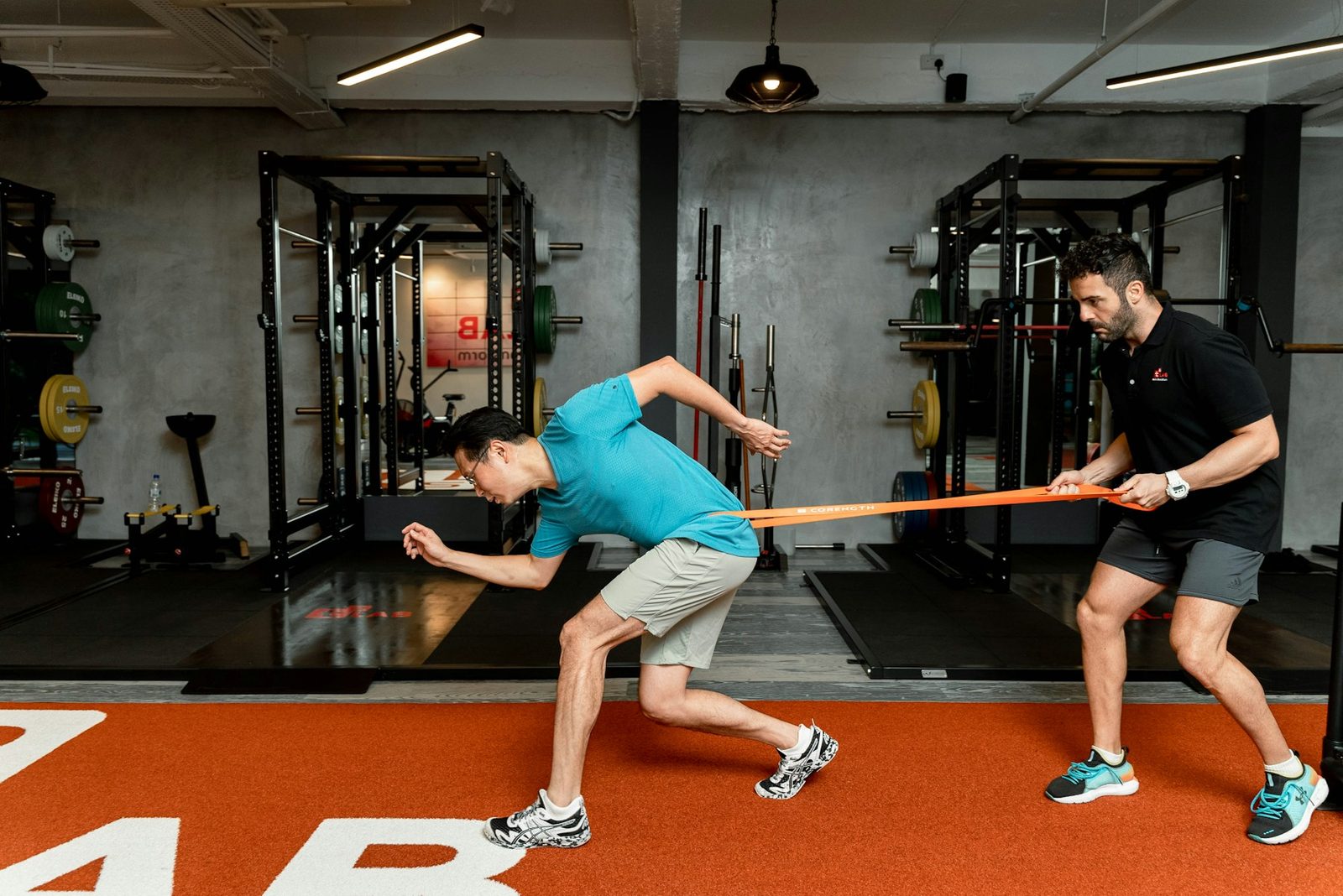
Ten minutes, twice a week, with a resistance band. It is the least interesting recommendation in this article and comfortably the highest value.
- External rotation. Elbow tucked to your side, rotate the forearm outward against the band. 3 sets of 15 each arm.
- Internal rotation. The same movement inward, to keep the joint balanced. 3 x 15.
- Band pull-apart. Arms forward, pull the band apart across your chest. 3 x 15, for the upper back.
- Wall slides. Forearms on a wall, slide upward keeping contact. 3 x 10, for overhead control.
- Prone Y raise. Face down, raise the arms in a Y. 3 x 12, for the lower trapezius.
Slow and controlled beats heavy. These are small stabilising muscles and they respond to quality repetitions rather than load.
04Do not neglect the upper back
The rotator cuff gets all the attention, but the shoulder blade is what it works from. If the scapula cannot rotate and tilt properly as the arm goes overhead, the space the tendons pass through narrows.
Rows, pull-aparts and any horizontal pulling movement build the muscles that control it. Thoracic mobility work matters too, because a stiff mid-back forces the shoulder to find range it does not have. Both fit naturally into the programme in this off-court tennis fitness training.

05Warm the shoulder up before you serve
Almost nobody does this, and it is close to free. Four minutes of band work and arm circles before you start serving prepares the exact tissue you are about to load hardest.
- Arm circles, forward and backward, gradually increasing range.
- Band external rotations, one light set.
- Thoracic rotations, ten each side.
- Progressive serving: start at half pace and build over five or six serves.
- Never start a match or a practice session with a full-power first serve.

06Managing serve volume
Serving load is cumulative across a week, not a session. Two hundred serves in one session followed by six days off is harder on the shoulder than the same number spread across three days.
| Pattern | Risk | Better approach |
|---|---|---|
| A single long serving session weekly | Higher | Split across two or three days |
| Tournament with several matches a day | High | Prepare with multi-match practice |
| Sudden return after a long break | High | Rebuild serve volume over weeks |
| Regular moderate serving | Lower | Maintain year-round where possible |
The same principle applies to the elbow, and for the same reason: tendons adapt slowly and dislike sudden change. That case is covered in this guide to tennis elbow prevention.
07If it already hurts
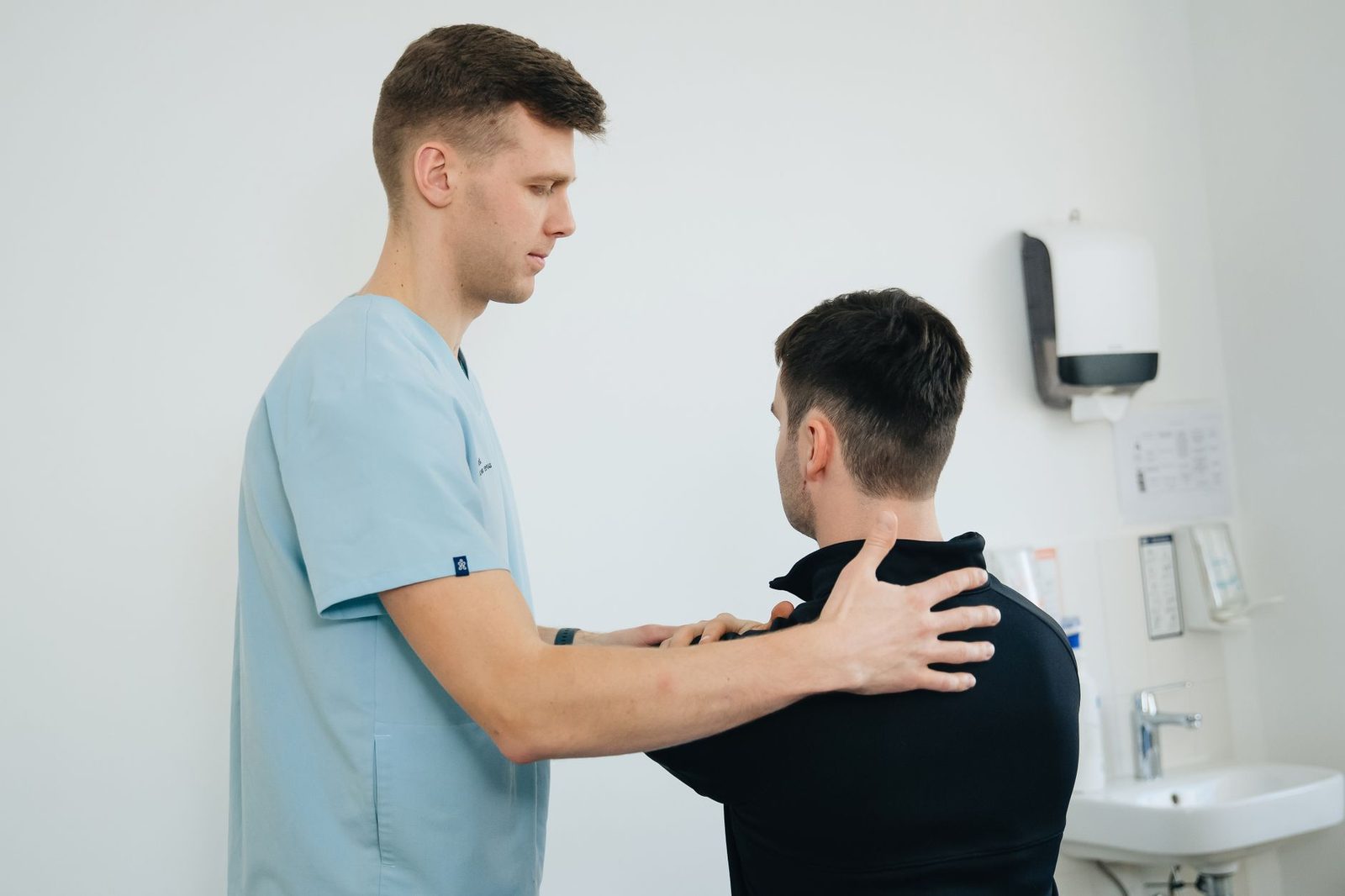
Get it assessed. Shoulder pain has several possible causes with genuinely different treatments, and working out which one you have is not something to do from a website.
What is broadly consistent in the clinical literature is that most of these problems are managed without surgery, through rest from the aggravating activity, appropriate rehabilitation and a graded return. OrthoCarolina has a useful overview for recreational players.
08Playing while you recover
You do not necessarily have to stop playing entirely, though that is your clinician’s call rather than mine. Where they permit it, most of the game remains available with the serve removed or reduced.
- Play sets starting each point with an underarm or very gentle serve.
- Work on groundstrokes, which load the shoulder far less than serving.
- Use the time on footwork; these tennis footwork drills need no racquet at all.
- Avoid overheads entirely until cleared; they load the shoulder like a serve.
- Keep up the band work throughout, not only once it hurts.
And when you do return, rebuild the serve rather than resuming at your old volume. The first week back is where re-injury happens most often.

09Frequently asked questions
Usually overuse from serving. The serve is the most demanding motion in the sport and accounts for a large share of the strokes in a match, so the shoulder absorbs repeated overhead load. Pain that arrives after play and settles overnight is different from pain during play, and both are worth getting assessed.
It describes tissue being pinched in the space between the top of the shoulder blade and the arm bone, commonly involving the rotator cuff tendons or the bursa. It is one of the most frequently reported shoulder complaints among tennis players.
That is a question for a clinician, not an article. In general, playing through significant or worsening shoulder pain tends to extend the problem, and reducing serving volume early is usually faster than pushing on.
Rotator cuff work with a resistance band, scapular and upper back strengthening, and thoracic mobility. Ten minutes twice a week is enough for most club players, and it is one of the better-evidenced preventive measures available.
It contributes. A serve driven by the arm alone, without leg drive or trunk rotation, loads the shoulder far more heavily. Building the serve from the ground up spreads the work across the whole body.

Claire Carter
Former WTA Tour Professional & Teaching Pro
Claire Carter is a former WTA Tour professional and a full-time teaching professional at Bay Club Redwood Shores, where she has coached juniors and adults for more than twelve years.
More about ClaireImage credits: Funkcinės Terapijos Centras (Pexels), Gera Cejas (Pexels), Jon (Pexels), TSquared Lab (Unsplash), Tima Miroshnichenko (Pexels), Towfiqu barbhuiya (Pexels), Vitaly Gariev (Unsplash). Photographs are illustrative.