
Fitness
How to Choose Tennis Shoes: Surface, Fit and Replacement
How to choose tennis shoes: outsoles by surface, why fit matters more than cushioning, and the signs that tell you it is time to replace them.

Jump to a section
Want to improve your game?
Private and group coaching with Claire Carter in Redwood Shores.
Book a lessonMore tennis guides
Technique, gear, fitness and match play, written from the coach’s chair.
Browse all guidesTennis shoes are the piece of equipment that most affects whether you get injured, and the one club players think about least. Most people will agonise over a racquet for weeks and then play in whatever trainers are in the car.
Three things matter: the outsole, the fit, and knowing when they are finished. Everything else is marketing.
01Why running shoes are the wrong tool
This is worth stating plainly because it is the most common and most consequential mistake. Running shoes are designed for repeated forward motion. They have soft, tall midsoles for cushioning and almost no lateral structure.
Tennis is played sideways. Every wide ball is a lateral push and an abrupt stop, and a soft high midsole under a sideways load rolls. That is how ankles get turned. A court shoe sits lower, has a firmer and wider platform, and is reinforced through the sides specifically to prevent it.
02Outsoles by surface
| Surface | Outsole | Purpose |
|---|---|---|
| Hard court | Dense, durable rubber; modified herringbone | Survives abrasion; grips for abrupt stops |
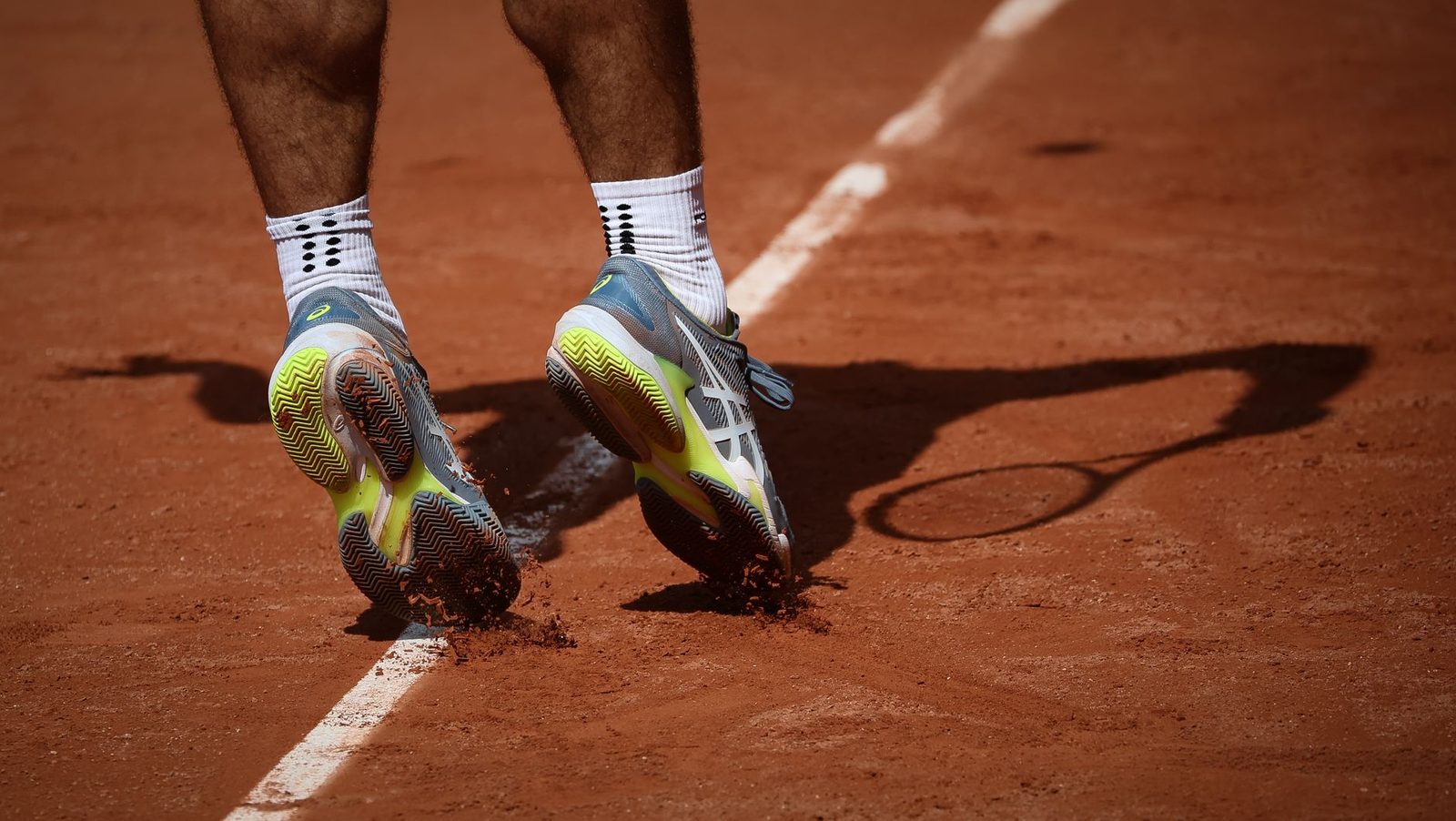
| Clay | Full herringbone, tight zigzag | Releases the surface so you can slide; resists clogging |
| Grass | Pimpled or nubbed sole | Traction on a slick surface without damaging it |
| Indoor carpet | Non-marking smooth or fine tread | Grip without leaving marks |
| All-court | Compromise tread | Fine if you play mainly one surface anyway |
If you play almost entirely on hard courts, as most Peninsula players do, buy a hard-court shoe and look for a manufacturer outsole durability guarantee. If you play clay regularly, a second pair is genuinely worth it. How the surfaces differ more broadly is covered in this guide to guide to tennis court surfaces.
03Fit matters more than cushioning
The single most important quality in a tennis shoe is that your foot does not move inside it. Sliding inside the shoe during a lateral push is what produces blisters, black toenails and rolled ankles.
- Try shoes on in the afternoon, when your feet are slightly larger.
- Wear the socks you actually play in.
- Leave roughly a thumb’s width at the toe; you will slide forward when you stop.
- The midfoot should feel locked, not merely comfortable.
- Do a lateral shuffle in the shop. If your foot moves inside the shoe, size down or try another model.
- Different brands run differently. Fit beats brand loyalty every time.
Width is under-considered. If you have wide feet, several manufacturers offer wide fittings, and using them will do more for your comfort than any amount of extra cushioning.
04What the features actually do
| Feature | What it does | How much it matters |
|---|---|---|
| Lateral support | Stops the foot rolling on side movements | Very high |
| Outsole durability | Determines how long the shoe lasts | High on hard courts |
| Heel cushioning | Absorbs stopping impact | High, especially on hard courts |
| Toe drag guard | Protects the toe on serves and slides | High if you drag your toe |
| Weight | Lighter feels quicker | Moderate; do not trade support for it |
| Upper material | Breathability and hold | Moderate |
Notice that weight is near the bottom. Light shoes feel fast in a shop and offer less support, which is the wrong trade for most club players and especially so for anyone managing joint issues, as covered in playing tennis after 50.
05How many pairs do you need?
One good pair is enough for most club players. Two becomes worthwhile once you are playing several times a week, and the reason is not variety but recovery: the midsole foam decompresses between sessions, so alternating pairs makes both last noticeably longer.
- Playing once or twice a week: one pair, replaced annually.
- Three or more times a week: two pairs, alternated.
- Playing on two surfaces regularly: a dedicated pair for each.
- Tournament players: keep a broken-in spare in the bag.
If you do buy two, buy them a few months apart rather than together. That way you always have one pair that is properly broken in and one that is fresh, rather than both wearing out at the same time.
06When to replace them
Worn-out shoes are also one of the clearer risk factors in this guide to preventing tennis ankle injuries. The mistake here is judging by appearance. The upper often looks fine long after the parts that protect you have stopped working.
- The outsole is worn smooth at the toe or under the ball of the front foot.
- The shoe feels unstable or loose during side-to-side movement.
- You are feeling more impact through your knees and hips than you used to.
- New blisters or hot spots appear in shoes that were previously comfortable.
- You have played regularly in them for six to twelve months.
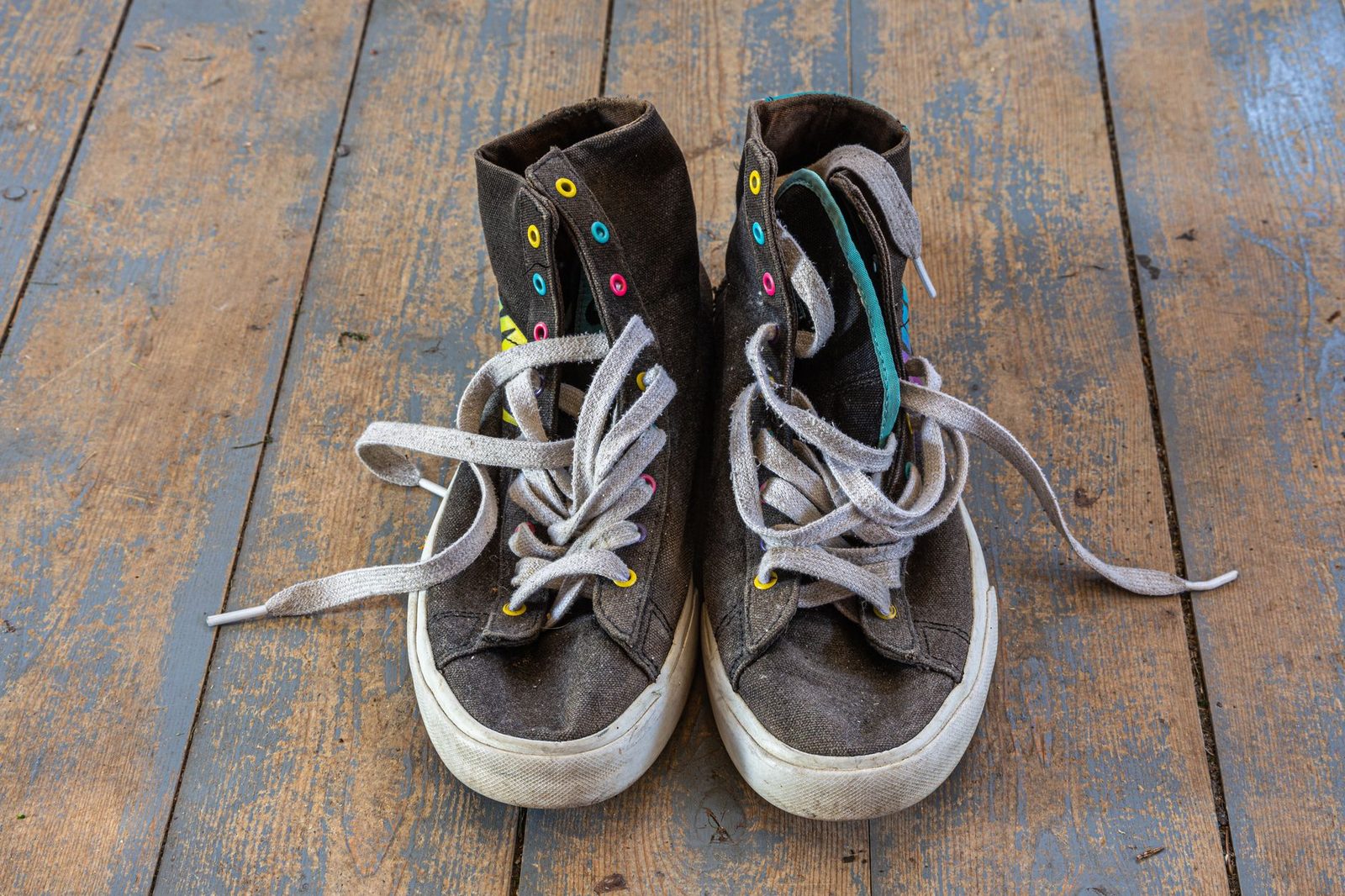
For a regular player, six to twelve months is the realistic window. If you play four times a week on hard courts, expect the lower end of that. Worn shoes contribute to the overuse problems described in guide to tennis elbow prevention and to knee and Achilles complaints, because your body compensates for what the shoe no longer absorbs.
07Junior shoes
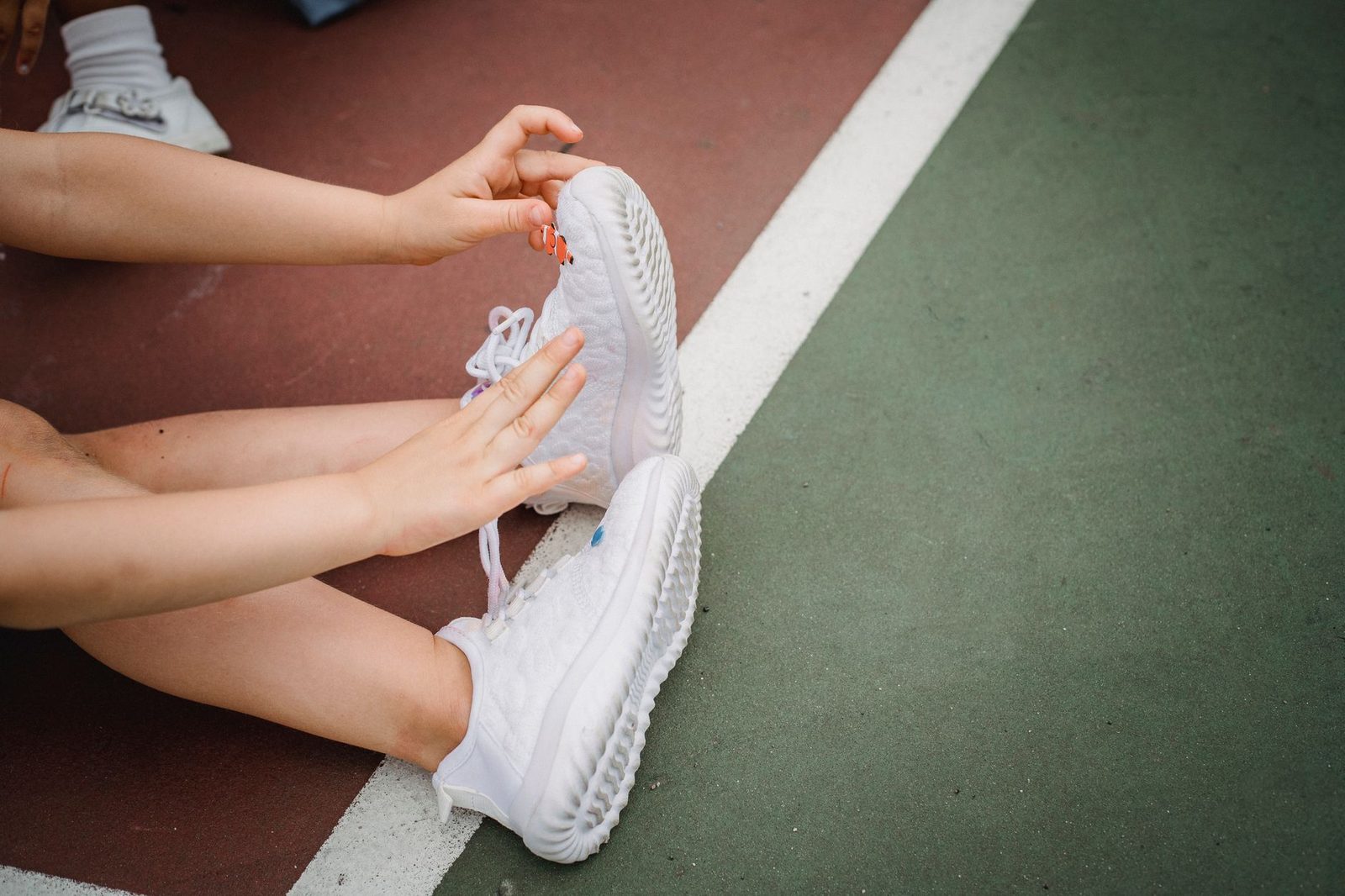
Children need proper court shoes as much as adults do, and arguably more, because they change direction constantly and their coordination is still developing.
- Check fit every few months. Feet grow faster than shoes wear out.
- Do not buy large for them to grow into; excess room causes exactly the sliding you are trying to prevent.
- Junior-specific court shoes exist and are worth the small premium over generic trainers.
- Replace on wear, not on appearance, the same as adults.
This sits alongside the racquet sizing advice in this parent’s guide to starting a child in tennis, and it is the item parents most often skip.
08Socks, briefly
Not an afterthought. A proper cushioned sports sock reduces friction, wicks moisture and fills the shoe correctly. Cotton socks hold sweat, which is what turns a hot spot into a blister mid-match.
Two pairs in the bag on a hot day is a small thing that makes a genuine difference over three sets. There is a good general footwear overview here if you want another reference before buying.
09Frequently asked questions
You can, but you should not. Running shoes are built for forward motion and have soft, high midsoles with no lateral support. Tennis is played sideways, and the combination is a common cause of rolled ankles.
Snugly. Your foot should not slide inside the shoe when you change direction, because that movement is what causes blisters and ankle rolls. Leave about a thumb’s width at the toe, but the midfoot should feel locked in.
Every six to twelve months for a regular player, or sooner if the outsole is worn smooth or the shoe feels unstable in side-to-side movement. Cushioning degrades before the upper looks worn out, so appearance is a poor guide.
Ideally yes. Clay shoes use a full herringbone tread that releases the surface so you can slide and does not clog. Hard-court shoes use denser rubber for abrasion resistance. Using hard-court shoes on clay is a common cause of slipping.
Up to a point. The meaningful differences are outsole durability, lateral stability and cushioning, and those improve noticeably up to the mid range. Beyond that you are largely paying for weight savings and materials.

Claire Carter
Former WTA Tour Professional & Teaching Pro
Claire Carter is a former WTA Tour professional and a full-time teaching professional at Bay Club Redwood Shores, where she has coached juniors and adults for more than twelve years.
More about ClaireImage credits: Alexandr Podvalny (Unsplash), Antonius Ferret (Pexels), Christian Skiada (Pexels), Edward Eyer (Pexels), Kaman Abdullah (Pexels), Lucas (Unsplash), Stas Knop (Pexels). Photographs are illustrative.