
High Performance
Playing Against a Left-Hander: Tactics That Work
How to beat a left-handed tennis player: where their serve goes, why your crosscourt forehand helps them, and the adjustments that neutralise the advantage.

Jump to a section
Want to improve your game?
Private and group coaching with Claire Carter in Redwood Shores.
Book a lessonMore tennis guides
Technique, gear, fitness and match play, written from the coach’s chair.
Browse all guidesRoughly one player in ten is left-handed, which means most club players face one occasionally and practise against one almost never. That gap is where the lefty advantage actually lives.
The strokes are the same. What changes is geometry: every diagonal on the court is mirrored, so the patterns you have grooved over years now land in the wrong place.
01The two structural advantages
Two things genuinely favour a left-hander, and both are about angles rather than ability.
First, the serve. A left-hander’s slice serve curves the opposite way to what you are used to. In the ad court it swings wide, away from a right-hander’s backhand, dragging you off the court on exactly the points that matter most. Deuce, advantage and break points are all played in the ad court.
Second, the forehand diagonal. Your crosscourt forehand, probably your most reliable rally ball, arrives on their forehand. Their crosscourt forehand arrives on your backhand. Left unmanaged, every neutral rally is quietly played to their strength and your weakness.
02How to attack their backhand
The answer to the forehand diagonal is not to hit harder. It is to change which diagonal you play.
| Your shot | Where it lands | Difficulty |
|---|---|---|
| Backhand crosscourt | Their backhand | Moderate; needs a reliable backhand |
| Forehand down the line | Their backhand | Higher risk; smaller margin |
| Inside-out forehand | Their backhand | Best option if you have it |
| Deep down the middle | Neutralises both wings | Easiest; a good default |
| Slice to the backhand | Their backhand, low | Reliable and awkward for them |
Notice that the two easiest options for most club players are the middle ball and the slice. Neither is glamorous and both work. If your backhand crosscourt is unreliable, this two-handed backhand technique guide is the more useful long-term fix.
03Handling the serve
The wide slice serve in the ad court is the shot to prepare for. It is coming, it is coming on the big points, and standing where you normally stand will not work.
- Shade a step or two toward the ad sideline when receiving on that side.
- Expect the ball to keep moving away after the bounce; start earlier.
- Block or slice the return rather than driving it. Getting it back deep is a win.
- Consider the lob return occasionally to buy recovery time.
- In the deuce court, expect the serve into your body more often.
The general principles of neutralising a strong serve apply here too, and they are set out in this guide to returning a big serve.
04Serving to a left-hander
Your serving patterns need mirroring as well, and most players forget this entirely.
| Court | Target | Why |
|---|---|---|
| Deuce court | Wide | Goes to their backhand, not their forehand |
| Ad court | Down the T | Their backhand side |
| Either court | Into the body | Always awkward; removes the angle |
| Avoid | Deuce court down the T | Feeds their forehand |
| Avoid | Ad court wide | Their forehand, and it opens your court |
A kick serve is particularly useful here, because it climbs into the backhand on both sides against a lefty. If you do not have one, this guide to slice and kick serves covers it.
05What does not change
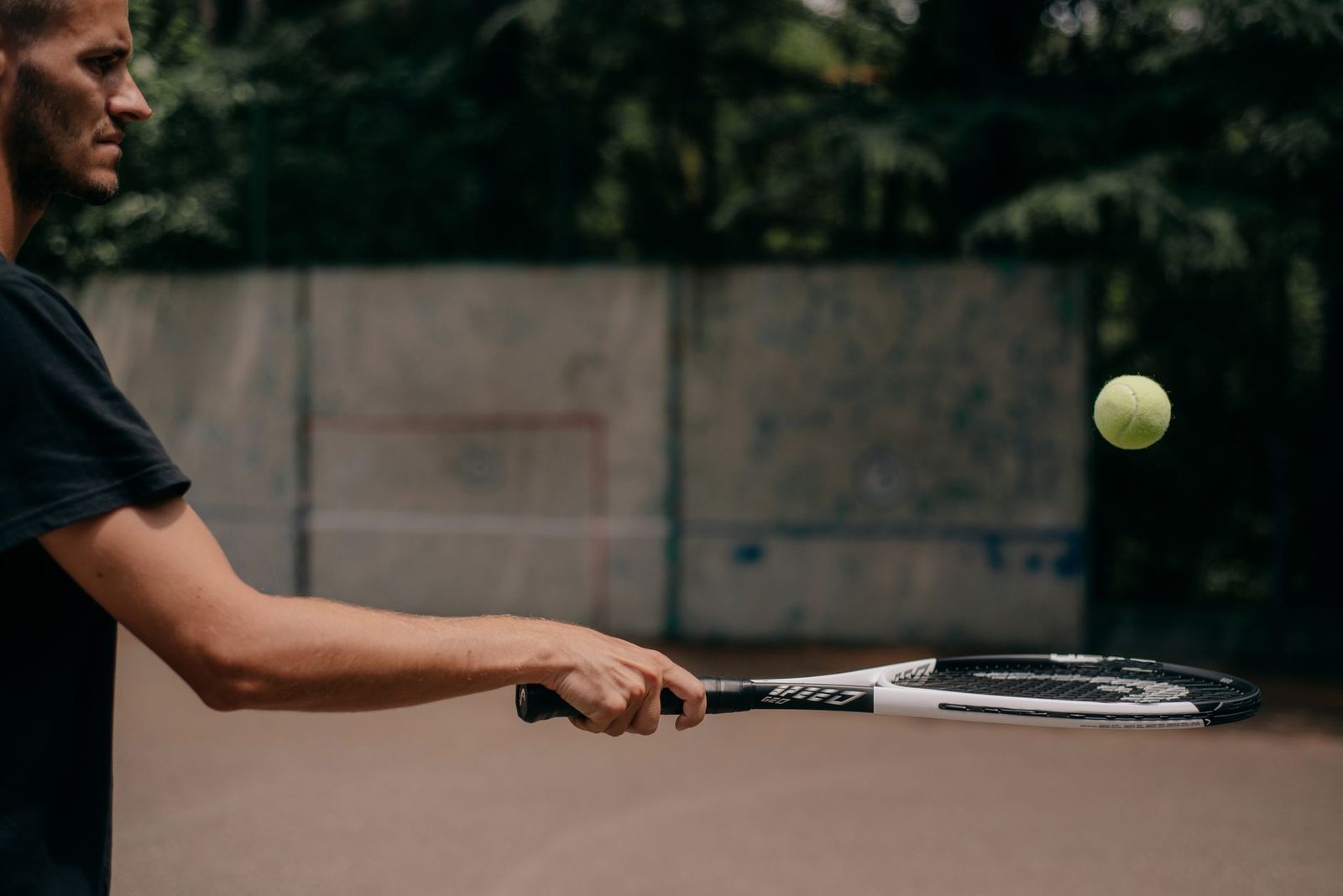
It is worth saying clearly, because players tie themselves in knots preparing for a left-hander: your technique does not change at all. The grips, the swings and the footwork are identical. Only the geometry is mirrored.
That matters because the most common overreaction is to start playing differently, hitting harder or going for lines you would not normally attempt. A left-hander beats you through unfamiliarity, and the answer to unfamiliarity is a clear simple plan, not a different game.
Pick two adjustments and hold them for the whole match. Something like “serve wide in the deuce court” and “backhand crosscourt in rallies” is enough. Three or more and you will abandon all of them by the second set, which is the pattern described in tennis mental game strategies.
06Doubles with and against left-handers
In doubles a left-right pairing is genuinely advantageous, because both players have their forehand on the outside of the court, covering the alleys and the wide balls with their stronger wing.
- If you are the lefty in a pair, take the ad court so both forehands cover the outside.
- Against a left-right pair, aim more balls through the middle where the two backhands meet.
- Watch which of them takes middle balls; that tells you where the gap is.
- A left-handed net player poaches into a different lane than you expect. Adjust your return.
The positional framework behind all of that is in this guide to doubles court positioning.
07If you are the left-hander
The advantages are real but they erode against anyone who prepares. Two things extend them.
First, develop the wide slice serve in the ad court deliberately. It is your single best shot and many left-handers under-use it because nobody has told them how valuable it is.
Second, expect opponents to feed your backhand once they work it out. A left-hander with a genuinely solid backhand is very difficult to play, because the standard counter-tactic stops working. Basha Tennis lists the tactics opponents are likely to use, which is worth reading from the other side.
08The practical problem: finding practice
You cannot prepare for something you never see. If there is a left-hander at your club, ask for a hit occasionally, even for twenty minutes. It is the only reliable way to make the mirrored geometry feel normal.
Failing that, a ball machine set to feed wide to your backhand simulates the most awkward part of it, and a wall gives you volume on the backhand crosscourt you will need. The wider tactical thinking sits in singles strategy and point construction.
09Frequently asked questions
Mostly unfamiliarity. Everything is mirrored, so your habitual patterns land in the wrong places. Your natural crosscourt forehand goes to their forehand rather than their backhand, and their slice serve swings away from your backhand in the ad court.
Their slice serve curves in the opposite direction to a right-hander’s. In the ad court it swings wide away from a right-hander’s backhand, which is the single most awkward serve most club players face, and it is why they win so many big points there.
Your backhand crosscourt and your forehand down the line both go there, which means the shots you use least are the ones you now need most. Practising the inside-out forehand also helps, since it lets you use your best shot on their weaker side.
Yes. Shade slightly toward the ad side when returning, because that is where their best serve goes. During rallies, expect to be pulled wide on your backhand more often than usual and recover accordingly.
At club level, meaningfully so, mostly because opponents rarely practise against it. The serve angles and the forehand-to-backhand diagonal are genuine structural advantages, but they diminish against players who prepare for them.

Claire Carter
Former WTA Tour Professional & Teaching Pro
Claire Carter is a former WTA Tour professional and a full-time teaching professional at Bay Club Redwood Shores, where she has coached juniors and adults for more than twelve years.
More about ClaireImage credits: Ayberk Mirza (Pexels), Cristina Anne Costello (Unsplash), Gera Cejas (Pexels), Gonzalo Facello (Pexels), Nenyasha Manzvera (Pexels), ROMAN ODINTSOV (Pexels). Photographs are illustrative.