
Doubles
Doubles Court Positioning: Where to Stand and When to Move
A practical guide to doubles court positioning: two up, two back, one up one back and the staggered formation, plus when to move and how to cover the lob.


Jump to a section
Want to improve your game?
Private and group coaching with Claire Carter in Redwood Shores.
Book a lessonMore tennis guides
Technique, gear, fitness and match play, written from the coach’s chair.
Browse all guidesDoubles is decided by where you stand far more than by how hard you hit. The mixed format has its own dynamics, covered in this mixed doubles strategy guide. Singles runs on different logic entirely, set out in singles strategy and point construction. Two players who position well will beat two better ball-strikers who do not, regularly and without drama.
There are three basic formations, one that most teams should treat as the default, and a handful of rules about when to move. That is genuinely most of it.
01Why net position wins doubles
The reason positioning matters so much is that the net is where points end. Analysis of doubles play consistently finds that the overwhelming majority of winners are struck by the player at the net rather than from the baseline — one data-driven breakdown of doubles positioning puts it at roughly 84 per cent.
That single statistic should reshape how you play. If you spend the point at the baseline, you have opted out of the place where points are actually won.

02The three basic formations
| Formation | Strength | Weakness | Use it when |
|---|---|---|---|
| Two up | Most offensive; covers the angles; ends points | Very vulnerable to the lob | You have forced a weak or low reply |
| Two back | Safe against lobs; buys time; covers depth | Almost impossible to be offensive | Defending a big server or under pressure |
| One up, one back | Familiar and comfortable | Leaves a large gap through the middle | Transitioning only, not as a resting spot |
Most club teams live permanently in one up, one back, which is the weakest of the three. It feels balanced because each player has a zone, but the middle belongs to nobody and good opponents will find it every time. The formation is not wrong; treating it as a permanent home is.
03The staggered formation: a better default
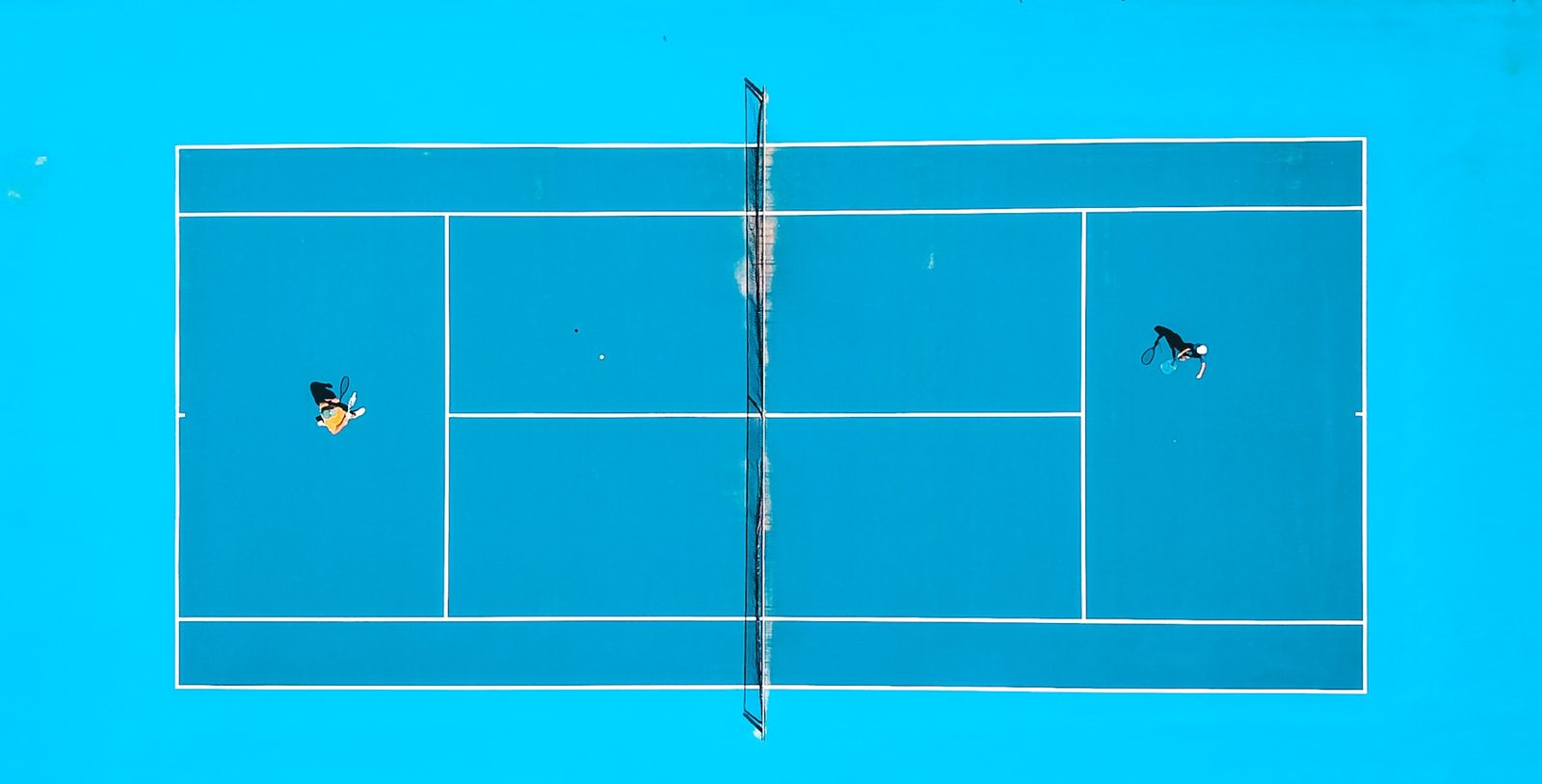
Rather than choosing between two up and one up one back, stagger. After serving, the server moves forward to around the midpoint of the service line while their partner holds the net. The team forms a diagonal rather than a straight line.
- It closes the middle gap that one up one back leaves open.
- It keeps a player deep enough to handle a lob.
- It lets you progress to two up as the point improves.
- It gives the returner no obvious target.
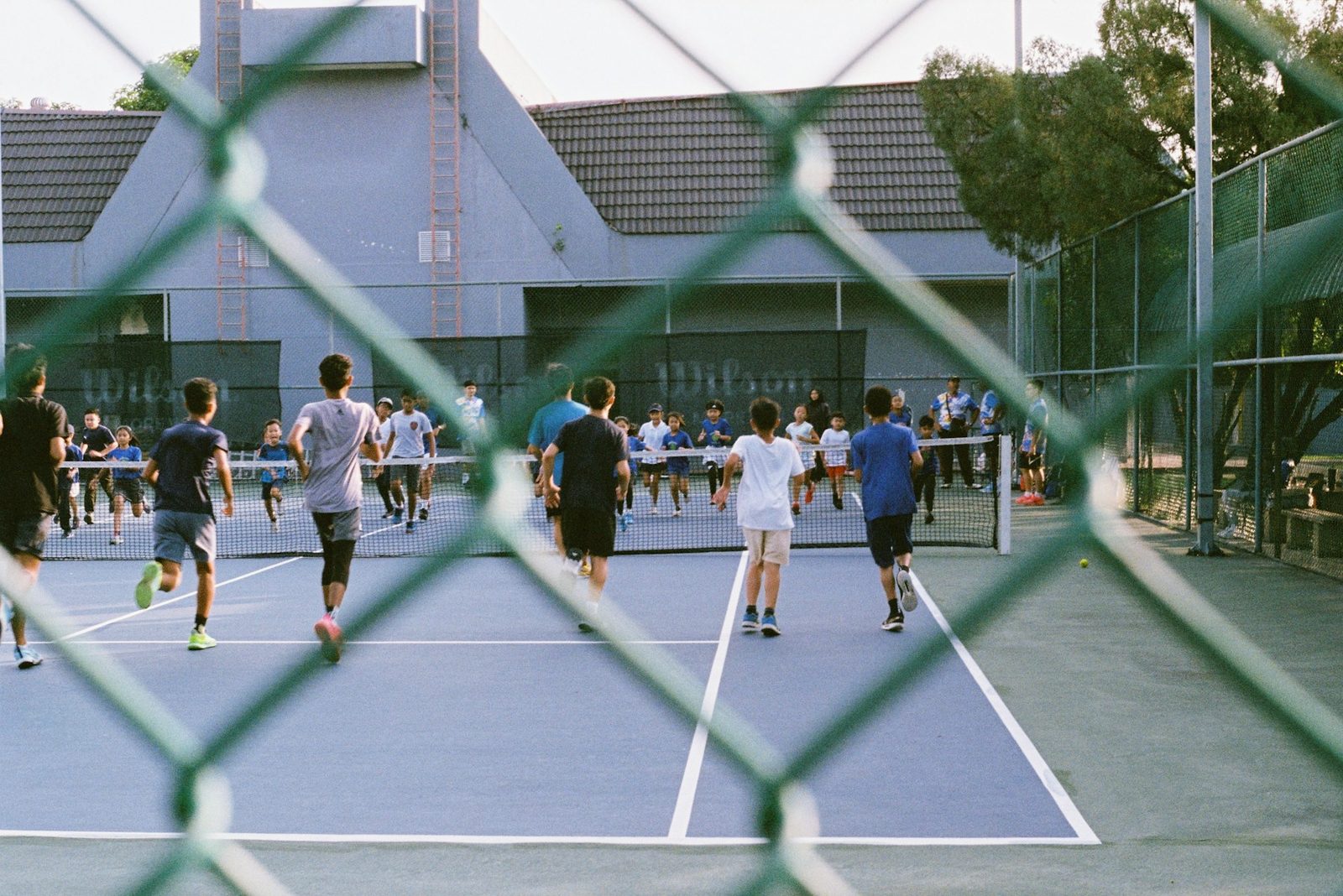
The rule that makes it work: move as a pair. When your partner steps forward, you step forward. When they retreat for a lob, you retreat. The diagonal is maintained, not the individual positions.
04When to move forward, and when not to
| The ball you just hit | Move? | Reason |
|---|---|---|
| Low at their feet | Go | They must hit upward; you get a volley above the net |
| Wide angle pulling them off court | Go | The court is open and their reply is limited |
| Deep down the middle | Go | Shrinks their angles and removes the passing lane |
| High and short | Stay | You have given them a free attacking ball |
| A defensive lob | Retreat | Reset to two back and rebuild the point |
| Anything while off balance | Stay | You cannot cover a passing shot from a stumble |
05Covering the lob without giving up the net
There is a full treatment of the overhead and the tactics that stop a lobber in how to beat a lobber. Fear of the lob is what keeps most club players from the net, and the fear is usually out of proportion to the threat. Lobs are hard to hit well. What you need is a plan, not permanent retreat.
- Agree before the match who takes the overhead in the middle. Usually the player with the stronger smash.
- The player who chases the lob calls it loudly. One word is enough.
- If a lob goes over your partner, you switch sides. Do not both chase.
- If lobs keep landing, take one step back rather than abandoning the net.

06The alley myth
Most net players stand too wide, guarding the alley. It feels responsible. It is not: the down-the-line pass is a low-percentage shot that opponents attempt rarely and miss often.
Stand closer to the middle and you cover the crosscourt ball, which is the shot they hit constantly. Concede the alley. If they beat you down the line twice in a set, they have earned it, and you can adjust one step. Moving toward the middle is also what makes a complete guide to poaching in tennis doubles possible in the first place.

07Positioning as the returning team
Returners get less attention than servers, but the same principles apply. The returner’s partner should stand on or just inside the service line, ready to move forward if the return lands well and back if it floats.
- Do not start at the net as the returner’s partner unless the server is weak.
- Watch the return, not the server. Your movement depends on your partner’s shot.
- If the return is good, close immediately. That is your best chance to take the net.
- If your partner is struggling to get returns in play, drop back level with them and rebuild from two back rather than standing exposed at the net.
The returning team’s whole objective is to take the net away from the serving team. Every return that lands low and deep buys you a step forward. Every return that floats gives that step back. Judged that way, a deep return down the middle is worth more than a spectacular winner attempt that lands in once every eight tries.

08Putting it together
Positioning only pays off if the shot at the end is reliable, which is why these tennis volley drills for a sharper net game matter as much as the tactics on this page. Movement between positions comes from the same split-and-recover cycle covered in these tennis footwork drills, and you can see several of these patterns played out in the free tennis instructional videos.
09Frequently asked questions
Both players at the net is the most offensive and wins the most points, but it is also the most vulnerable to a lob. For most club teams the practical default is a staggered formation, where the net player holds their position and the baseline partner moves up as the point turns in your favour.
Because it leaves a large gap through the middle and gives your opponents an easy crosscourt target that neither player fully covers. It is fine as a transition position but poor as a resting formation.
Roughly in the middle of the service box, about six to nine feet from the net, and closer to the centre than most players expect. Standing wide to guard the alley protects a shot your opponents rarely attempt.
Move both players back a step, agree in advance who takes the overhead, and let the player with the better smash cover the middle. If lobs keep landing in, drop into two back and make them beat you with a passing shot instead.
Move in together when your shot forces your opponent to hit upward: a low ball at their feet, a wide angle, or a weak short reply. Never move forward on a ball you hit high and short.

Claire Carter
Former WTA Tour Professional & Teaching Pro
Claire Carter is a former WTA Tour professional and a full-time teaching professional at Bay Club Redwood Shores, where she has coached juniors and adults for more than twelve years.
More about ClaireImage credits: Alejandra D (Pexels), Brenda Rossato (Unsplash), Jan van der Wolf (Pexels), Lucas Davies (Unsplash), Macourt Media (Pexels), SHVETS production (Pexels), nik radzi (Unsplash). Photographs are illustrative.