
Fitness
Tennis Footwork Drills: The Complete Guide
Eleven tennis footwork drills covering the split step, recovery, ladder and cone work, plus a weekly plan and the movement errors that cost you points.

Jump to a section
Want to improve your game?
Private and group coaching with Claire Carter in Redwood Shores.
Book a lessonMore tennis guides
Technique, gear, fitness and match play, written from the coach’s chair.
Browse all guidesAlmost every mishit in club tennis is a footwork error wearing a technique costume. The swing looked wrong because the player arrived late, off balance, or too close to the ball.
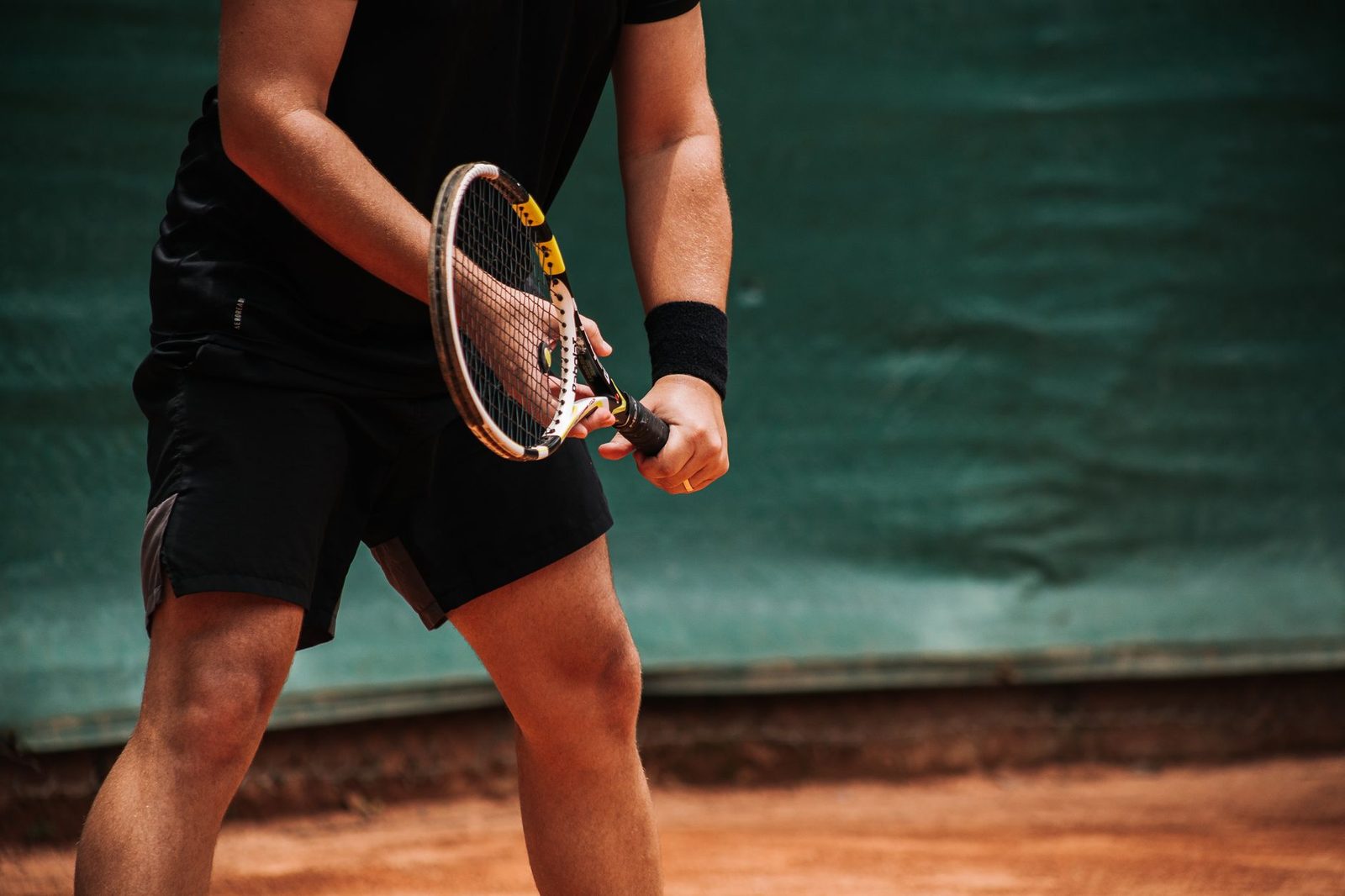
Good movement follows one repeating sequence: split, move, strike, recover. Every drill below trains one link in that chain. Work through the fundamentals first, then pick drills that match the problem you actually have.
01The four-part movement cycle
| Phase | What happens | The error to avoid |
|---|---|---|
| Split | A small hop as your opponent strikes, landing on the balls of the feet | Standing flat, or splitting too late |
| Move | First step is an explosive push-off, not a shuffle | Stepping sideways with the near foot first |
| Strike | Arrive balanced with the body set before contact | Still moving through the shot |
| Recover | Immediate steps back toward the neutral position | Admiring the shot you just hit |
Recovery is the phase everyone skips. It does not begin when you feel ready, it begins the instant the ball leaves your strings.
02On-court footwork drills
1. Split-step timing
A partner or coach holds a ball and drops it without warning. You split as their hand releases and sprint to catch it before the second bounce. Twelve repetitions. This isolates timing, which is the part players get wrong most often.
2. Cone star drill
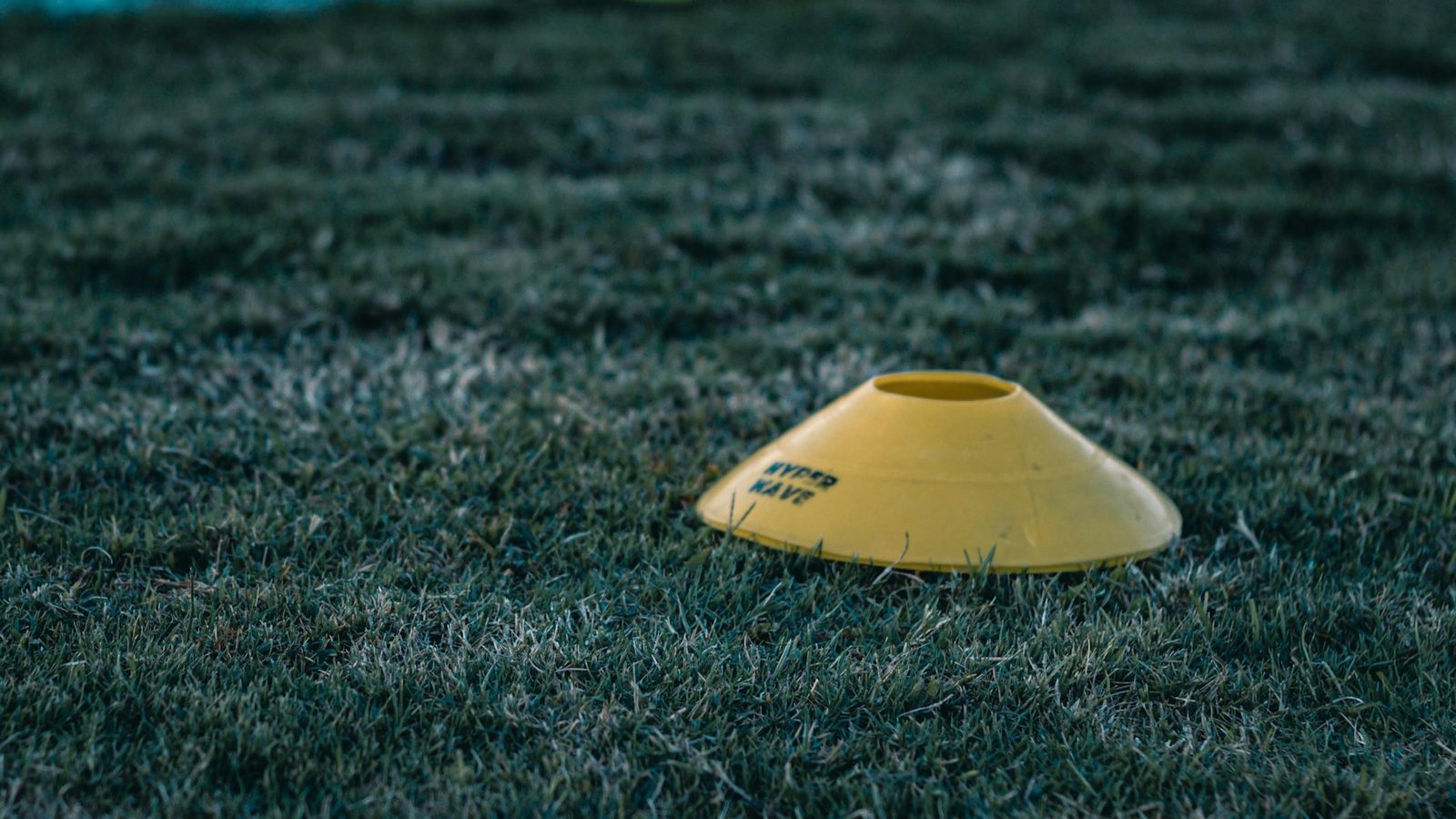
Place five cones: one centre, four at the corners of a square about eight feet out. Split at the centre, move to a called cone, shadow a shot, recover. Thirty seconds continuous, three rounds. It trains both the push-off and the recovery that everyone ignores.
3. Suicide recovery
Start at the centre mark. Sprint to the doubles sideline, touch, recover to centre, then the other side. Six repetitions. Brutal, short, and the closest thing to a real defensive scramble.
4. Shadow rally
No ball at all. Move through an imagined rally: split, push off, set, full shadow swing, recover, repeat. Ninety seconds. Because there is no ball to chase, you can give the movement your full attention.
5. Around the cone
Place a cone two feet inside the baseline. Every ball must be played after running around the outside of it. This forces the wide, curved approach path that sets up a balanced open stance rather than a cramped one.
03Off-court speed and agility drills
6. Ladder: two feet in each
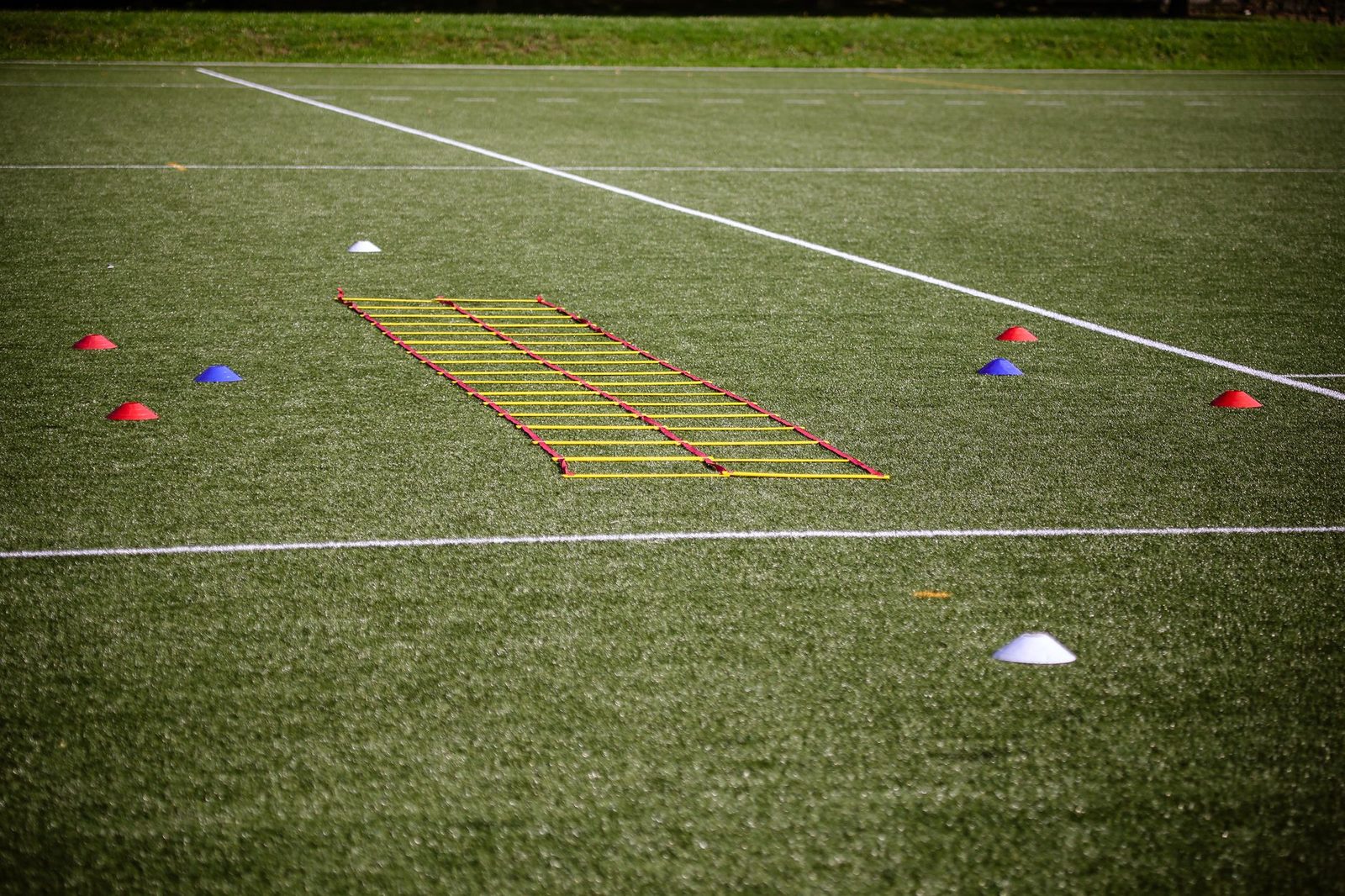
The foundation pattern. Both feet into every rung, fast and light, staying on the balls of the feet. Thirty seconds, three rounds, twenty seconds rest.
7. Ladder: lateral shuffle
Face sideways and shuffle through the rungs without crossing your feet. This is the exact movement you use recovering along the baseline.
8. Ladder: crossover step
Now cross the trailing foot over. Learning when to shuffle and when to cross is one of the biggest movement upgrades available to a club player: shuffle for short distances, cross over for anything wide.
9. Jump rope intervals
Thirty seconds on, thirty off, eight rounds. Nothing builds light feet and ankle stiffness faster, and it costs almost nothing. Ideal on a day you cannot get court time.
10. Lateral bounds
Push off one leg, land on the other, hold the landing for a full second. Eight each side. The hold matters more than the distance, because it trains the deceleration that lets you change direction.
11. Reaction sprints
A partner points left or right without warning; you split and sprint five yards. Ten repetitions. This adds the decision-making that ladder work deliberately leaves out.
04Which drill fixes which problem?
| Symptom | Likely cause | Drill to run |
|---|---|---|
| Always late to wide balls | No split step, or crossing over too late | Split-step timing, crossover ladder |
| Cramped on the forehand | Running straight at the ball | Around the cone |
| Out of position for the next shot | No recovery step | Cone star drill |
| Slow first step | Flat-footed at contact | Jump rope, lateral bounds |
| Off balance when hitting | Still moving through the strike | Shadow rally |
| Fine in drills, poor in matches | No decision-making under pressure | Reaction sprints |
05A weekly footwork plan
| Day | Session | Time |
|---|---|---|
| Monday | Ladder set (drills 6 to 8) plus jump rope | 20 min |
| Wednesday | On-court: split-step timing, cone star, around the cone | 25 min |
| Friday | Lateral bounds, reaction sprints, shadow rally | 20 min |
| Match day | Ladder two feet in each as a warm-up only | 5 min |
Footwork responds quickly but decays just as fast. Three short sessions a week beat one long one, and consistency matters more than intensity. TennisCompanion has a good visual reference if you want to see the ladder patterns demonstrated.
06Shoes and surface
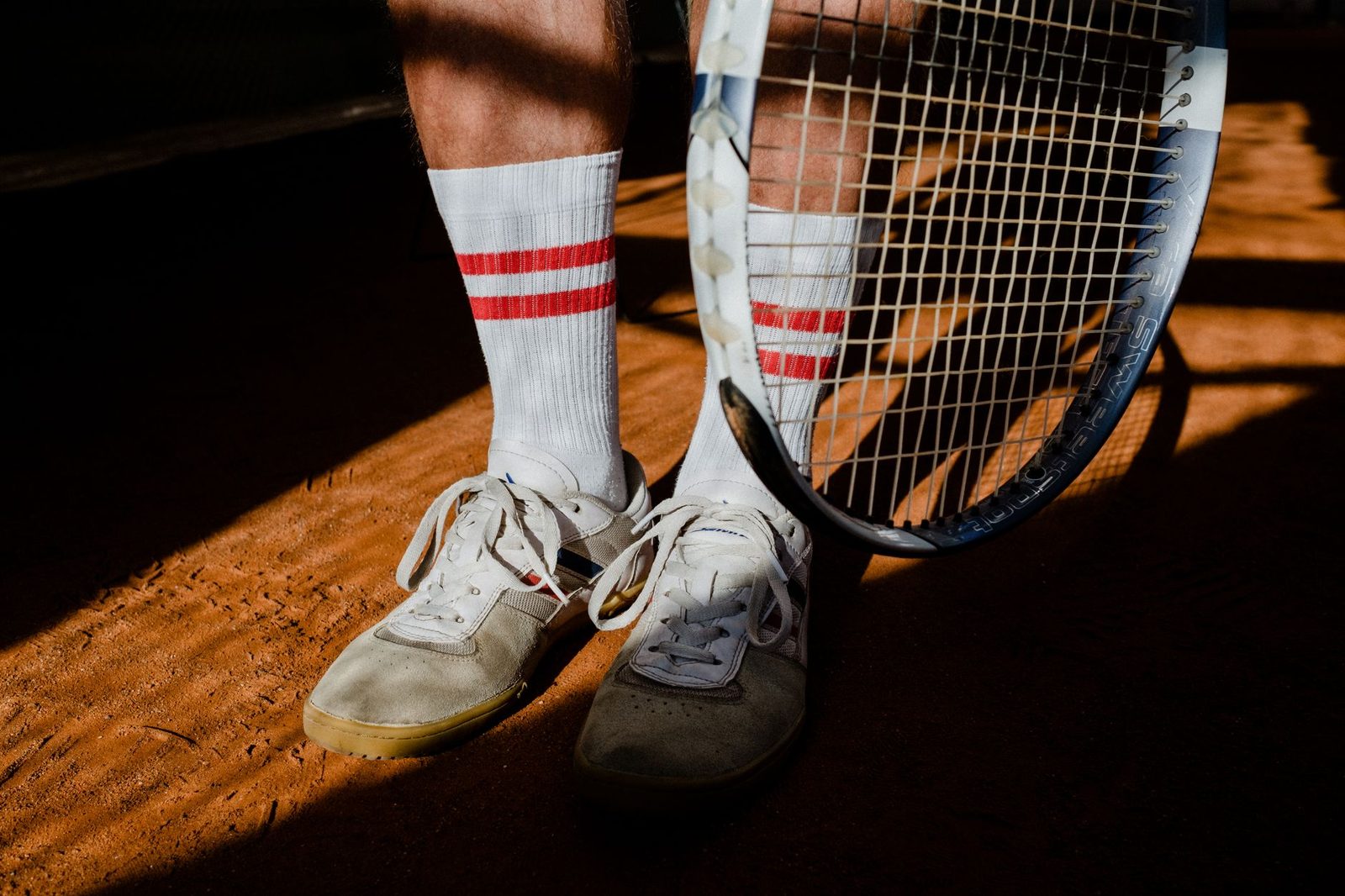
Footwork is partly equipment. Running shoes have no lateral support and will roll an ankle on a hard court. Court shoes have a flat, reinforced outsole designed for sliding and stopping sideways. Choosing the right pair is covered in this guide to choosing tennis shoes.
- Hard court: durable outsole, most abrasion resistance, look for a wear warranty.
- Clay: full herringbone tread so the shoe releases rather than grips.
- Grass: pimpled outsole for traction on a slick surface.
- Replace when the tread under the ball of your front foot goes smooth. Strength and deceleration work in the gym supports all of this, which is covered in off-court tennis fitness training.
07Where footwork meets the rest of your game
Movement is not a separate skill. The split step is the same one that makes a volley possible, which is why it appears in these tennis volley drills for a sharper net game. The recovery step is what lets you cross with balance in a complete guide to poaching in tennis doubles. And if you cannot get court time this week, the figure-eight exercise in these tennis backboard drills for solo practice trains movement and ball-striking together against a wall.
Junior players in particular should build this early, before technique hardens around bad movement habits. That progression is part of the junior tennis pathway in Northern California, and it is the first thing assessed in a private lesson in Redwood Shores.
08Frequently asked questions
The split step. It is the small hop you make as your opponent strikes the ball, and it loads your legs so you can push off in any direction. Without it you are flat-footed at the exact moment you need to move, and every shot becomes a lunge.
Two or three sessions a week is enough, and each one can be short. Keep repetitions sharp and rest fully between efforts, because footwork practised while fatigued teaches sloppy patterns rather than fast ones.
They help with foot speed, coordination and the difference between a shuffle and a crossover step. What they do not train is reading the ball and choosing a direction, so pair ladder work with cone drills and live movement rather than relying on it.
Usually one of three things: no split step, watching the ball instead of your opponent’s racquet, or no recovery step after the previous shot. Late arrival is almost always caused by the shot before, not the shot you are chasing.
Yes. Ladder patterns, cone drills, shadow swings and jump rope all transfer well and need almost no space. Shadow movement in particular lets you rehearse the full split, move, strike and recover sequence anywhere.

Claire Carter
Former WTA Tour Professional & Teaching Pro
Claire Carter is a former WTA Tour professional and a full-time teaching professional at Bay Club Redwood Shores, where she has coached juniors and adults for more than twelve years.
More about ClaireImage credits: Chris K (Pexels), Christian Tenguan (Unsplash), Edward Eyer (Pexels), Kirill Zharkiy (Unsplash), cottonbro studio (Pexels), julio Galvao (Unsplash). Photographs are illustrative.