
Practice
Tennis Backboard Drills: Solo Practice That Works
Nine tennis backboard drills that build real technique, plus how far to stand, how long to practise, and how a wall compares with a ball machine.

Jump to a section
Want to improve your game?
Private and group coaching with Claire Carter in Redwood Shores.
Book a lessonMore tennis guides
Technique, gear, fitness and match play, written from the coach’s chair.
Browse all guidesA tennis backboard is the most underrated practice tool in the sport. It never cancels, it never gets tired, and it will give you more repetitions in thirty minutes than an hour of casual rallying with a partner.
The catch is that most players use a wall badly. They stand too close, hit too hard, and turn a technical session into a survival exercise. Below are nine drills that actually build something, along with the practical details of distance, session length and what a wall can and cannot do for your game.
01Why a backboard works
A wall isolates the parts of your game that need volume: timing, preparation, contact point and recovery footwork. Because the ball comes back with predictable pace and no spin, you are free to think about your own technique rather than reacting to someone else’s.
It is also honest. A wall returns exactly what you hit. A ball that comes back awkwardly is information about your own shot, not bad luck.
02Set-up: distance, height and pace
| Setting | Recommendation | Why it matters |
|---|---|---|
| Distance from wall | 16 to 20 feet for groundstrokes | Below 16 feet the ball returns before you can prepare properly |
| Distance for volleys | 8 to 10 feet | Close enough to force compact hands, far enough to stay safe |
| Target height | A taped line about 3 feet up | Approximates net height, so a ball above the line clears the net |
| Pace | Roughly half of match pace | Control, not power. The wall punishes hard hitting immediately |
| Session length | 30 minutes, 2 to 3 times a week | Dense repetition; technique degrades quickly beyond this |
03Nine tennis backboard drills
1. Three in a row
From just behind your marked baseline, hit three forehands, then three backhands. Repeat. This is the warm-up that gets your timing synchronised with the wall’s rhythm before anything more demanding.
2. Alternating groundstrokes
One forehand, one backhand, continuously. Forces a full unit turn and recovery between every shot. Aim for twenty in a row before you count it as a success.
3. Target rally
Chalk or tape a one-foot square on the wall at net height and rally into it. The stroke you are grooving is broken down in this complete guide to forehand technique. Count consecutive hits. This turns a mindless rally into a measurable skill with a score you can beat next week.
4. The ladder
Start at level four out of ten on pace. Every five successful shots, add one level. When you miss, drop two levels and rebuild. You will find your genuine control ceiling in about five minutes.
5. Split-step discipline
Perform a deliberate split step every single time the ball leaves the wall. Most club players skip this under pressure, and a wall gives you two hundred chances an hour to make it automatic.
6. Volley rapid-fire
Move to 8 to 10 feet and hit continuous volleys, alternating forehand and backhand. Short punch, no backswing, firm wrist. Thirty seconds on, thirty seconds rest, six rounds.
7. Approach and close
Hit a groundstroke from deep, then move forward and take the next ball as a volley. Back up and repeat. This trains the transition that most players never practise in isolation.
8. Serve and recover
Serve into the wall from a realistic distance, then immediately split step and play the rebound as your first groundstroke. It is the closest a wall gets to simulating the serve-plus-one pattern.
9. Figure-eight footwork
Rally while deliberately moving between two cones set six feet apart. Every ball is struck on the move. Brutal, brief, and the fastest way to expose lazy recovery steps.
04Backboard, ball machine or hitting partner?
Each tool trains something different, and the honest answer is that a serious player uses all three. Here is how they compare on the things that actually matter.
| Backboard | Ball machine | Hitting partner | |
|---|---|---|---|
| Typical cost | Free at public courts; roughly $200 to $300 for a DIY build | Around $800 to $2,000 to buy, or about $20 per hour to rent | Free to split court time, or coaching rates |
| Repetitions per hour | Highest | High | Moderate |
| Ball variety and spin | None | Good, programmable | Realistic |
| Trains reading an opponent | No | No | Yes |
| Trains reaction speed | Excellent at close range | Good | Good |
| Setup time | None | Moderate: transport, loading, batteries | Depends on scheduling |
| Best for | Technique, timing, volleys, footwork volume | Depth control, repeatable patterns, drilling one shot | Tactics, match rhythm, pressure |
If you are choosing one to start with, the wall wins on cost and convenience every time. If you do have access to a machine, this guide to using a ball machine effectively covers settings and drills. Tennis.com’s appreciation of the humble backboard makes the same case from a slightly more romantic angle.
05What a wall cannot teach you
- Depth judgement. The rebound is always roughly the same length.
- Spin recognition. A flat wall returns a flat ball, every time.
- Point construction and shot selection under pressure.
- Serve placement, since you have no service box to aim into.
Treat the wall as a technical gym rather than a substitute for playing. For the playing half, this guide to finding someone to hit with covers where partners actually come from. The players who improve fastest use it for the mechanical work and save court time for the tactical work.
06A 30-minute session you can copy
| Time | Drill | Focus |
|---|---|---|
| 0 to 5 min | Three in a row | Timing and rhythm |
| 5 to 12 min | Alternating groundstrokes | Unit turn and recovery |
| 12 to 18 min | Target rally | Accuracy under fatigue |
| 18 to 24 min | Volley rapid-fire | Compact hands |
| 24 to 28 min | Approach and close | Transition footwork |
| 28 to 30 min | Three in a row, easy pace | Cool-down and technique reset |
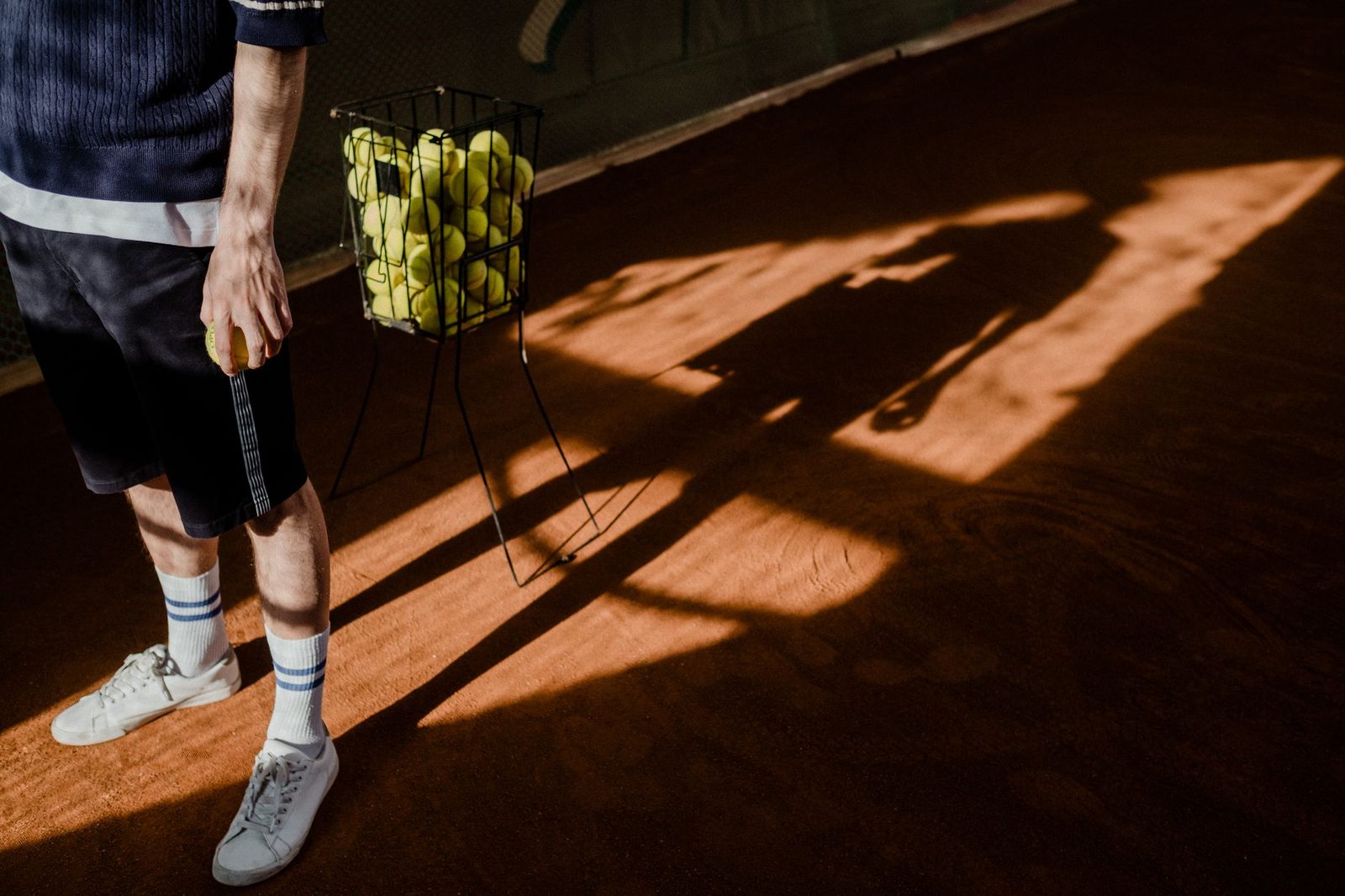
Bring more than one ball. Chasing a single ball around a public court wastes half your session, and a cheap hopper pays for itself in the first week. There are a few training aids worth owning listed on the tennis training equipment I recommend, though honestly a wall, six balls and a roll of tape covers ninety per cent of it. If there is no public wall near you, here is how to build a tennis backboard at home for roughly $200 to $300 in materials.
Once your contact point is reliable against a wall, the natural next step is taking that compact swing to the net. These tennis volley drills for a sharper net game pick up exactly where the rapid-fire wall drill leaves off, and if you play doubles, that same punch volley is the shot that finishes a complete guide to poaching in tennis doubles.
You can see several of these drills demonstrated in the free tennis instructional videos. If you would like a session structured around the specific weakness the wall keeps exposing, book a session at Bay Club Redwood Shores.
07Frequently asked questions
Start about 16 to 20 feet back, roughly the distance manufacturers recommend for singles practice. Closer than that and the ball returns before you can prepare. Move further back as your control improves, because a longer distance more closely matches a real baseline rally.
Yes, for technique, timing, hand-eye coordination and footwork volume. A wall gives you far more repetitions per hour than a rally with a partner. What it cannot teach is reading an opponent, handling varied spin, or dealing with genuinely deep balls.
Around 30 minutes, two or three times a week, is a realistic and effective target. Wall sessions are dense, so fatigue and sloppy technique arrive faster than they would in a normal hitting session.
Yes, and it is one of the best uses of a wall. Stand roughly 8 to 10 feet away and hit continuous controlled volleys with a short punch. The fast turnaround trains quick hands and a compact swing better than almost any partner drill.
Hitting too hard. The wall returns exactly what you give it, so power simply means you are rushed on the next ball. Aim for control at roughly half pace and let the rally length, not the ball speed, be the measure of success.

Claire Carter
Former WTA Tour Professional & Teaching Pro
Claire Carter is a former WTA Tour professional and a full-time teaching professional at Bay Club Redwood Shores, where she has coached juniors and adults for more than twelve years.
More about ClaireImage credits: Abigail Sylvester (Pexels), Gaspar Zaldo (Pexels), Jay Brand (Pexels), Moises Alex (Unsplash), Prashant Gurung (Unsplash), Renith R (Unsplash), cottonbro studio (Pexels). Photographs are illustrative.