
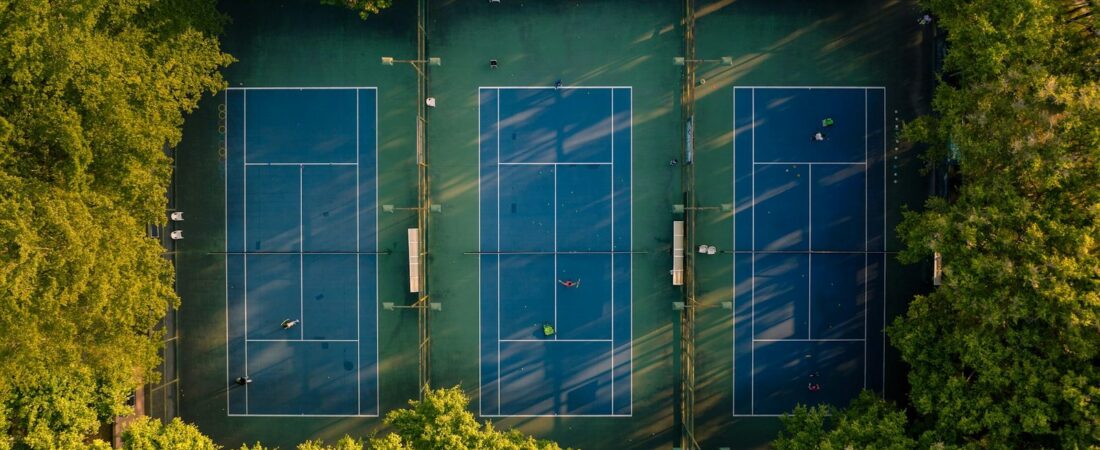
Most club players spend their whole tennis lives on one surface and are then baffled when a holiday, a league fixture or a tournament puts them on another. The strokes are the same. Almost nothing else is.
Surface changes ball speed, bounce height, how you move and which tactics pay. Here is what actually differs, and what to adjust when you switch.
The three surfaces at a glance
| Clay | Hard | Grass | |
|---|---|---|---|
| Speed | Slowest | Medium to fast | Fastest |
| Bounce height | Highest | High and true | Lowest |
| Bounce predictability | Good, spin-dependent | Most predictable | Least predictable |
| Rally length | Longest | Medium | Shortest |
| Movement | Sliding | Stopping and planting | Careful; slippery when damp |
| Joint impact | Lowest | Highest | Low |
| Rewards | Patience, topspin, fitness | All-court games | Serving, slice, net play |
The single most useful idea here is that surface does not change what a good shot is; it changes how much a good shot is worth. A heavy topspin forehand that pushes someone behind the baseline is excellent on clay and merely useful on grass, where the ball stays low and the point ends sooner.
Clay
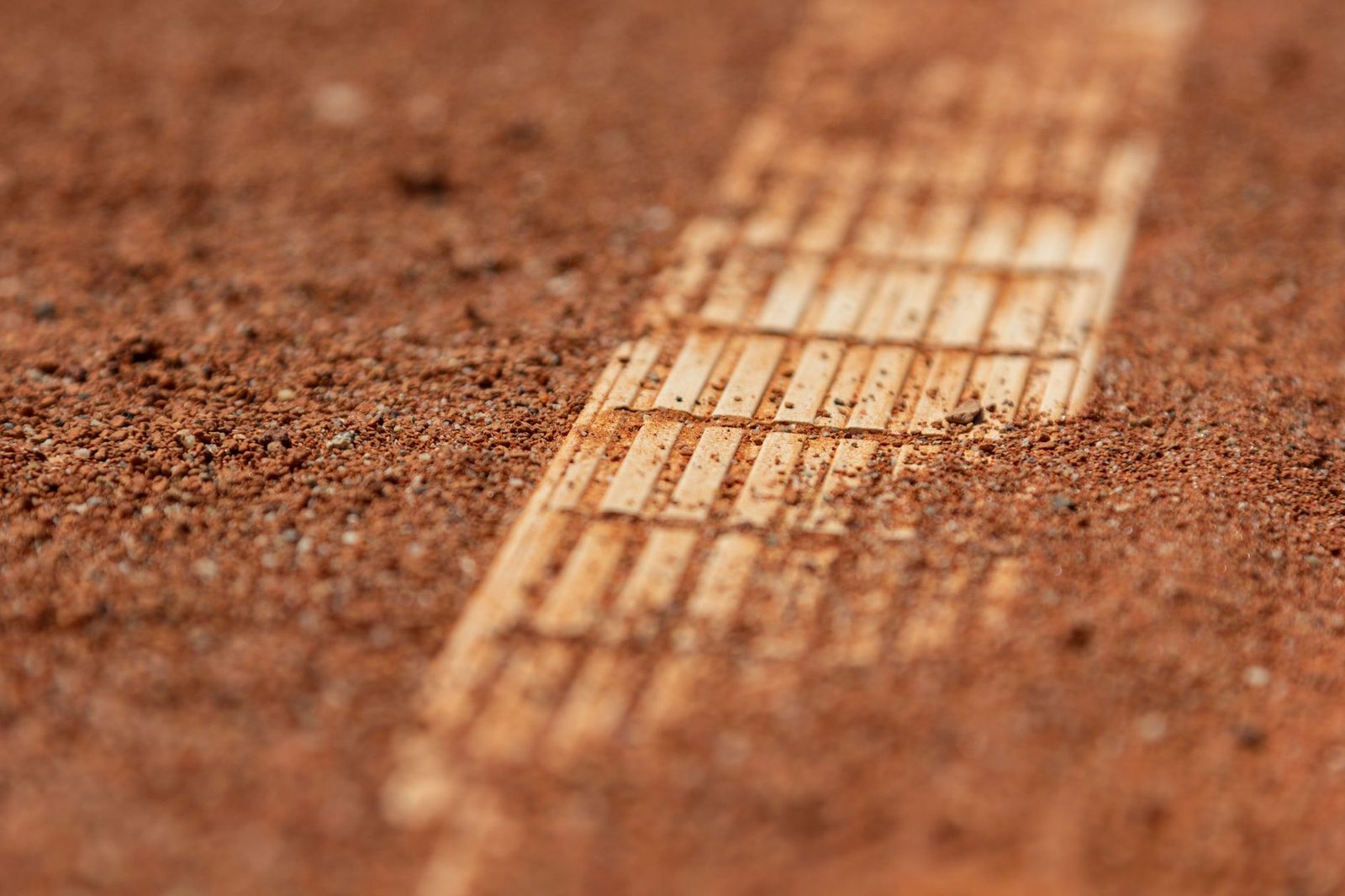
Clay is the slowest surface. The gritty top layer grips the ball, which scrubs off pace and sends it upward, so the bounce is high and rallies run long.
- Topspin is disproportionately effective because the surface exaggerates the kick.
- Winners are harder to hit; you win by constructing rather than by ending points.
- Sliding into shots is a genuine skill and takes time to learn safely.
- Drop shots are lethal because backspin bites and the ball dies.
- Fitness matters more here than anywhere else.
Clay is also the kindest surface for older players and anyone managing joint problems, because the slide absorbs force that a hard court sends straight up through the knee. That is one reason it appears in this guide to playing tennis after 50.
Hard courts
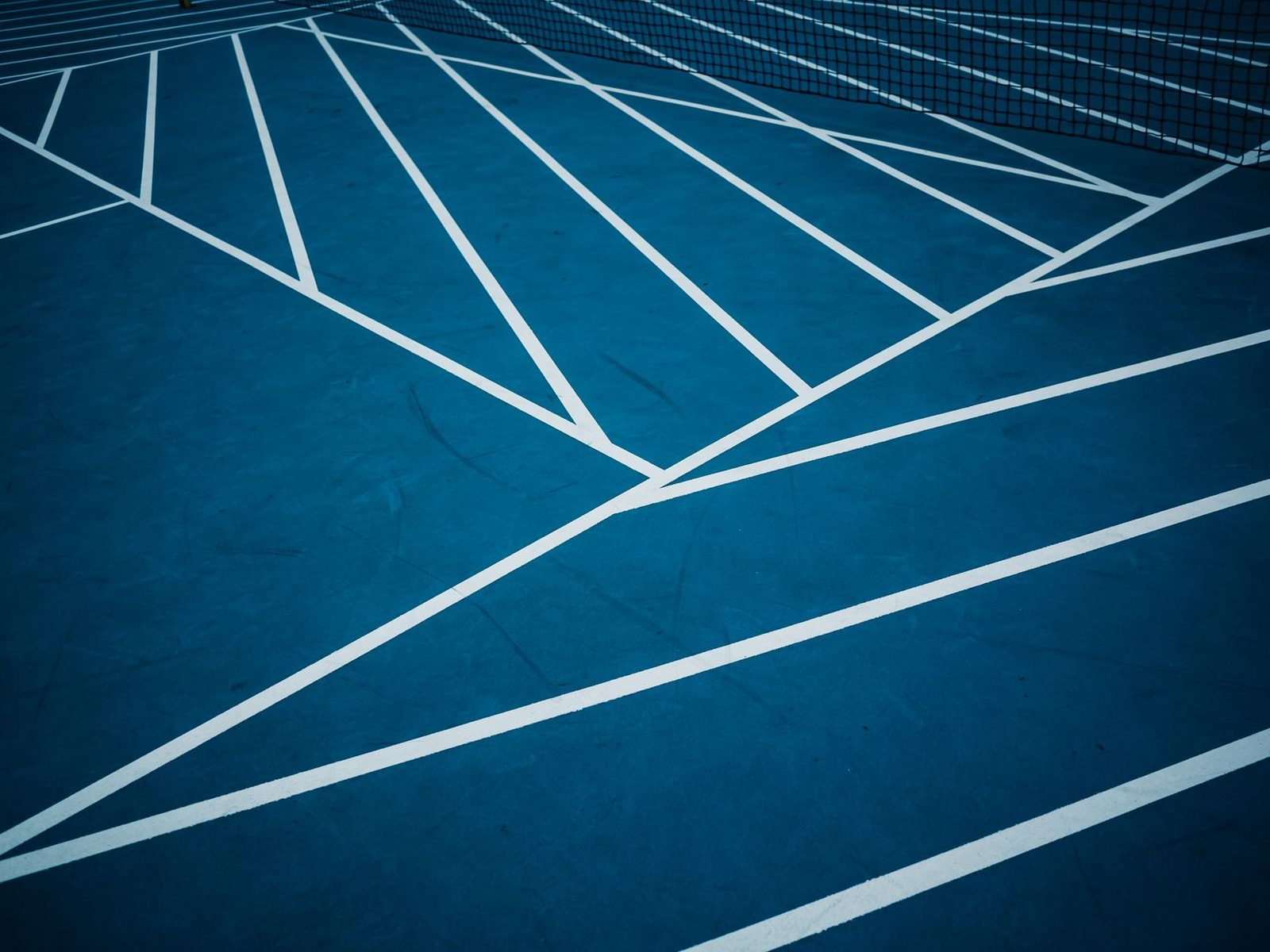
The default surface across most of the world, and the one most club players learn on. Speed varies considerably with the acrylic mix, but the defining quality is a true bounce: the ball does roughly what you expect.
That predictability makes hard courts the best place to learn, because timing errors are your own rather than the court’s. It also makes them the most neutral tactically. Flat drives, heavy topspin, slice and net play all work, which is why hard-court tennis rewards all-court players.
The trade-off is physical. Every stop is abrupt, and the repeated deceleration is hard on knees, hips and lower backs. Footwear and load management matter more than players expect.
Grass
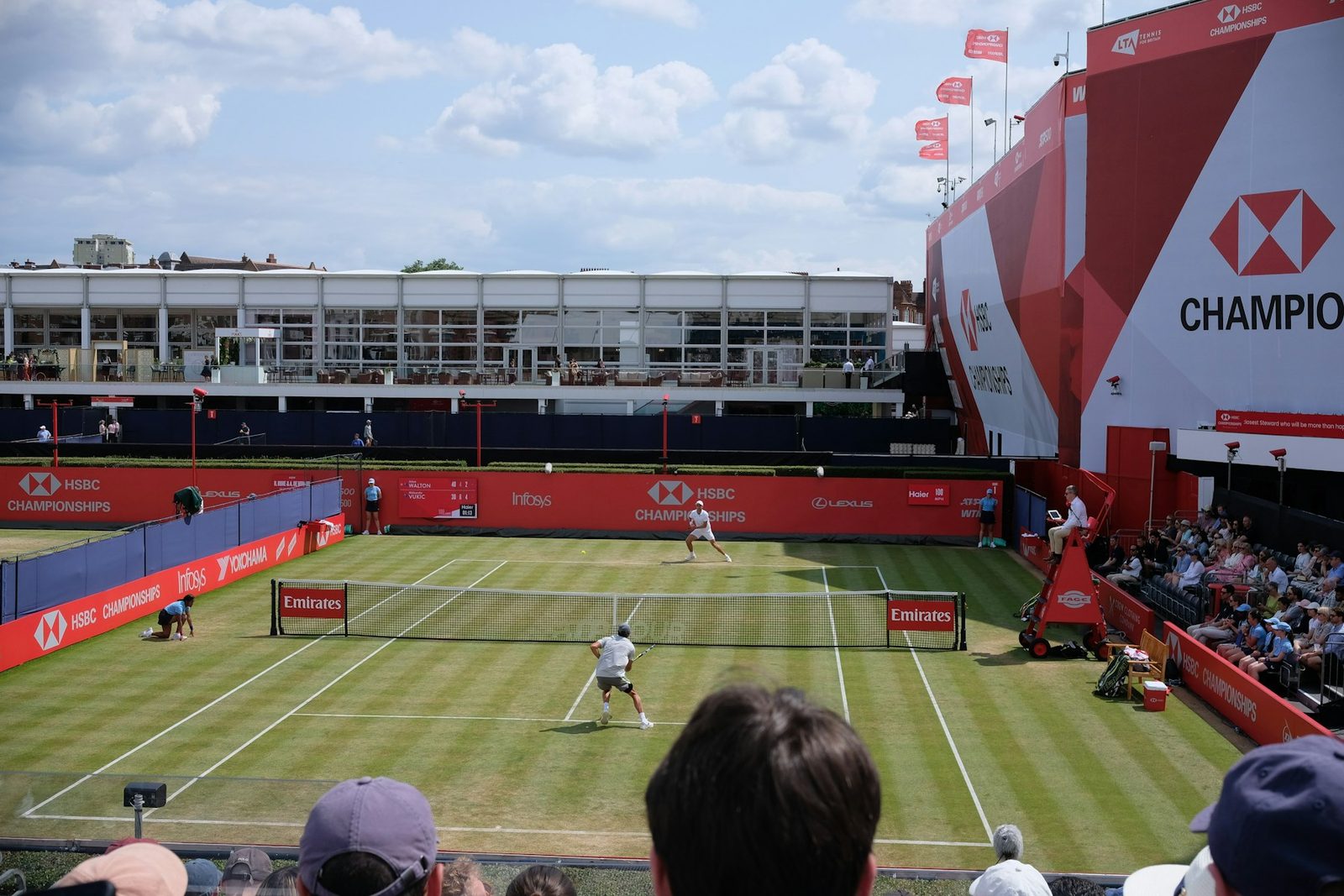
The fastest surface and the rarest. The ball skids low and comes through quickly, which shortens points dramatically and rewards anyone who can serve and take the ball early.
- Compact your swings, especially on the return. There is no time for a full backswing.
- Bend more. The low bounce means you are hitting from lower than you are used to.
- The slice is outstanding here because a low ball becomes a very low ball.
- Come to the net. Points are short and passing shots are harder.
- Move carefully, particularly in the first few games and after rain.
Grass also changes through a match as the surface wears, which is part of why bounces become less predictable as the day goes on.
Which surface suits your game?
| If you are a… | Best surface | Hardest surface |
|---|---|---|
| Heavy topspin baseliner | Clay | Grass |
| Big server | Grass | Clay |
| Serve-and-volleyer | Grass | Clay |
| Counter-puncher or retriever | Clay | Grass |
| Flat, aggressive ball-striker | Hard or grass | Clay |
| All-court player | Hard | None especially |
This is worth knowing not to excuse losses but to plan. If you know clay is your weakest surface, the answer is more topspin and better fitness rather than hoping the draw is kind.
Other surfaces you may meet
If you are weighing up a private court of your own, the surface choice sits inside a much larger budget; this guide to what it costs to build a tennis court at home sets out the whole picture. Beyond the big three there are several synthetic surfaces in common club use, and they behave differently enough to catch you out.
| Surface | Plays like | Watch out for |
|---|---|---|
| Artificial grass with sand | Slow to medium; low bounce | Sand shifts; footing varies |
| Artificial clay | Close to real clay; slides | Less consistent than the real thing |
| Acrylic over asphalt | Standard hard court | Speed varies a lot by mix |
| Carpet, indoor | Fast; very low bounce | Rare now; grip can be sudden |
Most public facilities on the Peninsula use acrylic hard courts, but artificial grass appears at some clubs and it plays nothing like real grass despite the name. If you are booking an unfamiliar venue, it is worth asking what the surface actually is rather than assuming.
Shoes matter more than people think
Surface-specific outsoles exist for a reason. A clay shoe uses a full herringbone tread designed to release the surface so you can slide; a hard-court shoe uses a denser, more durable compound built for abrasion and abrupt stops.
Playing on clay in hard-court shoes is one of the most common causes of slips, because the tread clogs and then grips unpredictably. The full breakdown of outsoles, fit and replacement is in this guide to choosing tennis shoes.
Indoor courts
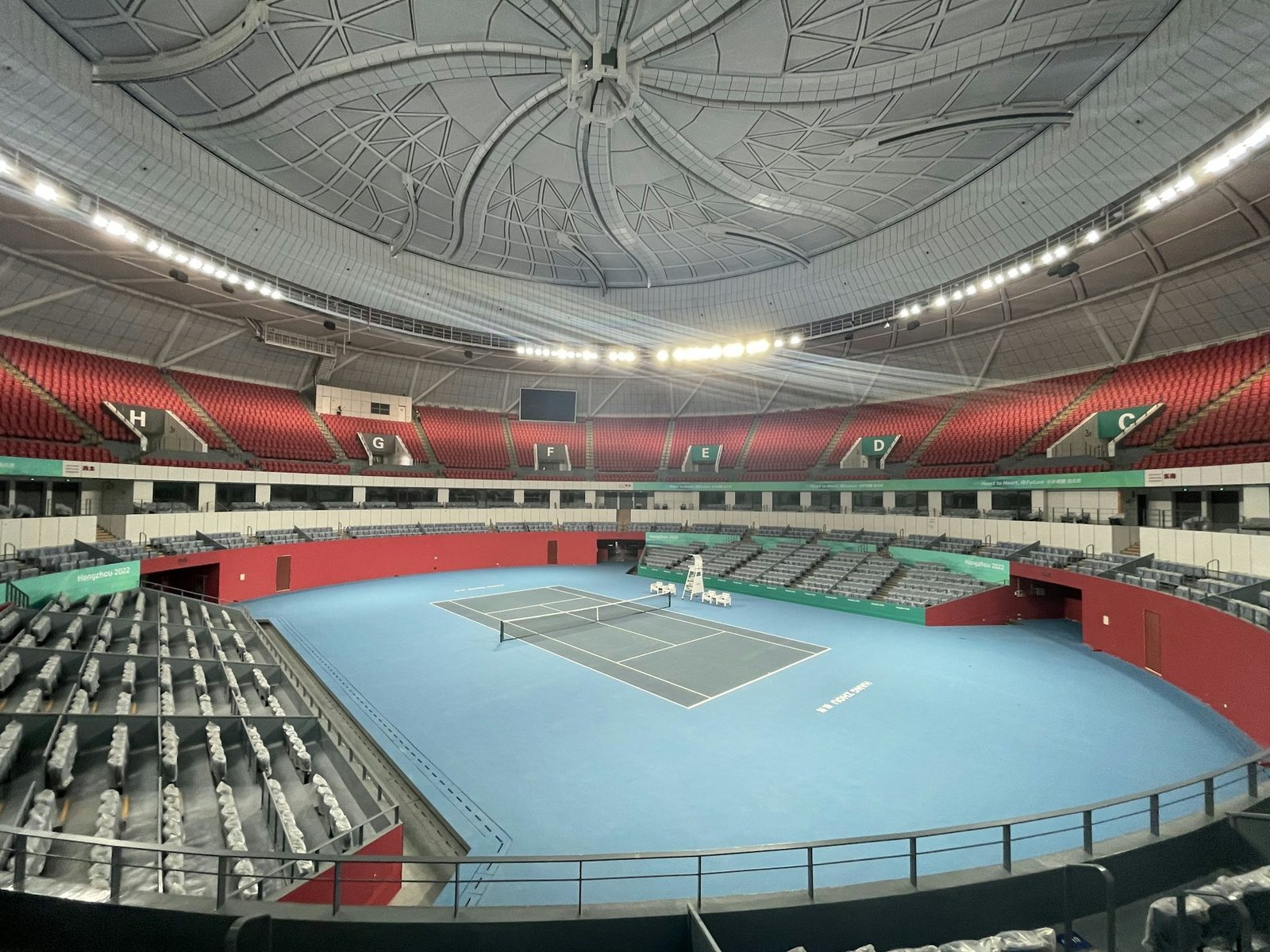
Indoors is not strictly a surface, but it changes the game as much as one. With no wind and no sun, ball flight becomes highly predictable, and indoor courts tend to play fast. Big serving becomes considerably more valuable and points shorten.
If your usual game depends on outdoor conditions creating errors, indoors will expose that quickly. The wider point about adapting to conditions is covered in playing in wind, heat and difficult conditions. Playfinder has a useful side-by-side comparison if you want another reference on how the surfaces differ.
Switching surfaces without a disaster
- Give yourself a hit before playing a match on an unfamiliar surface. Timing changes before technique does.
- Adjust your expectations for depth first; that is what changes most.
- On a faster surface, shorten the backswing before anything else.
- On a slower surface, accept that you will hit more balls per point.
- Change your shoes if you can. It is the cheapest adjustment available.
Most of the Peninsula’s public courts are hard courts, which are listed in this guide to public tennis courts on the Peninsula. If you know a clay or grass fixture is coming, a single practice session on the surface is worth more than a week of preparation on the wrong one.
Frequently asked questions
Which tennis surface is fastest?
Grass is the fastest, with a low skidding bounce that rewards big serving and early ball-striking. Hard courts sit in the middle. Clay is the slowest and produces the highest bounce, which is why rallies last longest there.
Which surface is easiest on your body?
Clay, by a clear margin. The sliding action absorbs a great deal of the force that would otherwise go through your knees and hips. Hard courts are the most punishing because every stop is abrupt.
What surface is best for a beginner?
A hard court, usually. The bounce is true and predictable, which makes it far easier to learn timing. Clay is kinder physically but the higher, more variable bounce adds difficulty while you are still learning to make contact consistently.
Do you need different shoes for different surfaces?
Yes, ideally. Clay shoes use a full herringbone tread so the shoe releases rather than grips; hard-court shoes prioritise durability and cushioning; grass shoes use a pimpled sole. Playing on clay in hard-court shoes is a common cause of slips.
How should you change tactics on clay?
Extend points, use more topspin and expect to hit more balls to win one. Winners are harder to hit because the surface slows the ball and gives your opponent time, so construction and patience matter more than pace.
Written by Claire Carter, a former WTA Tour professional and full-time teaching pro at Bay Club Redwood Shores, where she has coached juniors and adults for more than twelve years.
Image credits: AJ Alao (Unsplash), Aleksandr Galichkin (Unsplash), Bastian Riccardi (Pexels), Kise Xu (Unsplash), Sonny Sixteen (Pexels), Weichao Deng (Unsplash), cottonbro studio (Pexels). Photographs are illustrative.